A single fattener pig clears roughly ₱400 in profit over 5 months at July 2026 farmgate prices, and nothing at all if the price slips back to where it sat in the first quarter. A well-managed backyard sow still clears about ₱25,000 to ₱40,000 selling weaners across a year. That gap is enormous now, and it is enormous mostly because the fattener side stopped earning, not because sows got better.
But the fattener farmer recovers their capital in 5 months. The sow farmer waits 8 months for the first piglet sale, runs through six figures in operating capital before any revenue comes in, and watches some neighbors fail at it because the management is harder.
This is the most important business-model decision in Philippine pig farming. Get it wrong and you'll be running on fumes for years. Get it right and a well-run 5-sow hybrid can still clear ₱100,000 or more a year.
Here's the honest math for both, and how to decide which one fits your situation.
Free Tool
Pig Profit Simulator
Run both models side by side in the profit simulator: a 10-pig fattener cycle vs a 3-sow farrow-to-wean base over 5 years. The difference compounds fast.
The Two Business Models
A piggery operates in one of three basic ways. The decision matters because the capital, skills, time horizon, and profit profile of each are different.
Fattener (grow-out only). You buy weaners at 25-30 days old (8-12 kg), feed them for about 5 months until they hit market weight (90-95 kg liveweight), and sell to a trader, palengke buyer, or lechonero. You don't keep breeding stock. Capital cycles through every 5 months.
Farrow-to-finish (sow plus fattener). You keep breeding sows. The sows produce piglets, roughly 8-11 weaned per litter under backyard conditions, every 5-6 months. You can sell weaners at 25-30 days, or fatten the weaners yourself and sell them at market weight. Many sow operations do both, selling some weaners for quick cash and keeping some to fatten for a higher per-head margin.
Farrow-to-wean only (sow plus weaner sale). You keep sows but sell all weaners at 25-30 days. No grow-out. Lower feed cost per cycle, no pen space for fatteners. Lower per-pig revenue but faster cash turnover than full farrow-to-finish.
This article compares the first two, fattener vs sow operation, because that's the decision most Filipino backyard farmers actually face. We use the farrow-to-wean version of the sow model for the headline math, since that's what most backyard farms run.
The Math: 10 Fatteners
We'll start with a 10-pig fattener cycle under 2026 Central Luzon conditions, using premium (B-MEG-tier) feed at the July 2026 price band and a ₱185/kg average farmgate liveweight price. That ₱185 is the SINAG industry average for May 2026, which they put at ₱180-₱190/kg. It sits below the PSA Q3 2025 national average of ₱191.51/kg, and farmgate hasn't been near ₱200 since mid-2025.
One correction to something everybody repeats, including older versions of this article: Central Luzon is not the premium region. PSA had it at ₱181.05/kg in June 2026, sixth of seventeen. The top farmgate prices that month were Cordillera at ₱224.10 and Central Visayas at ₱208.73. SOCCSKSARGEN was the lowest at ₱141.98. The province-level backyard cut of that survey is downloadable at backyard farmgate by province, and it is the one worth checking, because the province you sell in decides more of this than the feed brand does.
| Cost item | Amount (PHP) |
|---|---|
| 10 weaners @ ₱3,500 | ₱35,000 |
| Starter feed (10 × 25 kg @ ₱38/kg) | ₱9,500 |
| Grower feed (10 × 120 kg @ ₱36.70/kg) | ₱44,040 |
| Finisher feed (10 × 130 kg @ ₱36.70/kg) | ₱47,710 |
| Vaccines + iron + dewormer (10 pigs) | ₱5,000 |
| Vet reserve (1 sick pig) | ₱2,000 |
| Utilities, bedding, transport | ₱3,000 |
| Total cost per cycle | ₱146,250 |
| Sale: 9 pigs × 90 kg × ₱172.44/kg | ₱139,676 |
| Net profit per cycle | ₱3,600 |
That works out to about ₱400 per surviving pig once you account for 10% normal mortality (1 dead pig out of 10). That is not a business. That's a rounding error.
Run the numbers the other way and you can see why. ₱146,250 of cost against 810 kg of pork sold is ₱181/kg, and SINAG and NatFed each put the industry's cost of production at about ₱180/kg. So this isn't a quirk of my table. The average Philippine hog farm in 2026 is selling at roughly its own cost. The total feed here is roughly 275 kg per pig, in line with the 260-310 kg most backyard fatteners go through to market weight, priced at the premium grower and finisher band of ₱34.90-₱38.20/kg (₱1,747-₱1,910 per 50 kg bag) as of 12 July 2026.
The margin swings hard on three numbers:
- Liveweight price. Drop to ₱176/kg, the PSA national mean for Q1 2026, and the same 9 pigs bring ₱142,560 and the cycle loses about ₱3,700. Lift to ₱193/kg, the top of the eFeedLink trade range, and net is about ₱10,100. The DA's ₱210/kg minimum would put you at ₱23,850, but the national average has never actually reached it since it was set in November 2025, and outside the Cordillera no region has been paid it. Don't build a cycle on it.
- Weaner cost. ₱3,500 (a Landrace x Large White cross from a local multiplier) is what makes this even break even. Pay ₱4,500 for Duroc-sired stock and the cycle is a loss unless the better FCR cuts more than ₱10,000 off your feed bill.
- Mortality. One extra dead pig is roughly ₱16,650 of lost sale plus the feed already sunk into it. At these margins, one dead pig on its own turns the cycle negative.
Annual profit, 10-pig fattener (2 cycles per year):
- Tight case (₱176/kg, the Q1 2026 PSA average, full feed cost, 10% mortality): a loss of roughly ₱5,000-₱8,000 for the year
- Realistic backyard (₱172.44/kg, mixed luck): about ₱13,000 of losses a year
- Good case (cheaper weaners, low mortality, one cycle timed into a Christmas window near ₱193/kg): ₱25,000-₱35,000
This is why the fattener model stopped working in 2026. Feed went up ₱1-₱2/kg through the year and no miller has announced a rollback. Corn is 50 to 65 percent of the formulation and its tariff was never cut, so no relief is coming from there either. And farmgate didn't follow feed up, because imports keep filling the gap. 851,760 MT of pork landed in 2025, and EO 116 in May 2026 raised the tariff-quota from 54,210 MT to 204,210 MT. A national herd of 8.93M heads, up 2.6% in the quarter to 1 July 2026 and still about 30% short of where it was before ASF, has produced no pricing power at all. The quarterly inventory is published here as a series if you want to watch it yourself.
So be clear-eyed about it. At the national average price, a fattener cycle isn't an income. It's a way to learn pig management while roughly holding onto your money.
The Math: 3-Sow Farrow-to-Wean
Now compare to a 3-sow farrow-to-wean operation, year 2 (skipping the year-1 gestation hole, which we'll cover separately).
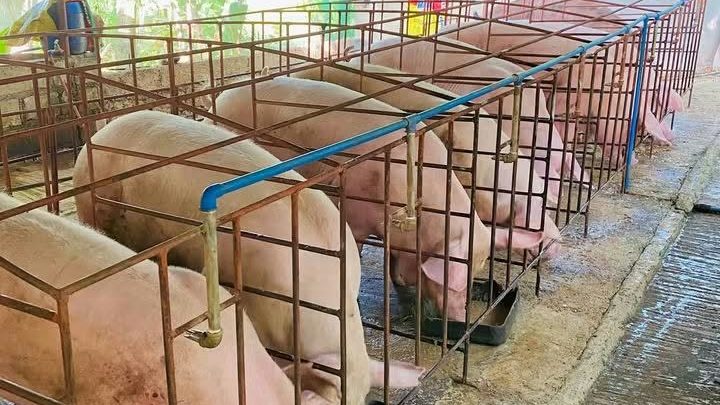
Be honest about output. Research on Filipino smallholder sows puts the national average at around 15 weaned piglets per sow per year, with semi-intensive village farms near 1.4-1.5 litters and 8-9 weaned per litter. Commercial farms with tight management reach 19-20. A well-run backyard sow with good genetics and proper farrowing care lands in between. We'll use 18 weaned per sow per year as a realistic "you're doing this properly" number, and show the spread.
Per-sow output per year (well-managed backyard):
- About 2 litters a year (5.5-6 month cycle)
- 10-11 piglets born alive per litter
- 9 piglets weaned per litter (some lost to stillbirth and crushing)
- Roughly 18 weaned piglets per sow per year (range 15-20)
Per-sow revenue paths:
Option A, sell all weaners at 25-30 days:
- 18 weaners × ₱3,500 = ₱63,000 gross (₱56,000 at 16 weaned, ₱70,000 at 20)
Option B, fatten all 18 to market weight:
- More gross revenue, but you need pen space for 18 grow-outs and roughly ₱9,000-₱11,000 in feed per finisher. At current farmgate prices the extra margin per head is thin, the same squeeze the fattener table shows. Not recommended unless you have the space and a price window.
Option C, sell 10 weaners, fatten the rest:
- Splits the difference: faster cash from the weaner sales, a shot at the Christmas premium on the fattened ones. The most common setup on farms that have outgrown pure weaner sales.
Most backyard farms use Option A because the cashflow is faster and pen space is limited. The math below uses Option A.
Per-sow costs per year (Option A, sell weaners at 25-30 days):
| Cost item | Amount (PHP) |
|---|---|
| Sow feed (1,200 kg @ ₱30/kg avg) | ₱36,000 |
| Piglet starter + creep feed (50 kg/litter) | ₱3,300 |
| AI fee (2 services/year, ₱400 each) | ₱800 |
| Vaccines + vet (sow + piglets) | ₱3,500 |
| Housing depreciation + maintenance | ₱2,500 |
| Utilities (water, electricity) | ₱2,000 |
| Total cost per sow per year | ₱48,100 |
| Revenue per sow (18 weaners × ₱3,500) | ₱63,000 |
| Net profit per sow per year | ₱14,900 |
At 18 weaned and ₱3,500 a head, a sow nets around ₱15,000 a year before gilt amortization. Push to 20 weaned at ₱4,000 (good genetics, strong market) and net climbs toward ₱32,000. Slip to 15 weaned at ₱3,000 and you're near break-even. Sow feed is the single biggest cost, so a well-conditioned sow that weans more pigs on the same feed is what actually moves the number.
This is the part most "sow vs fattener" guides get wrong. They quote ₱5,000-₱6,000 weaners and 22+ weaned per sow and arrive at a fantasy ₱80,000-per-sow figure. At real 2026 backyard prices and real backyard productivity, a single sow nets closer to ₱15,000-₱30,000. That is far more than a fattener earns now, but read the multiple the right way. It's huge mainly because the fattener number collapsed toward zero, not because sows suddenly got rich.
For a 3-sow operation:
- Gross revenue (annual): 54 weaners × ₱3,500 = ₱189,000
- Total costs (annual): 3 × ₱48,100 = ₱144,300
- Net before amortization: ₱44,700
Subtract amortization on the gilts (3 × ₱18,000 over a 3-year productive life, about ₱18,000/year) and you're at roughly ₱25,000-₱30,000 net from 3 sows in a tight year, climbing to ₱70,000-₱100,000 in a good one with strong weaning numbers and ₱4,000 weaners. The point of running 3 instead of 1 is that fixed costs spread thinner and a bad litter on one sow doesn't sink the year.
Year 1: Where Sow Operations Die
The math above is for year 2 onwards. Year 1 is brutal for new sow farmers because of the gestation gap.
The 6-8 Month Cashflow Hole
A gilt purchased in January goes through:
- 1-2 months of acclimation to your farm
- 1 month to reach breeding-ready condition (puberty/cycle synchronization)
- 1 service attempt (AI or boar mating) at month 3-4
- 114 days of gestation (the old "3 months, 3 weeks, 3 days")
- Farrowing at month 8
- 4 weeks of lactation
- First weaner sale: month 9
For 8-9 months, you're spending money on gilts, feed, vaccines, and housing with zero revenue. A 3-sow operation runs through ₱120,000-₱180,000 in operating capital before the first piglet sells.
This is where most first-time sow farmers fail. They run out of feed money in month 5, can't pay for vaccines in month 6, panic-sell a sow in month 7, then watch the remaining sows produce smaller litters because they were underfed during late gestation.
The Skill Gap
Sow management is harder than fattener management. You need to:
- Time AI breeding correctly (24-hour window per cycle)
- Recognize sows in heat
- Manage gestation feed levels (under-feed early, peak-feed late)
- Run farrowing supervision (assist if dystocia, prevent crushing, ensure colostrum intake)
- Manage piglet creep feeding and weaning transition
- Cull non-productive sows after 3 parities
Backyard farmers with no breeding experience typically lose 20-40% of expected output in year 1 from skill gaps. The math gets better by year 2 once you've learned the cycle. Year 1 often clears close to nothing net, or even runs a small loss, instead of the ₱25,000-₱30,000 a settled 3-sow operation makes in a tight year.
Side-by-Side Comparison
| Factor | 10 Fatteners (annual, 2 cycles) | 3-Sow Farrow-to-Wean (annual) |
|---|---|---|
| Starting capital | ₱60,000-₱90,000 | ₱120,000-₱160,000 |
| Time to first revenue | 5-5.5 months | 8-9 months |
| Operating capital required | 5 months of feed | 8-9 months of feed |
| Year 1 net profit | break-even to ₱10,000 | near zero to small loss |
| Year 2+ net profit | break-even to ₱10,000 (steady) | ₱25,000-₱100,000 (varies) |
| Mortality risk | Even (10% normal) | Higher per-animal stakes |
| Skill required | Moderate | High (breeding, farrowing) |
| Daily time commitment | 1-2 hours | 2-4 hours |
| Loan eligibility | Limited | Higher (DA-ACPC, OWWA EDLP) |
| Vulnerability to price crash | Extreme (already at cost) | Lower (sell weaners or hold) |
| Scalability | Limited (capital-intensive) | Strong (replace sows, multiply) |
A few honest observations from those numbers:
1. Sows win per animal, and in 2026 they win as whole operations too. The old counter-argument, that a 10-pig fattener cycle run twice a year matches a 3-sow farrow-to-wean operation in total pesos, held when feed was cheaper and farmgate ran near ₱200. At SINAG's ₱185/kg farmgate and ₱36.70/kg grower feed it doesn't hold anymore. Three sows beat ten fatteners, and it isn't close.
2. Fattener operations still win on simplicity and year 1. Lower capital, faster turnaround, less skill, and you get your money back instead of bleeding through a gestation gap. What they no longer do is pay you much. Treat a first fattener cycle in 2026 as tuition you mostly get refunded.
3. There is no crossover anymore. The old advice was that fatteners beat sows below 3-4 head and lost above that. At current feed and farmgate prices the fattener model doesn't beat sows at any scale. It only beats them on risk, on speed, and on how much you need to know before you start.
How to Decide
Use this decision tree. One thing to get straight before you read it: at July 2026 prices, "stay with fatteners" is not a claim that fatteners earn more. They don't. It's a claim about capital, cashflow, and skill.
Stay with fatteners if:
- You have less than ₱100,000 in starting capital
- This is your first pig farming operation
- You can't commit 8-9 months of zero revenue
- You want a low-stakes way in, and you accept that a fattener cycle right now mostly returns your money rather than growing it
- You don't have someone to manage farrowing (you or family)
- Your goal is to test the model before scaling
Move to sow operations if:
- You have ₱120,000+ in starting capital plus an operating reserve
- You've run at least one or two successful fattener cycles
- You can absorb 8-9 months of zero revenue (savings, OFW remittance, second income)
- This will be primary income, not a sideline
- You're willing to learn farrowing and AI management
- You're scaling toward 3+ sows, where the fixed costs finally spread thin enough to matter
The "best of both worlds" path: Start with a 5-10 pig fattener cycle. Use the first year to learn pig management, build a pen, establish a buyer relationship. In year 2, add 2-3 sows while continuing fattener cycles. In year 3, scale to 5+ sows and reduce fattener purchases. This is the standard scaling path for Filipino backyard farmers who go pro, and it spreads the year-1 cashflow pain across years when the fattener side is already paying.
The Hybrid Model (What Most Successful Farms Actually Do)
Most farms that earn real money from piggery don't choose one or the other. They do both:
- Keep 5-10 sows for breeding
- Sell some weaners directly at 25-30 days for cash
- Keep some weaners (the slower-growing ones, or the surplus when weaner prices are low) and fatten them to market weight
- Time fattener sales to hit Christmas and Holy Week premiums
This hybrid model captures the best of both:
- Steady weaner sales for month-to-month cashflow
- Fattener sales for lumpy, high-value income at premium windows
- A sow herd that compounds in value over years through better genetics and more breeders
A well-managed 5-sow hybrid operation in Bulacan or Pampanga clears roughly ₱60,000-₱150,000 net per year at 2026 prices, depending on weaning numbers, how many pigs you fatten, and whether you catch the Christmas window. The top of that band is piggery as a real business. The bottom of it is a decent sideline, and the reason the band is so wide is that the fattening leg barely contributes now. Grower and finisher feed eats nearly the whole liveweight margin, so fattening a home-bred weaner instead of selling it at 30 days adds only a few hundred pesos a head once you allow for grow-out mortality, and it ties up five months of pen space to earn it. Fatten to catch a price window, not out of habit. All of this is a far cry from the half-million figures some guides throw around, those assume commercial-tier weaning and pre-2024 prices that don't exist in a backyard pen today.
Free Tool
Break-Even Price Calculator
Run both models through the break-even calculator at your actual feed cost and liveweight price. The break-even thresholds differ for each, and the same farmgate price can be profitable for sows but a loss for fatteners.
One More Thing: The Skill Asymmetry
A common mistake: assuming sow operations are "just fattener operations plus breeding." They're not. The skills are different.
Fattener skills (mostly daily management):
- Daily feeding routine
- Pen sanitation
- Recognizing early disease signs (off-feed, lethargy, diarrhea)
- Weighing or estimating growth
- Selling decisions
Sow skills (cyclical, complex):
- Estrus detection (heat signs every 21 days)
- AI timing or boar management
- Pregnancy detection (visual at 21-28 days, ultrasound optional)
- Gestation feeding curves
- Farrowing supervision (recognize labor, assist if needed, prevent crushing)
- Lactation management (sow nutrition, piglet health, weaning timing)
- Sow culling decisions (parity, productivity, body condition)
A fattener farmer who decides to add sows in month 3 of their first cycle typically loses 30-50% of expected output in year 1 from skill gaps alone. Time the transition deliberately. Watch a few farrowings at a neighbor's farm before doing your own. Apprentice with an experienced sow farmer for 2-3 months if you can. Sus, the farmers who skip this step are the ones who panic-sell a sow in month 7.
Bisaya / Cebuano
Para sa mga mag-uuma
Sow ba o fattener? Asa mas dako og kita?
Per baboy, mas dako gyud og kita ang sow kaysa fattener. Karong 2026, mas dako pa gani ang kalainan, pero dili tungod kay nidako ang kita sa sow. Nikunhod hinuon ang kita sa fattener kay nimahal ang feed ug wala nisunod ang presyo sa farmgate. Ang ubang guide moingon nga 30 ka pilo. Gibase kana sa ₱6,000 nga weaner ug 22 ka piglet kada sow, dili kana tinuod sa backyard karon. Ug ang sow operation lisod gyud sa unang tuig.
Ang math sa fattener (10 ka baboy, 2 ka cycle kada tuig):
- Weaner: ₱3,500 kada usa, dili ₱6,000
- Gasto kada cycle: mga ₱146,000 (nimahal na ang feed, ₱34.90 ngadto ₱38.20 kada kilo ang grower ug finisher)
- Baligya sa ₱185/kg nga gikutlo sa SINAG: mga ₱150,000
- Net profit: mga ₱3,600 ra kada cycle, halos wala ngadto ₱10,000 kada tuig
Ang gasto sa pagpadako og baboy karon mga ₱180 kada kilo (SINAG ug NatFed). Ang presyo sa farmgate mga ₱185 kada kilo sumala sa SINAG (Mayo 2026), samtang ₱172.44 ang opisyal nga PSA sa Q2 2026. Busa halos wala gyuy kita ang fattener karon. Ang ₱210 kada kilo nga floor price sa DA wala pa gyud nakab-ot, bisan usa ka bulan, bisan asa nga rehiyon. Ayaw pagsalig ana.
Ang math sa 3 ka sow farrow-to-wean (year 2, well-managed):
- 54 ka weaner × ₱3,500 = ₱189,000 gross
- Gasto: mga ₱144,000
- Net human sa amortization sa gilt: mga ₱25,000 ngadto ₱100,000 kada tuig, depende sa weaning numbers ug presyo
Kanus-a ang fattener:
- Wala pay ₱120,000 nga puhunan
- First-time piggery
- Dili kaya mo-survive 8 ka bulan nga walay income
- Side income ra
- Walay kaagi sa farrowing
- Gusto pa subukan kung makaya
Hinumdomi: ang fattener karon halos walay kita. Pang-tuon na lang siya, dili pang-kwarta.
Kanus-a ang sow operation:
- Naa kay ₱180,000+ nga puhunan plus operating reserve
- Dunay 1-2 ka cycle nga eksperyensya na sa fattener
- Pwede mosurvive 8 ka bulan nga way income
- Primary income ang piggery
- Andam mokat-on sa AI breeding ug farrowing
- Goal: dako nga income, dili side lang
Ang pinakamaayong paagi: hybrid.
Sugdi sa 5-10 ka fattener sulod sa unang tuig. Tuon-i ang pig management. Pagka-tuig 2, idugang og 2-3 ka sow. Pagka-tuig 3, mahimong 5 ka sow ug gamay ra nga fattener. Mao ni ang pattern sa kasagaran nga magmalampuson nga backyard pig farmers sa Pilipinas.
Importante:
Ang sow management lain. Dili kana pareho sa fattener management. Kinahanglan kahibalo ka sa heat detection, AI timing, gestation feeding, farrowing supervision, ug lactation management. Kung wala pa kay kaagi, ayaw pag-direkta sa 5 ka sow. Magsugod sa 1-2 ka sow, magtuon, dayon mo-scale.
Related Reading
- Cost to Raise a Pig in the Philippines: the per-pig cost breakdown behind the fattener table here
- Pig Farming Profit on 10 Pigs: detailed math for a 10-pig fattener operation
- Magkano Puhunan sa Baboyan, Capital Tiers: match capital to scale, from ₱20K to ₱500K
- Best Month to Sell Pigs: when to time fattener sales for the Christmas premium
- Crossbreed Pig Prices Philippines 2026: current weaner and gilt prices by region and breed
- Cull-Sow Pricing and Replacement Math: when to retire a sow and what the replacement gilt should cost
- Sow MMA / No-Milk Syndrome: the postpartum risk that wipes out a litter
- Profit Simulator: run both business models through 5 years of cycle math
Sources: PSA average farmgate price of hogs, July to September 2025 (₱191.51/kg liveweight), plus the PSA OpenSTAT monthly farmgate series (Q2 2026 national mean ₱172.44/kg; Central Luzon ₱181.05/kg in June 2026, against Cordillera at ₱224.10 and Central Visayas at ₱208.73). SINAG industry average farmgate of ₱180-₱190/kg and cost of production of about ₱180/kg (May 2026), corroborated independently by NatFed; trade quotes of ₱183-₱193/kg from eFeedLink. DA, hog farmers set ₱210/kg minimum farmgate price, 4 November 2025, a target that has not been met by the national average, nor by any region outside the Cordillera of PSA data since it was set. DA-BAI livestock and feed ingredient price monitoring, with premium grower and finisher feed at ₱34.90-₱38.20/kg as of 12 July 2026. PCAARRD swine industry strategic S&T program (sow productivity targets); ThePigSite, factors affecting litter size. Smallholder Philippine sow productivity benchmarks (average ~15 weaned/sow/year) from peer-reviewed field studies on Filipino smallholder herds. Figures are typical ranges and vary by region and management level. Prices current as of 12 July 2026.