Feed is about 57% of your hog operating cost, per PIDS. Not the 60–70% you see quoted in every feed article. That higher figure comes from a feed-tariff advocacy statement covering poultry and swine together, and 70% is an upper bound, not a hog benchmark. A properly balanced home-mixed grower ration using local ingredients runs about ₱21–23/kg versus ₱35–38/kg for commercial pellets (July 2026), roughly a 35–40% cut per kilo. The bigger ₱40,000-per-batch savings figures online assume a mix too low in protein to actually grow a pig on time.
"Ang baboy nga walay bugas, walay sustansya." (A pig without rice bran has no nutrition.)
Here is what actually works, what is just filler, and what to avoid.
The Best Cheap Ingredients (and What They Actually Contribute)
Not all "cheap" ingredients are worth your time. Some save money and still grow pigs. Others just fill their bellies without adding weight.
High value: worth buying or growing
| Ingredient | Crude Protein | Role | Approx. Cost (2026) | Notes |
|---|---|---|---|---|
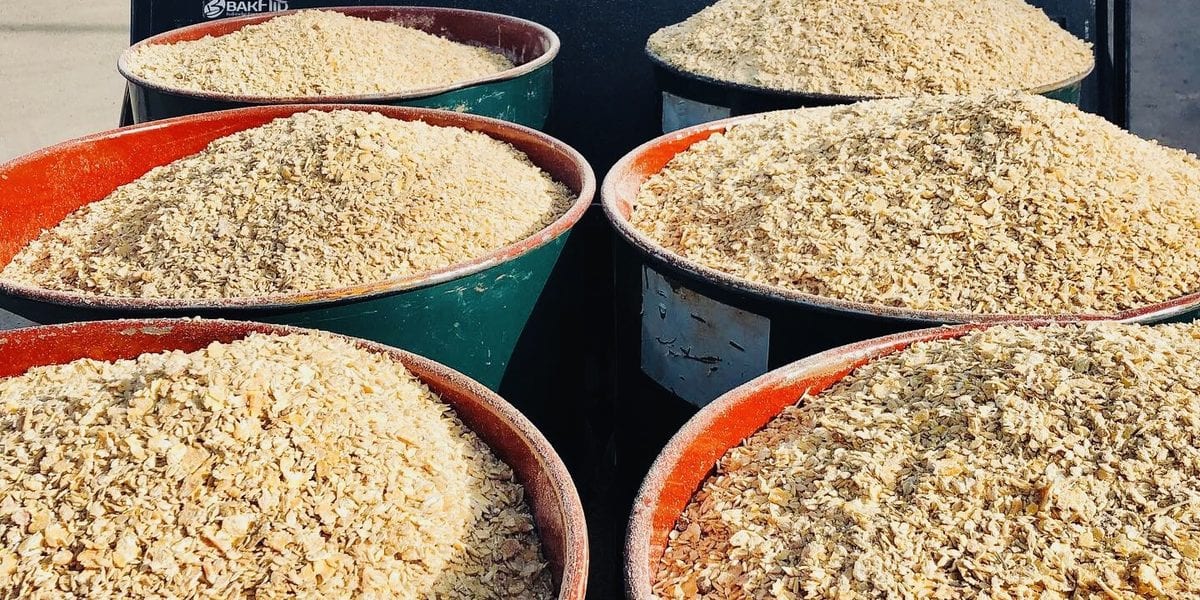
| Rice bran (D1/darak) | ~11–13% | Energy base | ₱12–18/kg from rice mills | Staple of Philippine backyard feeding. Use D1 (first pass), not D2. Keep under ~30% of the mix or you get soft, oily back fat. Goes rancid in about 2 weeks in heat, so buy fresh. |
| Copra meal | ~21–22% | Protein extender | ₱12–16/kg in coconut areas | Cheap in Visayas, Mindanao, and Bicol but high in fiber and low in lysine. Cap at ~20% of the mix. Soak 8–24 hours before feeding to improve digestibility. |
| Cracked corn (mais) | 8–9% | Main energy source | ₱20–24/kg wholesale | Better energy density than rice bran. Mix with darak for a solid energy base. |
| Fish meal (local) | 55–65% | High-quality protein | ₱40–60/kg | Expensive per kilo but you use only 5% of the mix. Provides the lysine copra meal and rice bran lack. |
| Soybean meal (44%) | ~44% | High-quality protein | ₱30–38/kg | The reliable way to actually reach a 16% grower protein target. Imported, so price tracks the peso, but a little goes a long way. |
Free or nearly free: grow these
| Ingredient | Crude Protein (dry basis) | Notes |
|---|---|---|
| Camote tops (sweet potato leaves) | 14–18% | One of the best free feed ingredients in the Philippines. High in vitamins. Feed 2–3 kg fresh daily per grower pig, but treat it as a supplement, not the protein backbone, since most of that weight is water. |
| Kangkong (water spinach) | 15–20% | Grows wild in wet areas. Decent free greens. Water content is around 90%, so the dry-matter protein it actually delivers is small. Do not count on it to hit your protein target. |
| Madre de agua (Trichanthera) | ~16–18% | Fast-growing shrub. Air-dry leaves into leaf meal before feeding. Plant as a hedgerow around your piggery. BAI/UPLB trials replaced part of the soybean meal in grower rations with comparable daily gain, but it is a partial protein extender, not a full soybean substitute. |
| Azolla (water fern) | ~20–25% | Grows on pond surfaces, doubles in 3–7 days. Useful protein supplement if you can grow it. Very high moisture, so pigs need large volumes. Requires a shallow pond or trough. |
Decent energy fillers
| Ingredient | Notes |
|---|---|
| Cassava (kamoteng kahoy) | Good energy but very low protein (2–3%). Must be peeled and cooked. Raw skin contains cyanide. |
| Banana rejects | Low protein (1–4% fresh), mostly water. Works as a filler to stretch commercial feed. Chop before feeding. |
Just filler: minimal nutrition
Don't waste your pigs' stomach space on these:
- Water hyacinth: extremely high moisture, almost zero nutritional value per kilo of fresh material
- Raw rice hulls: indigestible, zero nutritional value for pigs
- Napier / elephant grass: too fibrous for pigs (better for cattle and carabao)
We've talked to farmers who spent months feeding water hyacinth thinking it was free protein. It's not. The pigs eat a lot and gain almost nothing.
A Budget Feed Formula
This formula works for grower pigs (20–60 kg) and costs roughly 35–40% less per kilo than commercial complete feeds, while still landing near the 16% crude protein a grower needs:
- 40% rice bran (D1)
- 18% copra meal (soaked)
- 22% cracked corn
- 10% soybean meal (44%) or local fish meal
- 5% commercial concentrate (for vitamins, minerals, amino acids)
- 5% camote tops or kangkong (chopped fresh)
Here is the part most cheap-feed posts get wrong. Drop the soybean meal or fish meal and you are left with a corn-and-copra-and-darak mix that protein-tests around 12–13%. That looks fine on paper if you only count cost, but it grows fat instead of saleable weight, stretches your grow-out by weeks, and quietly wipes out the savings. The pig feed formulation guide shows the math: a 13% copra mix is not a complete grower feed, no matter how cheap it looks. Keep a real protein source in there.
The 5% commercial concentrate is the other part you should not skip. It fills the vitamin and mineral gaps a home-mixed ration misses. Without it, growth slows and you may see skin issues or weak legs over time. A 25 kg bag of pig concentrate lasts a long time at 5% inclusion, so the per-pig cost is small.
Plant camote and kangkong around your piggery now. In 2–3 months you will have a steady supply of free high-protein greens. Madre de agua hedgerows take longer to establish but produce year-round once mature.
What About Kitchen Scraps (Swill)?
Kitchen waste can supplement a pig's diet but comes with one non-negotiable rule:
All kitchen waste containing meat must be thoroughly boiled before feeding.
Uncooked swill was one of the main drivers of ASF spread in the Philippines. A PMC study on ASF risk factors found swill feeding to be the most significant factor across all 13 scenarios examined. The DA issued Administrative Order No. 07, Series 2021 with biosecurity guidelines that include proper swill handling at the barangay level.
This is not a suggestion. It is a biosecurity requirement.
Vegetable scraps, fruit peelings, and rice washings are generally safe to feed fresh. But any leftovers containing pork, chicken, or other meat: boil first, every time. For more on biosecurity practices, see the ASF recovery era guide.
What Does This Actually Cost? A Worked Example
Let's price out one pig from 20 kg to 90 kg on home-mixed feed vs. commercial. Prices as of July 2026, based on Visayas/Central Luzon sources.
Ingredient costs (per kg, bought in bulk)
| Ingredient | Visayas | Central Luzon | Notes |
|---|---|---|---|
| Rice bran D1 | ₱12–15/kg | ₱15–18/kg | Cheaper near rice mills. Buy weekly, not monthly. |
| Copra meal | ₱12–14/kg | ₱16–18/kg | Cheaper in coconut provinces (Leyte, Bohol, Zamboanga). Prices rose through 2025, so confirm locally. |
| Cracked corn | ₱20–22/kg | ₱22–24/kg | Corn tariffs keep PH prices high vs. neighbors. |
| Fish meal (local) | ₱40–50/kg | ₱45–60/kg | Cheaper near fishing towns. Quality varies a lot. |
| Commercial concentrate | ~₱45–55/kg | ~₱45–55/kg | B-MEG, Vitarich, or Thunderbird pig concentrate. |
| Soybean meal (44%) | ₱30–36/kg | ₱32–38/kg | Imported. The honest way to hit a 16% protein target. |
| Camote tops / kangkong | FREE | FREE | Grow your own. |
One pig, 20 kg to 90 kg (roughly 90–100 days)
| Cost Item | Home-Mixed (balanced) | Commercial (Suregrow/B-MEG) |
|---|---|---|
| Total feed consumed | ~225 kg | ~225 kg |
| Cost per kg of feed | ₱21–23/kg | ₱35–38/kg |
| Total feed cost | ₱4,725–5,175 | ₱7,875–8,550 |
| Savings per pig | ₱2,700–3,800 | n/a |
Commercial feed prices based on Agrilife Philippines listings: Suregrow Hog Finisher ₱1,747/50kg (₱34.94/kg), Suregrow Hog Grower ₱1,803/50kg (₱36.06/kg), VIEPro Grower ₱1,910/50kg (₱38.20/kg), all checked 12 July 2026. That is a ₱34.90–38.20/kg band, mean around ₱36.70. Feed has crept up ₱1–2/kg through 2026 and no miller has announced a rollback, so plan on the top of the band, not the bottom. Corn is 50–65% of the formulation and its tariff was not cut (EO 62 runs to 2028). A backyard pig eats roughly 225 kg of feed from 20 to 90 kg at a realistic Philippine FCR near 3.2, not the 2.6–2.8 seen in controlled trials.
For 10 pigs, that is roughly ₱27,000–38,000 saved per batch on feed. Still less than the ₱40,000-plus some blogs promise, and those numbers assume a protein-short ration that does not actually finish a pig on time. One honest caveat: the table gives both pigs the same 225 kg. In practice a home-mixed pig finishes 2–3 weeks later and eats more feed doing it, so treat the low end as your real number.
That saving matters more than it used to. Farmgate liveweight is running about ₱180–190/kg (SINAG industry average, May 2026) while cost of production sits near ₱180/kg, so the average farm is selling at roughly its own cost. Feed is where the margin is won or lost.
If you want to see how feed costs fit into overall profitability, the 10-pig profit breakdown has a full accounting.
Free Tool
Feed Cost Calculator
Model your own ingredient mix and local prices to see real per-head cost.
Common Mistakes That Waste Money
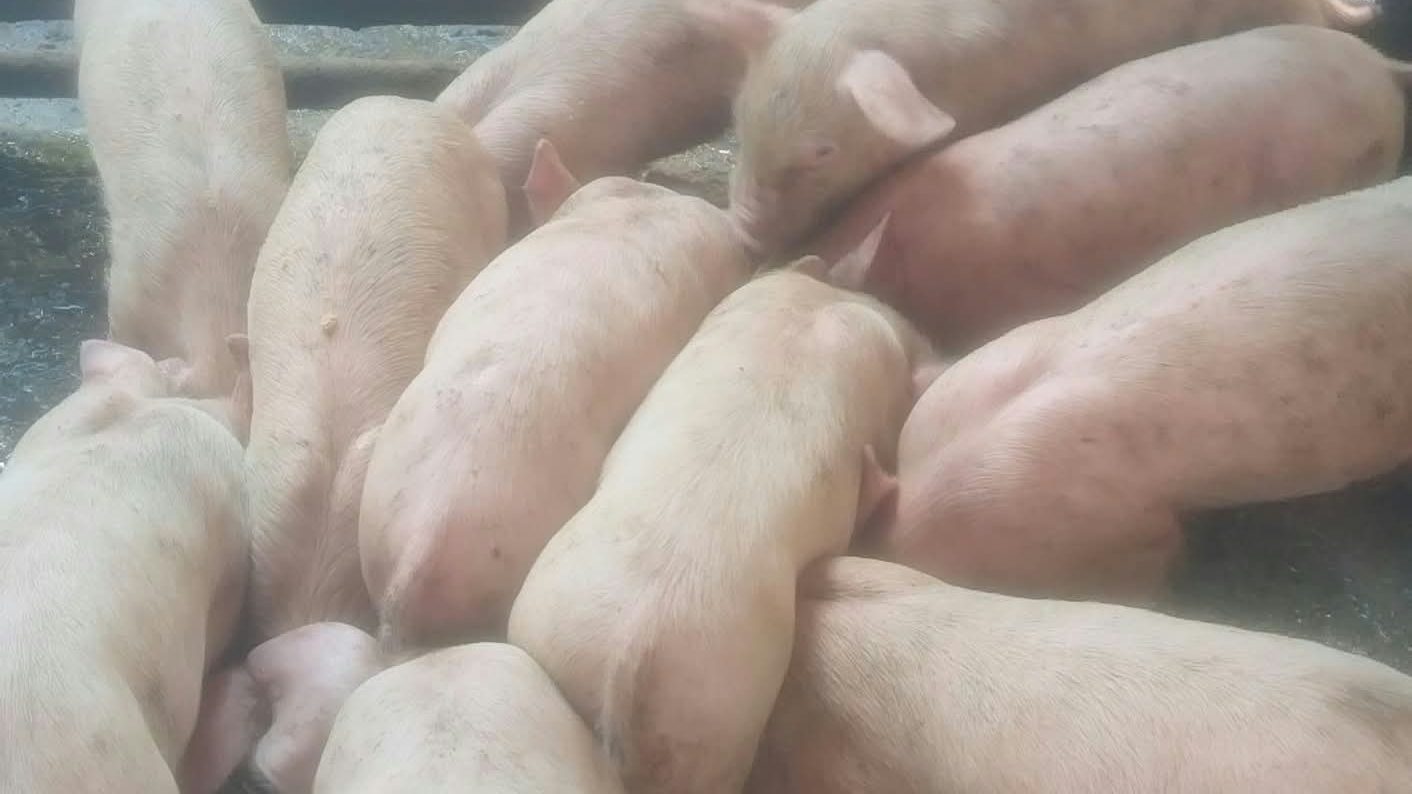
- Relying only on scraps. Kitchen waste is unpredictable. Some days high protein, some days just rice water. Pigs grow erratically and you can't predict your finish date.
- Buying rice bran in bulk to save a few pesos, then storing it too long. In Philippine heat, rice bran goes rancid within 2 weeks. Buy only what you will use in 7–10 days.
- No protein source at all. Corn + rice bran = energy but not enough protein. Pigs get fat slowly instead of building muscle. Growth rates drop hard. If you can't afford fish meal, at least grow kangkong or camote tops.
- Feeding ipil-ipil leaves above 5% of diet. High protein (22–30%) but contains mimosine, which causes hair loss and poor growth if overfed. Keep it below 5%.
- Not transitioning feed gradually. Switching abruptly from one feed type to another causes diarrhea and 3–5 days of lost growth. Mix old and new feeds over 3–4 days.
Honestly, mistake #3 is the one we see most often. Farmers think energy = growth. It doesn't. Protein builds muscle, energy builds fat. You need both.
Seasonal and Regional Tips
Feed costs aren't the same year-round, and they are not the same across the country.
Dry season (March–May): Kangkong and camote tops are harder to find unless you irrigate. This is when your feed costs spike if you depend on free greens. Plan ahead. Plant near a water source or stockpile dried madre de agua leaves.
Wet season (June–November): Greens are abundant. Rice bran is also cheaper right after harvest season (October–January in most of Luzon, varies in Visayas). This is the cheapest time to raise pigs on home-mixed feed.
Coconut regions (Leyte, Bohol, Zamboanga, Bicol): Copra meal is your biggest cost advantage, roughly ₱12–14/kg direct from oil mills. Outside coconut provinces it runs ₱16–18/kg and the savings shrink. Raw copra prices climbed hard through 2025 (Philippine Coconut Authority reporting), so confirm with your local mill rather than treating these as fixed.
Rice-producing areas (Central Luzon, Iloilo, Leyte): Darak is cheap and abundant, especially post-harvest. Build relationships with local rice millers. Most will sell D1 at ₱12–15/kg if you buy regularly.
The feed economics breakdown covers how corn tariffs and import policies drive Philippine feed costs higher than our Southeast Asian neighbors.
Bisaya / Cebuano
Pinakabarato nga paagi sa pagpakaon sa baboy sa Visayas ug Mindanao
Ang balanced formula (grower phase, mga 16% protein):
- Darak (rice bran D1): 40%
- Copra meal: 18%
- Cracked corn: 22%
- Soybean meal o fish meal: 10%
- Commercial concentrate (B-MEG o Vitarich): 5%
- Dahon sa kamote: 5%
Kini nga mix mga ₱21-23/kg, kompara sa ₱35-38/kg sa 100% commercial feeds (Hulyo 2026). Sa usa ka baboy nga mokaon og 225 kg feeds, makatipig ka og ₱2,700-₱3,800. Sa 10 ka baboy, ₱27,000-₱38,000. Pero hinumdomi, ang home-mixed nga baboy mas dugay mahuman og 2-3 ka semana ug mas daghan og kaon, busa ang ubos nga numero ang tinuod nga tipid. Ayaw kuhaa ang soybean meal o fish meal. Kung darak ug copra ug mais ra, mahimong 12-13% protein lang, motambok ang baboy imbis nga motubo, ug mawala ang imong tipid.
Asa mopalit sa mga ingredients:
| Ingredient | Asa makuha | Presyo (Visayas, early 2026) |
|---|---|---|
| Darak D1 | Rice mill sa imong lugar | ₱10-₱15/kg |
| Copra meal | Coconut oil mill, labi na sa Leyte, Bohol, Mindanao | ₱12-₱16/kg |
| Cracked corn | Corn trader o feed store, barato post-harvest (Oct-Dec) | ₱18-₱22/kg |
| Fish meal | Dried fish market o feed store | ₱35-₱45/kg |
| Commercial concentrate | Agri-vet supply, B-MEG/Vitarich/Thunderbird | ₱40-₱50/kg |
| Dahon sa kamote/kangkong | Itanom sa palibot sa tangkal | LIBRE |
Mga tips:
- Ang copra meal kinahanglan ibulad og 8-24 oras sa tubig bago isagol aron mawala ang anti-nutritional factors
- Ang dahon sa kamote pwede ihatag nga hilaw, pero ayaw mosobra sa 15% sa total feed (taas og fiber, mopuno sa tiyan pero gamay og energy)
- Palit og mais post-harvest (Oktubre-Disyembre sa Bukidnon, Isabela), pinakbarato dinhi
- Kung naay coconut oil mill sa duol, ang copra meal mas barato, mga ₱12-₱14/kg. Pero ang presyo sa copra misaka og maayo sa 2025, busa kumpirmaha sa imong lokal nga mill
Importante kaayo: ayaw og feed og kitchen waste nga naay hilaw nga karne. Ang ASF virus makuha gikan sa contaminated nga pagkaon. Kung gusto nimo gamiton ang labay, lut-a gyud una sa minimum 30 minutos sa bukal.
Ang mixed feeding dili para sa tanan. Kinahanglan ka mahibalo sa ratio ug mag-adjust depende sa growth sa imong baboy. Pero kung malearn nimo, mao ni ang pinakadako nga competitive advantage sa backyard farmer kaysa sa commercial operation. Gamita ang Feed Calculator aron ma-estimate ang gasto.
The Bottom Line
You do not need to buy B-MEG or Suregrow by the sack to raise healthy pigs. Most backyard farmers in the Visayas and Mindanao have rice bran, copra meal, and free greens within a few kilometers of their farm. Mix them right, add a small amount of commercial concentrate for vitamins, and your pigs will grow at 80–85% the rate of full-commercial feeding at roughly 60% of the feed cost per kilo.
That trade-off makes sense for most backyard operations. It might add 2–3 weeks to your grow-out, but the peso savings more than cover it. Run the numbers with the Feed Cost Calculator or the Break-Even Calculator using your actual local prices.
The real cost of raising a pig involves more than feed. See the full cost breakdown for housing, medications, and other expenses.
And if you want to know which of these ingredients is about to get dearer rather than which is cheapest today, what actually sets the price of your feed sack tracks all of them against the world price and the peso. Short version: copra meal was the only one in BAI's table that got cheaper last year, and pollard was the worst thing you could have been leaning on.
Sources:
- PIDS (Philippine Institute for Development Studies): feed is about 57% of hog operating cost. The commonly quoted 60–70% comes from a feed-tariff advocacy statement covering poultry and swine together, so 70% is an upper bound, not a hog benchmark.
- FAO Tropical Feeds: Philippine Feedstuffs Table: rice bran ~11% min protein, copra meal ≥22% protein
- PMC: Factors Affecting ASF Spread in the Philippines: swill feeding as primary ASF risk factor
- DA Administrative Order No. 07, Series 2021: biosecurity implementing guidelines
- Agrilife Philippines pig feed listings: Suregrow and VIEPro commercial feed pricing, ₱34.90–38.20/kg as of 12 July 2026
- UPLB-BIOTECH Protein Enriched Copra Meal: natural copra meal ~20% protein, fiber-limited inclusion
- PCAARRD Swine Feed Resources: Trichanthera and local feed ingredient research
- PIDS Discussion Paper 2022-20, benchmarking study: corn price comparisons (PH vs. Thailand/Vietnam)
- pig333: Anti-nutritional Factors in Pig Feed: mimosine toxicity in ipil-ipil, keep below 5–10%