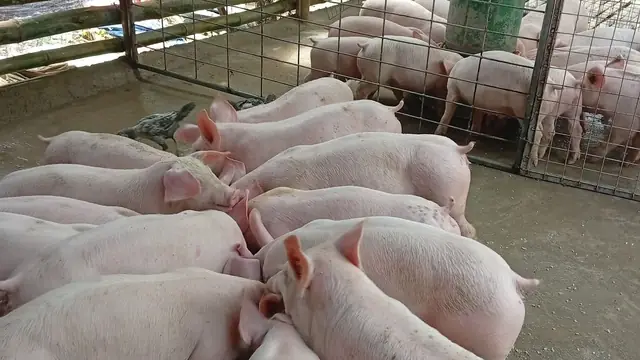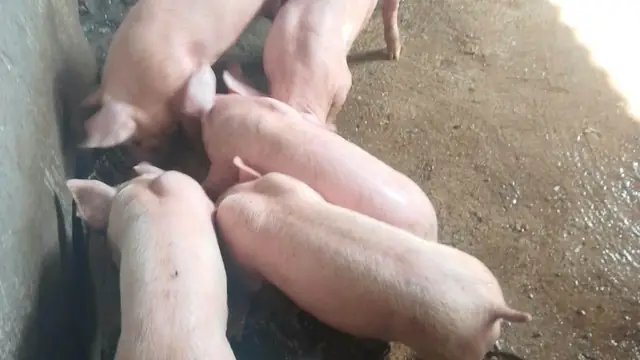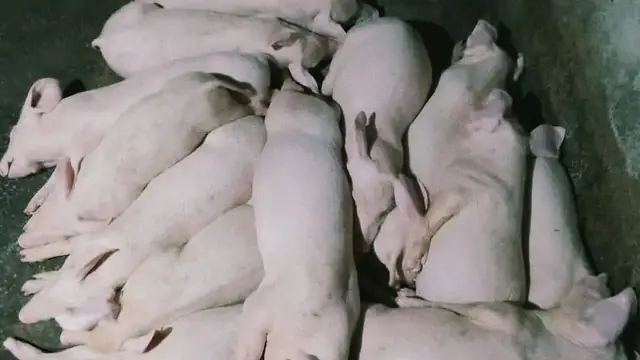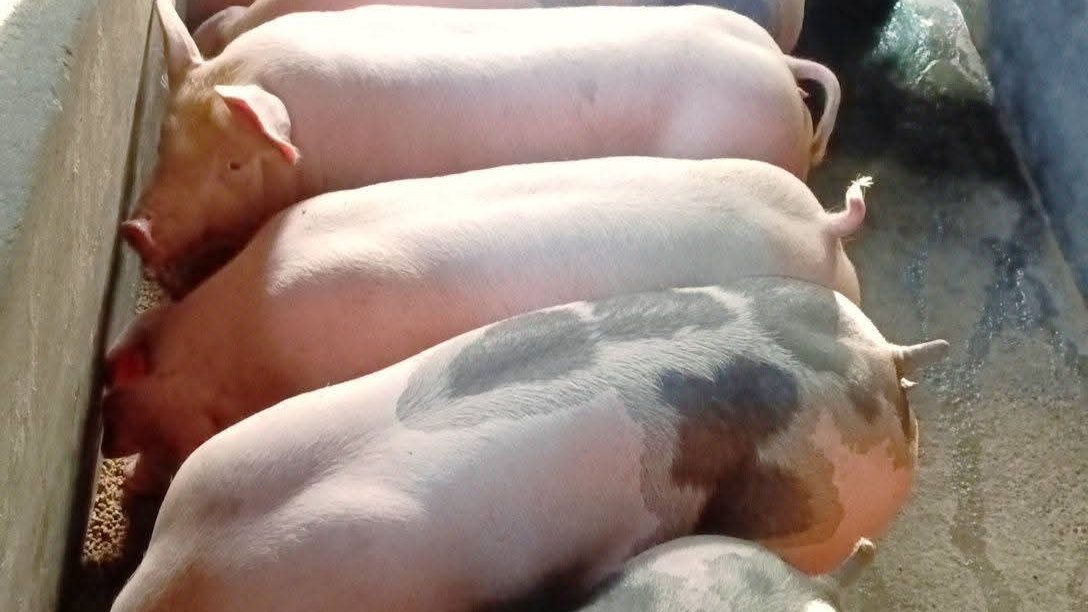
The DSWD SLP Seed Capital Fund grants up to ₱15,000 per program participant as a one-time, no-collateral, no-interest grant. Pool it with 9 other members of your barangay and a piggery group starts on roughly ₱150,000. No repayment if the project runs as documented in the approved business plan.
Most municipalities run at least one SLP piggery group every year. Most of those groups fail before the first cycle finishes, and rarely from bad luck. It comes down to three preventable mistakes.
This is how the program actually works under the 2025 guidelines, what ₱15,000 buys in 2026, and how to build a group that finishes the cycle.
Free Tool
Pig Profit Simulator
Plug in your group size, weaner cost, and feed price. The simulator tells you whether your SLP project covers production cost at current farmgate prices, or whether the group is starting underwater.
What the DSWD SLP Seed Capital Fund Is
The Sustainable Livelihood Program is a DSWD capacity-building program for poor, vulnerable, and marginalized households. The current rules come from DSWD Memorandum Circular No. 03, Series of 2025, the SLP omnibus guidelines effective February 2025. The program runs two tracks:
- Microenterprise Development (MD): capital for self-employed or group enterprises. Piggery sits here.
- Employment Facilitation (EF): skills training and job placement for job-seekers.
Inside the MD track, the funding modalities under MC 03 s. 2025 are the Seed Capital Fund (SCF), the Skills Training Fund, Cash for Building Livelihood Assets (CBLA), and the Employment Assistance Fund. For a piggery group, the SCF is the one that matters. It is a one-time cash grant, not a recurring allowance. Per DSWD field office guidance, the verified ceilings are:
| Component | Amount | Notes |
|---|---|---|
| Seed Capital Fund (SCF) | Up to ₱15,000 per participant | One-time grant, MC 03 s. 2025 |
| Skills Training Fund | Up to ₱15,000 per participant | If skills training is the chosen modality, not stacked on SCF |
| Group project pool (10 members) | About ₱150,000 | Members' SCF pooled into one SLPA enterprise |
| Interest rate | 0% (grant, not loan) | Non-refundable for compliant projects |
| Repayment | None | Project monitored after release |
| Equity required | Pen, labor, or in-kind | Not cash, but the SLPA must show a counterpart |
Older guides quote a ₱10,000-₱20,000 range or a separate "Capacity Building Fund." Under the 2025 guidelines the SCF ceiling is ₱15,000 per participant, and capacity building is delivered as workshops, not a second cash envelope on top of the SCF. Treat any figure above ₱15,000 per head as outdated unless your field office tells you otherwise in writing.
Piggery is one of dozens of approved project types. Sari-sari store, food vending, and small-scale livestock absorb most of the slots nationally, so a well-prepared piggery proposal stands out only if the group brings something the others do not, usually prior raising experience.
Who Actually Qualifies
The official priority order, per the SLP guidelines, is 4Ps households first, then households listed in the Listahanan/NHTS-PR database as poor or near-poor, then other marginalized sectors (out-of-school youth, PWDs, indigenous peoples). Applicants who are not on any list can still qualify by passing the SLP Means Test. For the Microenterprise Development track the participant must be at least 16 years old and a member of a registered Sustainable Livelihood Program Association. Each household may enroll up to two members across different tracks.
That is the rulebook. In practice, the screening favours groups that look ready to run:
Strong applications:
- An active 4Ps household whose designated member has attended at least one prior SLP orientation
- A Listahanan-listed poor or near-poor household assessed by the C/MSWDO
- A 4Ps graduate transitioning out, with a documented livelihood plan and some raising experience
Weak applications:
- A brand-new 4Ps enrollee who has not completed Family Development Sessions
- A household that joined a previous SLP cycle and dropped out
- A barangay with no active Implementing Project Development Officer covering it
The C/MSWDO is the gatekeeper, and the Implementing Project Development Officer (IPDO) is the person who actually preps and endorses your project. If you do not know your municipality's IPDO by name, your paperwork sits in a pile. Go to City Hall and ask for the SLP IPDO by title. Ang relasyon sa IPDO mas bug-at pa sa porma. The conversation matters more than the form.
Across SLP piggery groups documented in Region VII and Region XI, the most consistent predictor of approval is prior raising experience. When two or three members have already finished an independent fattener cycle in their backyards, the IPDO can cite that as proof of project viability, and it tends to shorten the approval timeline. Bring that evidence to the orientation, not after.
What ₱15,000 Per Member Actually Buys
₱15,000 sounds substantial. In piggery economics it barely covers the start. Here is the realistic line-item budget for one participant's ₱15,000 share at July 2026 prices:
| Line item | Cost (PHP) | Notes |
|---|---|---|
| Weaner pigs (4 head at ~₱3,000) | ₱12,000 | LW × Landrace from a registered multiplier |
| Feed, first 30 days (about 2 bags) | ₱3,500 - ₱3,800 | Premium grower runs ₱1,750-₱1,910 per 50 kg bag (12 July 2026) |
| Vet meds (CSF, dewormer, iron) | ₱400 - ₱600 | LGU vet often supplies these subsidised |
| Salt, minerals, basic supplements | ₱200 | Carryover for the whole cycle |
| Cash reserve | ₱0 | Nothing left |
| Total | ₱16,100 - ₱16,600 | Already past the ₱15,000 ceiling |
Look at the total. Four weaners and one month of feed already overshoot the grant by ₱1,100 to ₱1,600, and that is before a single peso goes into the pen. Feed is what breaks it: at ₱34.90-₱38.20/kg a 50 kg bag costs ₱1,750-₱1,910, and four weaners eat through two bags in their first month. A member who wants any cushion at all stocks three pigs, not five.
That budget assumes the pen already exists. If it does not, the entire grant gets eaten by pen construction (roughly ₱25,000-₱45,000 for a 30 m² semi-permanent pen) and the project never starts. This is the single biggest reason SLP piggery projects collapse early.
The realistic solutions, in order of how well they work in practice:
-
The group builds one shared cooperative pen first. Members contribute labor, scavenged materials, and a small cash counterpart (₱2,000-₱5,000 each). The shared pen serves all 10-15 members in rotation or in adjacent stalls. Most successful SLP piggery groups use this model.
-
Each member already has a small backyard pen. Works for groups in long-time pig-raising barangays. Members are essentially scaling existing operations.
-
The LGU contributes pen materials through a separate program. Less common but possible if the C/MSWDO has connections to the Agriculture Office. Worth asking.
For pen construction sizing and material costs, see How to build a backyard piggery.
Real Cycle Math: 10-Member SLP Group
Run the numbers for a typical 10-beneficiary group, pooling ₱150,000 in seed capital, raising 45 head total (4-5 per member) from about 15 kg to 90-92 kg:
| Item | Total for batch | Per member |
|---|---|---|
| Participants | 10 | one per household |
| Pooled seed capital | ₱150,000 | ₱15,000 |
| Weaners (45 head at ~₱3,000) | ₱135,000 | ₱13,500 |
| Feed, whole cycle (225-270 kg/head at ₱36.69/kg) | ₱371,000-₱446,000 | ₱37,000-₱44,600 |
| Vet meds + minerals | ₱6,500 | ₱650 |
| Total cycle cost | ₱512,000-₱587,000 | ₱51,200-₱58,700 |
| Working capital the group must raise | ₱362,000-₱437,000 | ₱36,000-₱44,000 |
Read the last two lines again. The seed capital covers roughly a quarter of the cycle. The 45 weaners alone eat ₱135,000 of the ₱150,000 pool. The ₱15,000 left over buys about a week and a half of feed for the batch. Everything after that is money the group has to find on its own, usually from member contributions or by pre-selling pickup rights to wet-market buyers.
The culprit is feed, and feed has only gone one direction. Premium grower and finisher ran ₱34.90-₱38.20/kg as of 12 July 2026, up ₱1-₱2/kg over the year, and no miller has announced a rollback. Corn is half the formulation and its tariff was not touched. Feed is roughly 57% of what it costs to put a hog on a truck (PIDS), so a group that budgets one bag a month per pig is not budgeting a cycle.
This is where SLP piggery groups die. The grant is gone inside the first month and there is no answer for the remaining 18 weeks.
What works: stock fewer head. Three pigs per member instead of five drops the working capital gap to something a 4Ps household can actually raise, and three finished pigs beat five half-fed ones. The other half of the answer is a buyer: by month 2 the group lines up a viajero or wet-market buyer who agrees to a tentative pickup with a small advance, say ₱2,000-₱5,000 per pig at week 12, against delivery of finished animals at market price. On 45 pigs that advance is ₱90,000-₱225,000, which is a real chunk of the feed bill, though not all of it.
What does not work: assuming the IPDO or DSWD regional office will release a second tranche. There is no second SCF tranche. The members who do not understand this until month 3 are the ones who quietly drop out.
Expected Cycle Returns
Assuming the group survives the working capital gap, here is the per-member return at the end of one cycle (4.5-5 months). Costed at ₱3,000 weaners, feed at ₱36.69/kg, and about ₱150/head in meds and minerals:
| Scenario | Net per member (4 head) | Net per member (5 head) |
|---|---|---|
| Pessimistic (₱150/kg weak local market, 90 kg avg, 2 deaths) | -₱10,600 | -₱9,450 |
| Realistic (₱172.44/kg, 92 kg avg, 1 death) | ₱4,130 | ₱7,680 |
| Optimistic (₱195/kg, 95 kg avg, no losses, fiesta timing) | ₱23,300 | ₱29,100 |
The pessimistic scenario is not rare. It happens when the group bought weaners at market peak (December to February, when restocking demand drives ₱500-₱800 above normal), did not lock in a buyer, and lost a pig to classical swine fever or scours. Two deaths in four and the member finishes the cycle poorer than they started, grant and all.
Two things to be honest about in the realistic column. First, that ₱7,600-₱12,300 is not a return on the ₱15,000 grant. The member also put in ₱36,000-₱44,000 of their own money to feed the pigs to weight, so the profit is earned on ₱51,000-₱59,000 of total inputs, not on ₱15,000. Call it 15-21% over five months on everything that went in, grant and household cash together. Still good, but it is not free money.
Second, the whole margin depends on family labor and a pen nobody charges rent for. Cost of production across the industry is around ₱180/kg (SINAG and NatFed put it there independently), and PSA farmgate averaged ₱176/kg through Q1 2026. The average Philippine hog farm is selling at about what it costs to produce. Backyard groups clear a margin because their labor, their pen, and often their water are not on the books. Start paying for any of that and the profit thins out fast. PSA runs a backyard-only farmgate series alongside the national one, and that is the one an SLP group is actually paid: backyard farmgate. Download it, take the last twelve rows, and use the worst of them in the project proposal rather than the average.
For the full profit math on small-batch fattening, see Pig farming profit on 10 pigs and Cost to raise a pig in the Philippines.
Free Tool
Break-Even Price Calculator
Find the minimum farmgate price your SLP project needs to break even. If the market is below that number when your pigs hit market weight, you hold or sell to the native market. You do not sell to a viajero at a loss.
Three Failure Patterns to Eliminate Before the Cycle Starts
Most SLP piggery failures cluster around three patterns. Each one is preventable during the project preparation workshop, but only if the group raises it first. The IPDO will not.
1. Groups under 7 members fail more often than groups of 10-12
Small groups have no slack. One member drops out (sick, family emergency, found employment elsewhere) and the remaining 4-6 members must absorb the working capital gap. The math breaks. Resentment builds. Two more members quit. The pen sits half-empty.
A 10-12 member group can lose 1-2 members and continue. The remaining members redistribute pigs and feed costs without the group becoming non-viable.
What to do: insist on a 10+ member group during the application phase, even if the SLP officer is willing to approve a smaller one. The officer wants approvals; you want a finishing cycle.
2. No buyer locked in by month 3
The single most reliable cause of SLP piggery distress sales is reaching month 4 with no firm pickup commitment. The group sells to whichever viajero shows up first, usually at ₱150-₱165/kg when the market is ₱180-₱190/kg (SINAG industry average, May 2026). On 40 pigs at 92 kg, that ₱20/kg gap is ₱73,600 lost that should have gone to members. The defence against that is knowing the going rate in your own province before the viajero arrives, and PSA's province-level backyard table is free. In June 2026 it spanned roughly ₱120 to ₱290 a kilo across the country, so the national figure is close to useless as a negotiating anchor. Note that the DA's ₱210/kg minimum farmgate price, set in November 2025, is a target, not a floor. No month of the national series has hit it, and outside the Cordillera no region has either. Nobody is going to enforce it on your behalf, so do not build the business plan around it.
What to do: by month 2, the project chairperson visits 3 viajeros and 1 lechon operator. Get the verbal commitment in writing: ₱/kg, weight band, pickup date. Repeat the visit in month 3. No buyer by month 4 means no project.
Timing the sale to a fiesta or Christmas demand window also lifts the price the group can hold out for, see The best month to sell a pig in the Philippines.
3. No biosecurity reserve
A ₱15,000 grant assumes zero pig losses. In Philippine conditions that assumption is dangerous. Classical swine fever is still present in many provinces, African swine fever keeps flaring, and even routine scours can kill 1-2 weaners in an unprotected pen. ASF is back in the Visayas as of this writing: Negros Occidental confirmed cases on 23 June 2026 with about 1,900 hog deaths province-wide, Iloilo logged its first case in four years on 29 June, Bacolod and Negros Oriental followed on 1 July, Capiz shut its border to pork on 24 June, and Cebu shut out Negros hogs on 7 July. Groups in those provinces should not be stocking right now. Check your province's current status with the Bureau of Animal Industry before you buy weaners, because the classification changes as outbreaks occur.
The group should set aside about ₱500 per member specifically for emergency vet response: an antibiotic round, an extra dewormer, a quarantine pen if one pig shows symptoms. Vaccination and treatment protocols are a vet decision, so loop in your LGU or municipal vet early. This reserve is the cheapest insurance available.
PCIC livestock insurance is also available, with premiums commonly in the ₱150-₱400/head range depending on coverage and the agency's current schedule. If the group has any operating reserve left, this is where it goes. See ASF recovery-era pig farming for the biosecurity protocols that come first.
How the Application Process Actually Runs
The steps are not complicated, but the waiting is real. Here is the realistic timeline:
| Phase | Duration | What happens |
|---|---|---|
| Inquiry + initial screening | 1-2 weeks | Visit C/MSWDO, attend orientation with the IPDO |
| Group formation | 2-4 weeks | Form an SLPA of 8-15 members from the same barangay |
| Capacity building workshops | 1-2 months | Financial literacy, project planning, bookkeeping |
| Business plan drafting | 2-4 weeks | Group plus IPDO prepare the simplified business plan |
| Regional office review | 4-6 weeks | DSWD Regional Project Management Office approval |
| Bank account opening | 1-2 weeks | SLPA account, LandBank or DBP |
| Seed capital release | 1-4 weeks | Direct cash release after account verification |
| Project implementation | 4-5 months | First cycle to finish |
| Monitoring period | Ongoing | DSWD monitors the enterprise after release |
Bring a government ID, a barangay Certificate of Residency, and the LSWDO endorsement. A group enterprise also needs its SLPA registration (DOLE, SEC, or CDA, whichever applies). Plan for 4-8 months from first inquiry to actual release, with the longer end common in high-caseload field offices. The capacity building phase is mandatory and there is no shortcut. Skip the workshops and you lose your slot.
Compared to Other Government Capital Options
For families weighing financing options, the choices in 2026:
| Program | Amount | Cost | Best fit |
|---|---|---|---|
| DSWD SLP Seed Capital Fund | Up to ₱15K/participant, pooled | 0%, grant | 4Ps and Listahanan-listed households, group projects |
| OWWA EDLP | ₱100K-₱2M (check current terms) | low single-digit % PA | OFW families, individual or group |
| DA-ACPC Agri-Negosyo | up to ₱300K individual (verify) | 2-6% PA range | Active farmers with RSBSA, prior cycles |
| LandBank swine financing | ₱200K and up | bank rate, collateral | Commercial-scale operations |
| PCIC livestock insurance | n/a (insurance) | ~₱150-₱400/head | Risk management on top of any capital source |
For families currently in 4Ps or listed in Listahanan, SLP is the right place to start. It is the only zero-interest, no-collateral option here, and the loan rates above are indicative ranges that change yearly, so confirm current terms with each agency. After one or two successful SLP cycles, the group or its members usually move up to ACPC or LandBank for scale-up capital.
For the broader picture of how capital scales with farm size, see Magkano puhunan sa baboyan: capital tiers.
Bisaya / Cebuano
Giya sa DSWD SLP Seed Capital para sa Baboyan
Ang DSWD SLP Seed Capital Fund mao ang pinakamabuhi nga paagi sa pagsugod og baboyan kung ikaw 4Ps o nalista sa Listahanan nga poor o near-poor. Hangtod ₱15,000 ang grant matag miyembro, kausa lang, base sa DSWD Memorandum Circular No. 03, Series of 2025. Walay interes, walay collateral, dili kinahanglan bayran kung sundon ang aprubadong business plan.
Pero importante kining masabtan: ang grant dili igo sa tibuok cycle. ₱15,000 maka-palit lang og 4 ka weaner ug mga usa ka buwan nga feed. Mahal na kaayo ang feed karon, ₱1,750 hangtod ₱1,910 matag sako (Hulyo 2026). Ang ubang 4 ka buwan, kinahanglan kamo og ₱36,000 hangtod ₱44,000 nga dugang working capital matag miyembro. Kung wala ka magplano para niini sa workshop phase, mamatay ang project sa ika-2 nga buwan. Kung gamay ra ang inyong kwarta, pag-stock og 3 ka baboy lang matag miyembro, ayaw og 5.
Tulo ka rason nganong mapakyas ang SLP piggery group:
-
Gamay ra ang grupo (ubos sa 7 ka miyembro). Kung usa mahawa, dili na kaya sa nahabilin. Pangayoa sa IPDO nga 10–12 ka miyembro gyud, dili kulang.
-
Walay buyer hangtod ika-4 nga buwan. Mobaligya kamo sa unang viajero nga moabot, kasagaran ₱20/kg ubos sa tinuod nga merkado. Sa 40 ka baboy, ₱73,600 ang mawala. Pagpangita og viajero o lechon buyer sa ika-2 hangtod ika-3 nga buwan. Hangyo og sinulat nga kasabotan.
-
Walay reserba para sa sakit sa baboy. Ang kolera sa baboy ug scours kasagaran sa Pilipinas. Magbutang og mga ₱500 matag miyembro para sa emergency vet bills. Tan-awa usab ang PCIC insurance nga mga ₱150 hangtod ₱400 matag baboy para sa ASF coverage.
Ang nag-trabaho nga set-up:
- 10–15 ka miyembro nga gikan sa parehong barangay
- Usa ka shared pen nga gitukod sa grupo isip ilang counterpart equity
- Buyer nga naa nay verbal commitment sa wala pa moabot ang ika-4 nga buwan
- Reserba para sa emergency
- Usa ka treasurer nga nagtipig sa lista sa tanan nga gasto, walay sayop
Kung sundon kining mga butanga ug ₱172.44/kg ang opisyal nga farmgate (PSA, Q2 2026), ang net matag miyembro mga ₱4,100 hangtod ₱7,700 sulod sa 5 ka buwan. Pero hinumdomi, dako sad ang inyong gigasto gikan sa kaugalingon ninyong bulsa, dili lang ang ₱15,000 nga grant. Ug kung duha ka baboy ang mamatay o mahulog sa ₱175/kg ang presyo, malugi gyud ang cycle. Ang DA nga ₱210/kg nga minimum farmgate price, target lang na, wala pa gyud na maabot bisan asa nga rehiyon.
Adto sa imong C/MSWDO. Pangitaa ang IPDO sa SLP. Ayaw paghulat kay daghan ang mag-aplay matag tuig, gamay lang ang gi-aprubahan.
Run Your Own Numbers
Every group is different in size, location, weaner source, and market access. Use the calculators to verify your project economics before you finalize the business plan:
- Profit Simulator: full batch economics with your group's specific inputs
- Break-Even Calculator: minimum farmgate price your project needs to clear
- Feed Calculator: total feed needed across the cycle (the ₱362K-₱437K working capital gap starts here)
- Setup Planner: match your group's size and skill to a viable model
One last thing the workshops never say out loud: the grant is not the project. It is a deposit on the project. The group that plans the other ₱36,000-₱44,000 per member from day one, or stocks three pigs instead of five so the gap stays payable, is the group still raising pigs at month 5. Build the buyer list and the disease reserve before the cash lands, not after.
Related Articles
- How much capital do you need for a piggery?: full capital tier breakdown ₱20K-₱500K+
- Cost to raise a pig in the Philippines: itemised cost per head
- Pig farming profit on 10 pigs: full income math for a small batch
- The best month to sell a pig in the Philippines: timing the sale for the fiesta and Christmas price lift
- OWWA EDLP loan for OFW piggery: alternative loan if your group has OFW members
- ASF recovery-era pig farming: biosecurity reserve essentials
- Money & Profitability topic cluster: every money-side guide on Baboy PH
Sources
- DSWD Sustainable Livelihood Program (official portal): program overview and modalities
- DSWD Field Office I, Sustainable Livelihood Program: verified SCF ceiling (up to ₱15,000 per participant), four modalities, MD/EF tracks, SLPA eligibility
- DSWD Field Office CAR, Sustainable Livelihood Program: four funding modalities (SCF, CBLA, Skills Training, Employment Assistance)
- DSWD Memorandum Circular No. 03, Series of 2025 (DSWD Issuances): SLP omnibus guidelines, Punla to Ani stage framework, effective February 2025
- PIA: DSWD-SLP turns over ₱19.6M seed capital to 76 groups in Northern Mindanao (2025): 2025 disbursement and group-project structure
- Bureau of Animal Industry: current ASF zone classification and swine disease advisories
- PSA OpenSTAT, swine farmgate prices: the official monthly liveweight series used for the price scenarios above
Feed prices (₱34.90-₱38.20/kg premium grower, ₱1,750-₱1,910 per 50 kg bag) are as of 12 July 2026. Farmgate figures use the SINAG industry average of ₱180-₱190/kg (May 2026) and the PSA monthly series; prices vary by region, and Cordillera and Eastern Visayas were paying well above the national average in March 2026 while SOCCSKSARGEN and Negros were well below it. Program amounts and eligibility follow DSWD MC No. 03, s. 2025; confirm current ceilings with your C/MSWDO before applying.