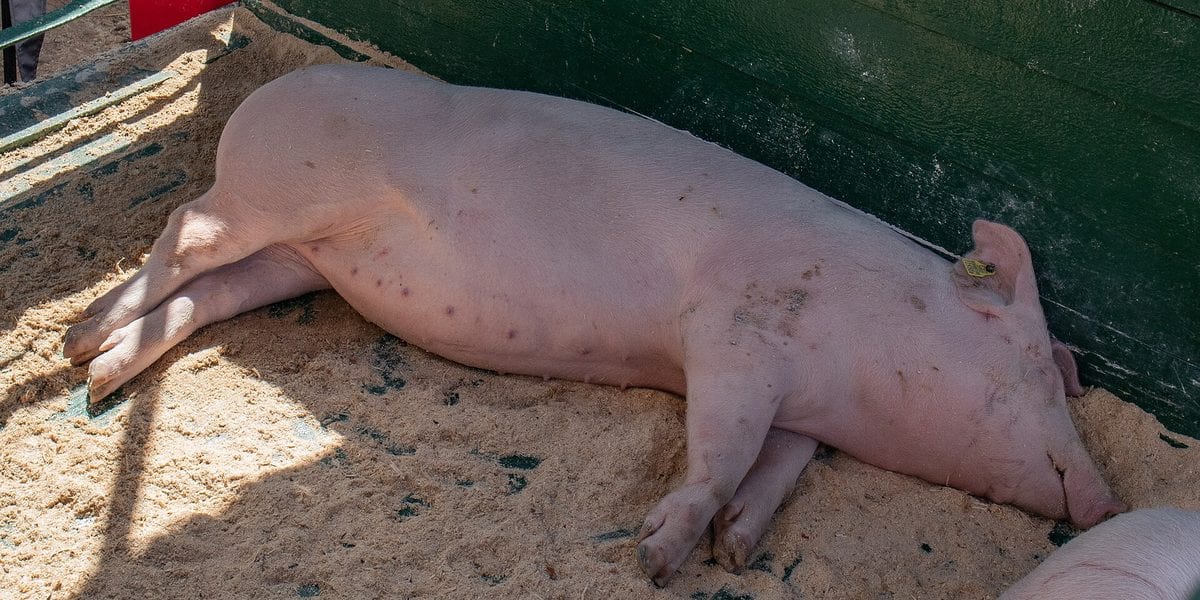
A commercial-cross pig weaned at 8 kg reaches the 90-100 kg market sweet spot in about 5-6 months (150-180 days) on decent backyard feeding. Native pigs take 6-8 months to hit just 50-60 kg. That single difference, two months and 40 kilos, decides whether a batch makes money.
One of the most common questions from new farmers: "Kanus-a na pwede ibaligya ang baboy?" (When can I sell the pig?) The answer depends on three things, in this order: the breed, how you feed, and what size your buyer actually wants. Get the timing wrong in either direction and it costs you. Sell too early and you leave feed-efficient growth on the table. Sell too late and you are paying premium feed to add backfat nobody pays extra for.
"Tambok na kaayo, panahon na ibaligya." (Already very fat, time to sell.) That instinct is usually right, but the numbers below tell you exactly when.
Growth Timelines by Breed Type
| Type | Starting Weight | Target Market Weight | Typical Grow-Out | Average Daily Gain |
|---|---|---|---|---|
| Native pig | 5–8 kg (weaned) | 50–60 kg | 6–8 months | 0.15–0.25 kg/day |
| Native × commercial cross | 8–12 kg | 70–80 kg | 5–6 months | 0.35–0.50 kg/day |
| Commercial (backyard fed) | 10–15 kg | 80–100 kg | 5–6 months | 0.55–0.75 kg/day |
| Commercial (intensive) | 10–15 kg | 90–110 kg | 4.5–5.5 months | 0.70–0.85 kg/day |
These timelines assume adequate feeding and basic health management (deworming, clean water). Pigs on kitchen scraps alone will take much longer.
What Buyers Actually Want
Standard slaughter pig
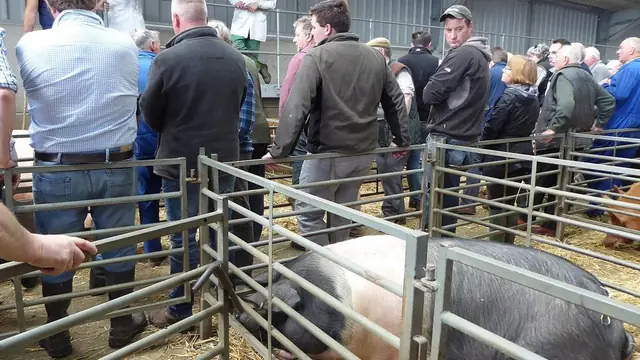
Most traders (viajeros) and wet market butchers want pigs in the 80–100 kg liveweight range. At this weight, the dressing percentage (meat yield after slaughter) is typically 72–78%, giving enough volume of saleable cuts.
Pigs lighter than 70 kg are generally sold at a discount, the meat yield is too low for butchers to profit. Pigs heavier than 110 kg get discounted too because of excess backfat.
Lechon size
There are two distinct lechon markets, and people mix them up constantly:
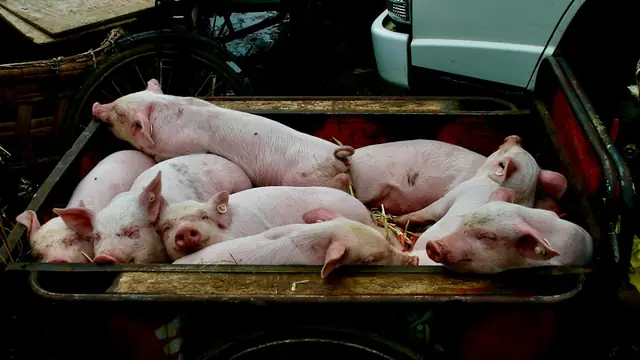
- Lechon de leche (suckling pig): 5–12 kg liveweight, roughly 3–6 weeks old. Sold whole for intimate gatherings and as a premium item. Native or native-cross piglets are preferred for the skin and flavor.
- Standard party lechon: the family-fiesta whole roast. Commercial-cross pigs are taken at 25–45 kg liveweight; native lechon runs heavier at 40–60 kg because the meat-to-bone ratio improves with age and buyers want the native flavor that develops.
Both command a premium price per kilo over slaughter pigs because demand spikes hard around fiestas, weddings, graduations, and December.
Native pig premium
Native pigs sell at a premium per kilo for lechon because of their distinctive flavor and skin. Even at 50–60 kg, smaller than commercial market weight, a native pig can earn more per kilo than a commercial pig sold for meat. The trade-off is slow growth: you wait 6–8 months for that 50–60 kg, versus 5–6 months for a commercial cross at 90–100 kg. Run both through the Profit Simulator before assuming the premium wins, the slower turn often eats it.
How to Know When Your Pig Is Ready
Experienced farmers use visual and physical cues:
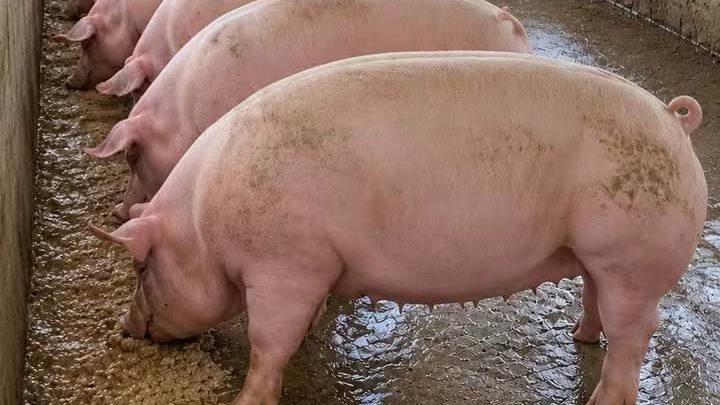
- Back is broad and flat not bony or ridged along the spine
- Belly hangs low and is full "puno na ang lawas" (the body is already full)
- Moves with a heavy, slow gait not running around energetically
- Skin is tight and smooth not loose and wrinkled
Visual cues get you close, but weight gain stalling is the real signal: if the pig is gaining under 0.4 kg/day on the same feed it was growing fast on, it has hit the point of diminishing returns. Sell.
The most reliable method is weighing. If you do not have a scale, use a heart-girth tape (sold at veterinary supply stores for around ₱60-₱150), measure just behind the front legs, and read off the weight. As a rough anchor: a girth of about 105-110 cm corresponds to roughly 95 kg liveweight on a commercial cross. The full method, including the girth-to-weight formula, is in how to estimate pig weight without a scale.
Timing Your Sale for Best Price
Pig prices fluctuate seasonally in the Philippines:
- Highest prices: November–January (Christmas, New Year, Sinulog, fiesta season)
- Also high: May (graduation celebrations, town fiestas)
- Lowest prices: March–April (hot season, lower demand)
If you are raising a batch for profit, buy your weaners in July–August to sell at market weight in December–January when prices peak. This is one of the simplest strategies for improving your return.
Free Tool
Pig Profit Simulator
See how a December sale at peak price compares to a March sale at the seasonal low, with your actual feed cost and target weight.
Sell at 75 kg or Hold to 95 kg? The Math
This is the decision that actually moves your profit, and most farmers guess instead of computing it. Start with a price you will actually be offered, not a hopeful one. As of May 2026, SINAG puts the industry-average farmgate at ₱180-₱190/kg and eFeedLink trade quotes run ₱183-₱193. Call it ₱185, and remember it is the trade's number. PSA's official Q2 2026 average is ₱172.44.
Ignore the ₱210/kg "minimum farmgate price" the DA announced in November 2025. It is a target on paper, not a floor you can bank on. No month of the national series, and no region outside the Cordillera, has actually reached it, and nobody is enforcing it. Budget on the trade's ₱185, and treat anything above that as a good week.
The other half of the picture, and the part that hurts: cost of production sits at roughly ₱180/kg. SINAG and NatFed land there independently. So at PSA's official ₱172.44 the average farm is selling below its own cost. The sell-weight decision matters far more now than it did two years ago because the margin has nowhere to hide.
| Sell weight | Gross at ₱185/kg (SINAG trade read) | Extra days to get there | Feed to add the extra weight | Net effect vs 75 kg |
|---|---|---|---|---|
| 75 kg | ₱13,875 | — | — | baseline |
| 85 kg | ₱15,725 | ~18–22 days | ~35 kg feed ≈ ₱1,300 | +₱550 |
| 95 kg | ₱17,575 | ~38–45 days | ~75 kg feed ≈ ₱2,750 | +₱950 |
| 110 kg | ₱19,030 after a ₱12/kg fat discount | ~70–80 days | ~150 kg feed ≈ ₱5,500 | −₱350, an outright loss |
The pattern: growing from 75 to 95 kg still pays, because feed conversion is decent through the grower-finisher phase and the extra kilos sell at full price. But look at the size of that win. Under ₱1,000 a head at 2026 prices, and that is before one vet visit or one dead pig wipes it out. Past roughly 100 kg it flips outright. Feed conversion ratio worsens past 3.5:1, every extra kilo costs more feed than the one before, and buyers start docking the price for excess backfat. Push a pig to 110 kg, take a ₱12/kg fat discount, and you have burned ₱5,500 in feed to end up behind where you were at 75 kg.
So the working rule: for commercial crosses, sell in the 90-100 kg window. Below 75 kg you are giving away cheap growth; above 110 kg you are buying expensive backfat. Native pigs are the exception, they top out near 60 kg and feeding them past that is pure waste.
What an extra month of holding really costs
A finished pig eats roughly 2.5-3 kg of feed a day. Premium grower-finisher runs ₱34.90-₱38.20/kg as of July 2026 (₱1,747-₱1,910 a 50 kg bag), so that is ₱2,600-₱3,400 a month in feed alone, before water, meds, and the pen space you could have given the next batch. If that month only adds 12-15 kg of low-efficiency weight, you are spending ₱2,600 or more to gross about ₱2,200-₱2,800 at the trade's ₱185/kg, then losing more to the fat discount. Holding a pig "just a little longer" hoping for a better price is the most common quiet money-leak in backyard farming. For the full cost picture per pig, see how much it costs to raise a pig.
Free Tool
Break-Even Price Calculator
Enter your feed cost and weaner price to find the exact liveweight where holding the pig longer stops paying.
What Slows Down Your Pig
If your pig is not reaching market weight in the expected timeframe, ranked by how much time each one quietly steals:
- Bad weaner genetics (the big one). This is the single most common cause and almost nobody admits it. A cheap roadside weaner from an unknown sow can run 40-60 days behind a properly bred commercial cross to the same weight, on the exact same feed. You cannot deworm or feed your way out of bad genetics. Spending ₱500 less on the weaner can cost you two months of feed. See the best age to buy piglets for what to check before you pay.
- Parasites. Internal worms compete with the pig for nutrition, so feed conversion and weight gain both slip. Deworm every 3–4 months. A wormy pig eats your feed and grows the worms, not the meat.
- Insufficient or low-protein feed. A pig that does not eat 3–4% of its body weight daily grows slowly. Worse is enough feed but too little protein in the grower stage, the pig stays alive but barely gains. Cheap "all-corn" or scraps-heavy rations are the usual culprit.
- Heat stress. Above 30°C, feed intake drops 20-30%. In the April-May hot months a pig can plateau for weeks. Shade, drinking water, and a wallow or wet floor recover most of it.
- Chronic disease. Respiratory infections or subclinical scours don't always kill, they just rob nutrient absorption for the whole grow-out. A pig that "never looks sick but never grows" usually has one of these.
Stack two or three of these and a 5-month pig becomes an 8-month pig eating the whole time. That is how a profitable batch turns into a loss without any single dramatic event.
Bisaya / Cebuano
Para sa mga mag-uuma
Kanus-a pwede ibaligya ang baboy?
- Native nga baboy: 6–8 ka bulan para maabot ang 50–60 kg
- Crossbreed: 5–6 ka bulan para maabot ang 70–80 kg
- Commercial: 5–6 ka bulan para maabot ang 80–100 kg
Ang labing maayo nga panahon sa pagbaligya: Nobyembre hangtod Enero pinakataas ang presyo tungod sa Pasko ug mga pista.
Kung gusto nimo makaginansya, palit og baktin sa Hulyo–Agosto para ibaligya sa Disyembre.
Learn More
- Best age to buy piglets for fattening, where the grow-out clock really starts
- How to estimate pig weight without a scale, the heart-girth tape method
- Best month to sell a pig, timing the December and fiesta peaks
- Pig farming profit: can you earn from 10 pigs?, complete economics
- Liveweight pig prices by region, current price ranges
- Sell-Readiness Wizard, answer a few questions and get a sell-or-wait verdict
- Break-even Calculator, find your break-even price
Sources: ThePigSite Philippine pig breed profiles, Lanada et al. 2005 (Philippine smallholder pig growth data), Vega 2012 (performance of Philippine commercial piggery farms), PSA quarterly livestock price surveys, FAO Farmer's Handbook on Pig Production.