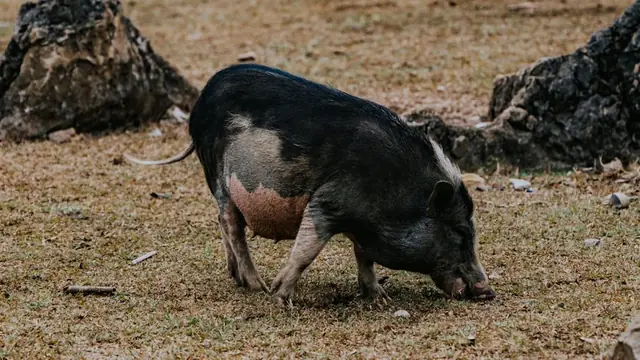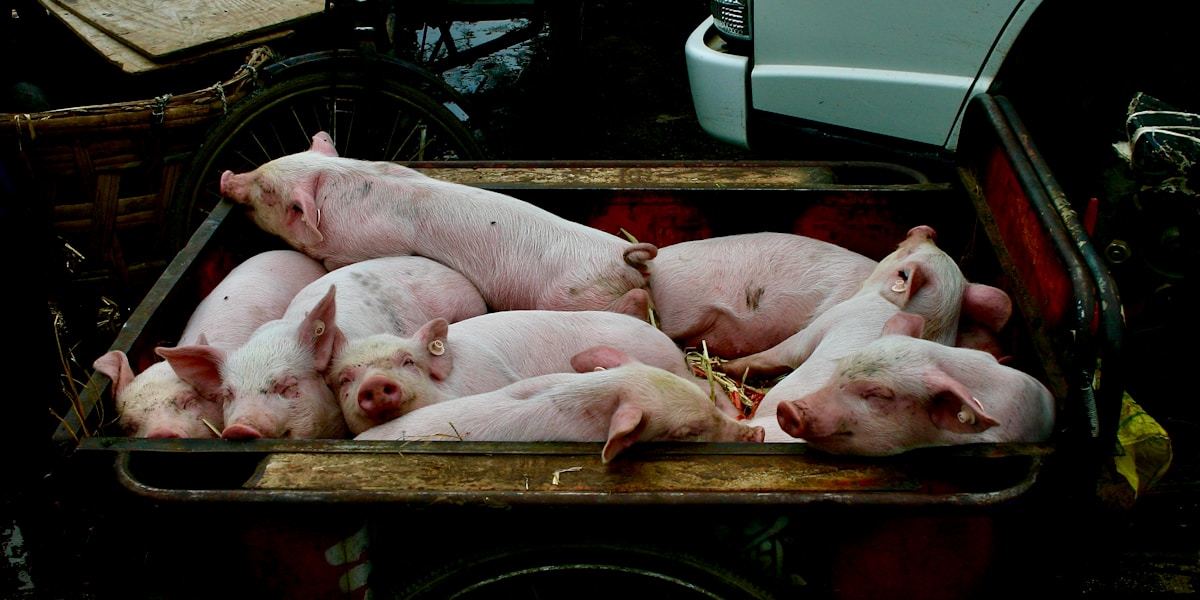
Your pig is at 70 kg and you want it at market weight, 90 to 100 kg, as quickly and efficiently as possible. Farmgate liveweight was running about P180–190/kg as of May 2026 on SINAG's trade read, while PSA put the national average at P172.44/kg for Q2 2026, so those last 20–30 kg are worth roughly P3,450–5,700 depending on which number your buyer is using. Know what you are up against first, though: cost of production is around P180/kg by both SINAG and NatFed reckoning. The average farm is selling at close to its own cost, which means the finishing stretch is exactly where a thin margin turns positive or negative. That is why feed management in the last 30 days matters more than anything else you do.
"Tamboka na, ibaligya na." (It is fat enough, sell it now.)
But there is a right way and a wrong way to do this. Here is what works, and what to avoid.
The Last 30 Days: What to Do
During the final finishing phase, the goal is maximum daily gain at the best feed cost. A well-managed finishing pig should gain 0.8–0.9 kg per day in this period.
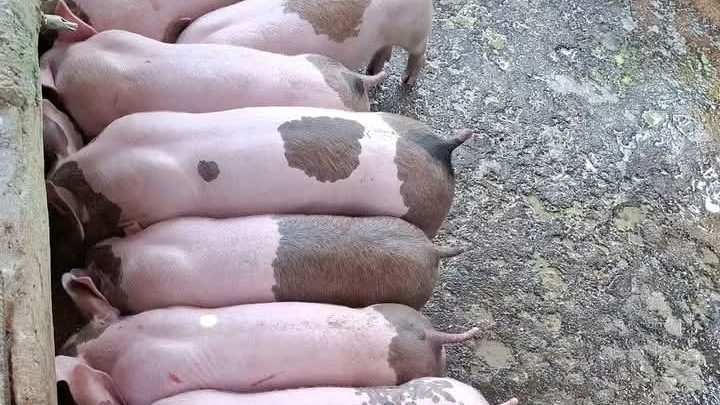
Increase energy density
Energy, not protein, drives weight gain in the finishing phase. Shift the ration toward more energy:
- Add coconut oil or cooking oil. 200–300 mL per pig per day mixed into feed. At current prices (P140–180/liter for coconut oil), that is about P28–54/day per pig. Still one of the cheapest ways to boost calorie density. Palm oil at P90–100/liter works too if coco oil prices are too high in your area.
- Increase corn in the ration. Corn has more energy than rice bran. Shift from 25% to 35% corn in the mix.
- Add molasses. 0.5 kg per pig per day, around P15–20. Improves palatability (pigs eat more eagerly) and provides quick energy. Available at most agricultural supply stores in Visayas and Mindanao.
- Cooked sweet potato (camote). Cheap energy, practically free if you grow your own. Up to 30% of the ration, mashed and mixed with concentrate.
Reduce protein slightly
Finishing pigs (60–100 kg) need only 13–14% crude protein, less than growers (15–16%). Excess protein at this stage gets wasted and converted to fat inefficiently. If you are using B-MEG or Vitarich finisher feeds, the protein is already dialed in. If mixing your own feed, reduce fish meal or soybean meal slightly and replace with energy sources.
Feed for maximum intake
- Feed 2 times per day in measured portions, morning and late afternoon
- Ensure 24-hour water access. Pigs that drink more, eat more.
- Keep the pen cool and comfortable. Heat stress suppresses appetite more than anything else.
What About Growth Promotants?
Ractopamine is BANNED in the Philippines under Joint DOH-DA Administrative Order No. 2013-0026. It is illegal to use, and residue testing at abattoirs can result in carcass condemnation and legal action.
"Dili suyopon og droga." (Do not inject drugs.) Stick to legal nutritional strategies.
Legal additives that can help:
- Coconut oil / cooking oil. Energy booster, legal, cheap
- Molasses. Energy + palatability
- Acidifiers (citric acid, vinegar). 0.5–1% in feed, improves gut health and feed efficiency
- Commercial probiotics. May improve feed conversion slightly
The Backyard Reality Gap
The 0.8-0.9 kg/day target is what published guides quote, and what well-managed semi-commercial pens deliver under controlled conditions. Most Philippine backyard finishers come in 30-50% lower than that, especially in hot months.
Realistic backyard ADG for the last 30 days:
| Conditions | Realistic daily gain |
|---|---|
| Backyard, hot season, basic ration | 0.45-0.6 kg/day |
| Backyard, cool season, improved ration with oil | 0.65-0.8 kg/day |
| Semi-commercial, climate-controlled, full finisher feed | 0.85-1.0 kg/day |
| Native or 50% native cross (any conditions) | 0.3-0.5 kg/day |
In my experience, the biggest gap-closer is not the ration. It's the heat. A finishing pig at 35°C+ stops eating during the day and only catches up at night. Cooling the pen with shade cloth (₱150/m²), wet-down twice a day, and a small overhead fan does more for ADG in May-September than any feed additive.
Timing Your Sale
Weight is one factor. Market timing is the other.
- Sell at 90–100 kg liveweight. This is the sweet spot for most traders and wet market buyers. At the P180–190/kg that was trading in May 2026, a 95 kg pig brings P17,100–18,050. Do not budget on the DA's P210/kg minimum farmgate price, set November 2025. It has never been reached in any month of the national series, and only in the Cordillera regionally. It is a target nobody enforces, not a floor anyone pays you.
- Do not hold past 100–110 kg. Feed efficiency drops sharply above 100 kg. The pig converts less feed to muscle and more to backfat. Each additional kilo above 100 kg costs you more in feed than it earns in sale price.
- Reduce feed slightly 1–2 days before sale. This reduces "gut fill" (undigested feed in the gut). Buyers who weigh pigs adjust price downward for obviously bloated animals.
- Do not stress the pig before weighing. Transport, mixing with unfamiliar pigs, and rough handling cause 3–5% weight shrinkage from dehydration and stress.
Unsay Isulti sa mga Mag-uuma
"Patambokun, pero ayaw palabihi." (Fatten it, but do not go overboard.)
Filipino traders know the difference between a well-finished pig and an overfed one. Excess backfat gets penalized. Lean meat (kasim, pigue, lomo) is what the market pays for. Your goal is maximum weight at optimal body composition, not just maximum fatness.
"Ang baboy nga 90 kilos, sakto na. Kung 110, sayang ang feeds." (A pig at 90 kg is just right. At 110, the feed is wasted.)
A Simple 30-Day Finishing Plan
| Week | Daily Feed | Key Addition | Target Gain |
|---|---|---|---|
| Week 1 | 3.0–3.5 kg | Start adding 200 mL oil/day | 0.8 kg/day |
| Week 2 | 3.5 kg | Add 0.5 kg molasses/day | 0.85 kg/day |
| Week 3 | 3.5–3.8 kg | Maintain oil + molasses | 0.9 kg/day |
| Week 4 | 3.5 kg (reduce last 2 days) | Remove molasses last 2 days | 0.9 kg/day |
Expected result: approximately 25 kg gained in 30 days (from ~70 kg to ~95 kg).
Free Tool
Quick Feed Estimate
Plug in your current pig weight and target market weight to see how many sacks of finishing feed you actually need for the last stretch. No guessing, no overbuying.
Where to Sell: Buyer Channels and Pricing
The same 95 kg pig can earn ₱1,500-3,000 different depending on who you sell it to. Knowing the channels matters as much as the finishing.
| Buyer channel | Typical price (May 2026) | Notes |
|---|---|---|
| Backyard trader (viajero, on-farm pickup) | ₱165-180/kg liveweight | Convenient, but lowest price; weight discount common |
| Wet market trader (you deliver) | ₱180-195/kg liveweight | Better margin if you have transport |
| Direct to lechon supplier | ₱200-240/kg liveweight (boars 50-60 kg) | Premium for specific weight/breed; book ahead |
| Slaughterhouse direct (carcass-grade) | ₱250-290/kg dressed | Best for 100+ kg lean carcasses; needs registration |
| LGU-organized pig market days | ₱180-195/kg liveweight | Good price discovery; check your MAO schedule |
Where you farm moves the number as much as who you sell to, and not in the direction most guides claim. In PSA's June 2026 regional farmgate data the top prices were in Cordillera (₱224.10) and Central Visayas (₱208.73). Central Luzon, supposedly the premium hog belt, sat sixth at ₱181.05. Negros came in at ₱166.29 and SOCCSKSARGEN at the bottom with ₱141.98. So check your own region's PSA number before you accept a trader's "that's the going rate" line.
Lechon suppliers in Cebu, Bohol, and parts of Iloilo will pay premiums for 60-80 kg whole pigs of specific breeds (especially native or 25-50% native crosses) for the lechon market, separate from the standard 90-100 kg market pig channel. If you have native genetics in your barangay, this is often the highest-margin exit.
Common Mistakes
- Using illegal growth promotants. Ractopamine is banned. Not worth the risk.
- Overfeeding in the last 2 days. Creates gut fill that experienced buyers detect and discount.
- Not adjusting protein down. Paying for expensive protein when the pig only needs energy.
- Holding past optimal weight. FCR gets worse fast above 100 kg. Sus, sayang ang feeds.
- Stressing pigs before sale. Rough transport = weight shrinkage = less money.
Bisaya / Cebuano
Para sa mga mag-uuma: Pagpatambok sa baboy sa ultimo 30 ka adlaw
Unsaon:
- Dagdagi og lana sa lubi. 200–300 mL kada baboy kada adlaw, isagol sa feeds.
- Dagdagi og mais. Mas taas og enerhiya kaysa darak.
- Butangi og molasses. 0.5 kg kada adlaw, ganahan kaayo og kaon ang baboy.
- Kamote (cooked). Barato nga enerhiya, hangtod 30% sa ration.
Ayaw buhata:
- Ayaw gamit og ractopamine o growth hormones. Gidili sa Pilipinas.
- Ayaw pakan-a og daghan sa ultimo 2 ka adlaw. Makamatikod ang buyer.
Kanus-a ibaligya: 90–100 kg ang sakto. Kung molabaw sa 110 kg, mas daghan ang tambok kaysa unod. Sayang ang feeds.
"Patambokun, pero ayaw palabihi." Sakto lang ang timbang, maayo ang presyo.
Learn More
- How long before a pig is ready to sell (growth timelines by breed)
- Pig farming profit: 10 pigs (complete economics including finishing costs)
- Profit Simulator (model your batch return)
- Feed Cost Calculator (finishing feed costs)
- Pig feed consumption chart (daily intake from weaner to market weight)
Sources: Joint DOH-DA Administrative Order No. 2013-0026 (ractopamine ban), PSA OpenSTAT farmgate price of hogs (national average P172.44/kg liveweight for Q2 2026; P176.03/kg for Q1 2026; P191.51/kg in Q3 2025; regional figures for June 2026), SINAG industry average of P180-190/kg and cost of production of about P180/kg (May 2026), DA minimum farmgate price (P210/kg, set 4 Nov 2025, not reached in any month or region of PSA data since), pig333 finishing nutrition, FAO Farmer's Handbook on Pig Production.