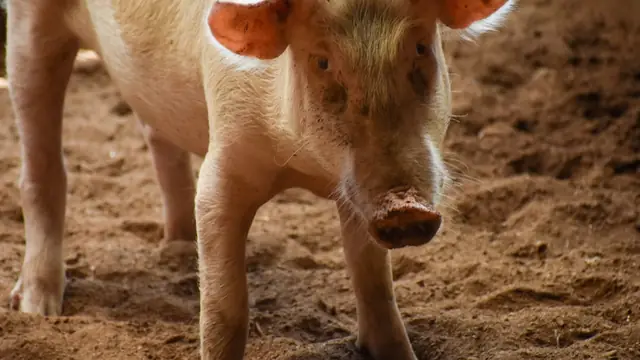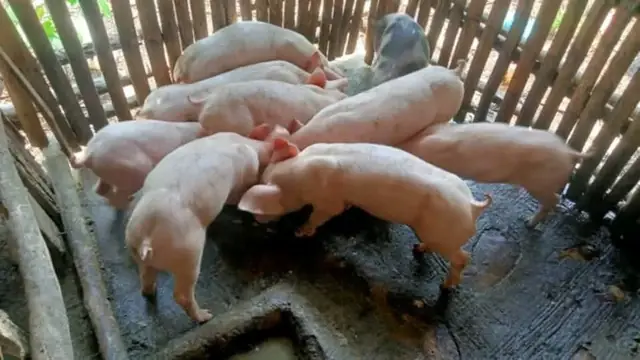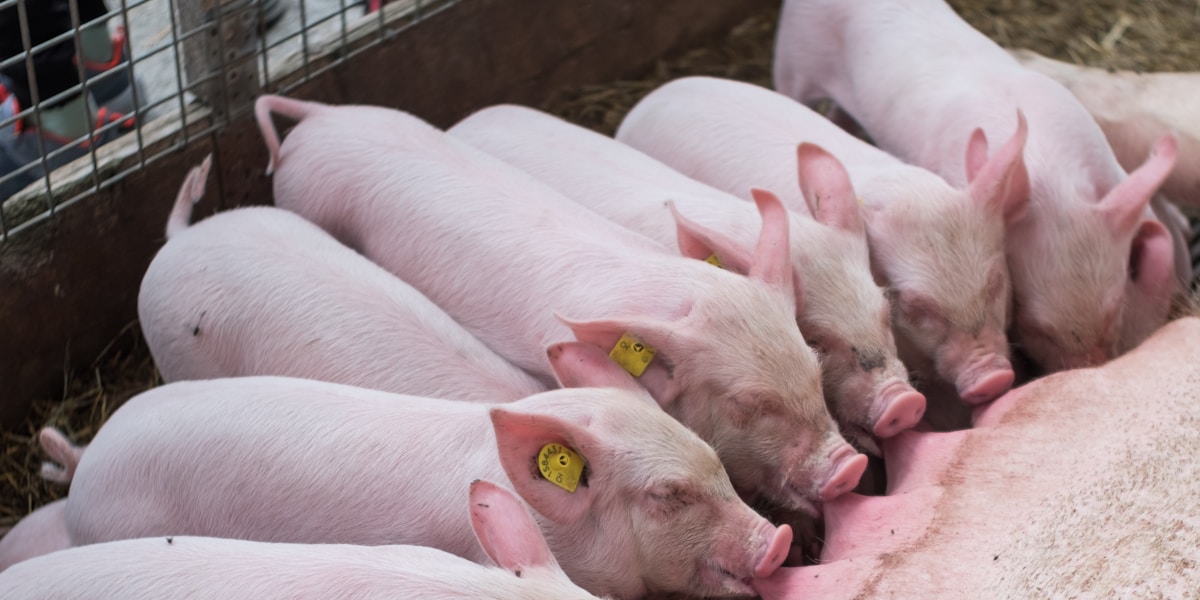
"Duha ka beses sa usa ka adlaw, buntag ug hapon." (Twice a day, morning and afternoon.)
Feed growers and finishers (15-100 kg) twice a day, morning around 6-7 AM and late afternoon 4:30-5:30 PM. Newly weaned piglets need 3-4 small meals at 175-230 g each. Lactating sows eat 5-7 kg/day across 3 feeds or free-choice. Skip midday meals once temperatures climb past 33°C.
Feeding Frequency by Stage
| Stage | Weight | How Often | Amount per Day | Method |
|---|---|---|---|---|
| Creep feed (piglets with sow) | 2–7 kg | Small amounts 4–6× | As much as they will eat | Shallow tray, fresh feed |
| Weaners | 7–15 kg | 3–4× per day | 0.5–1.0 kg | Hand-fed, small portions |
| Growers | 15–60 kg | 2–3× per day | 1.5–2.5 kg | Hand-fed |
| Finishers | 60–100 kg | 2× per day | 2.5–3.5 kg | Hand-fed, measured |
| Gestating sow | 120+ kg | 2× per day | 2.0–2.5 kg | Restricted (do not overfeed) |
| Lactating sow | 120+ kg | 3× per day or free choice | 5–7 kg | As much as she will eat |
| Boar | 150+ kg | 2× per day | 2.0–2.5 kg | Restricted |
Why Twice a Day Works for Most Pigs
For growers and finishers, which is most of what backyard farmers raise, twice daily feeding (morning and late afternoon) is practical and efficient.
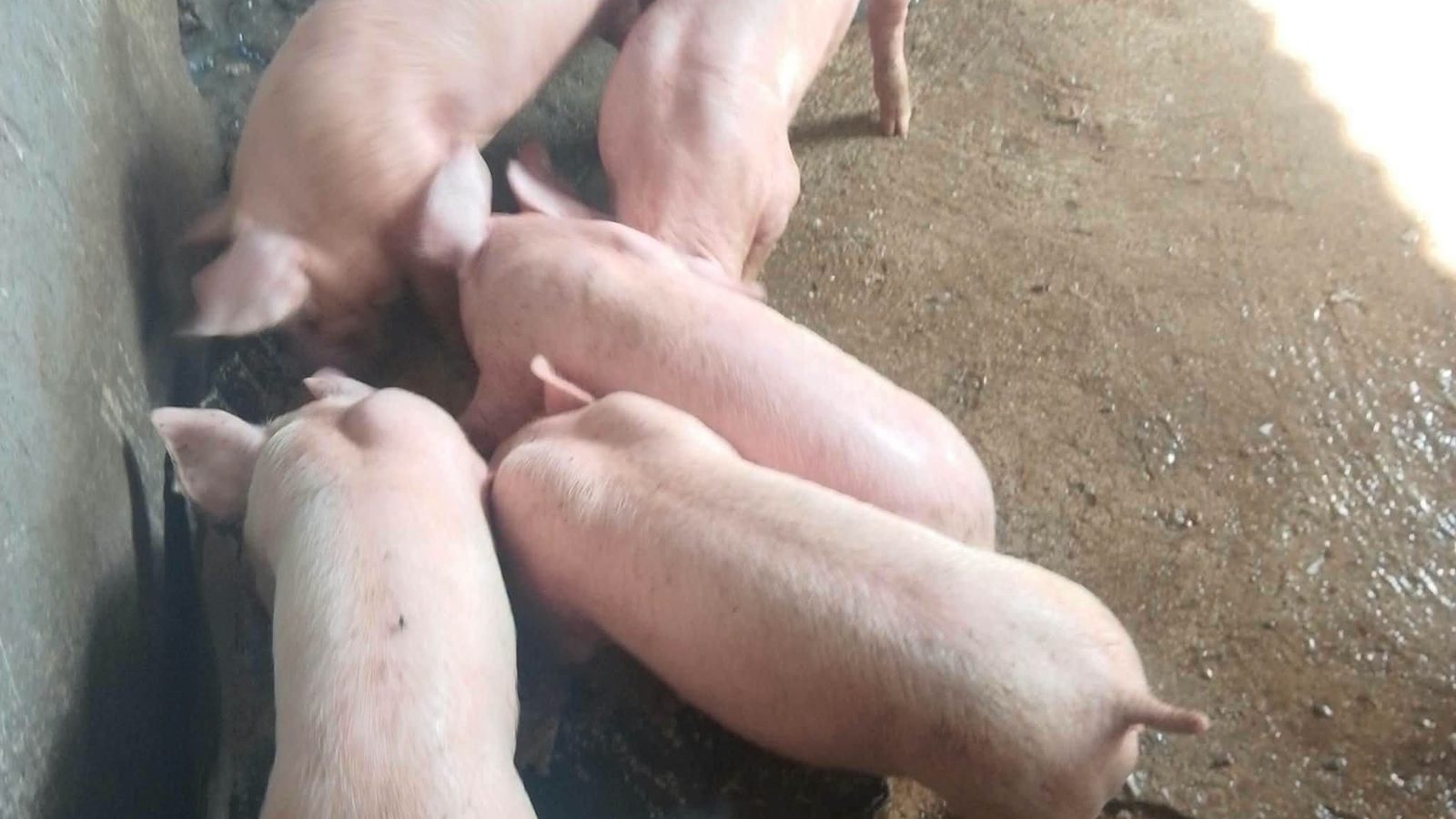
The pig's stomach can hold a full meal, digest it over 6–8 hours, and be ready for the next. This matches the farmer's schedule and allows you to measure feed consumed. That matters more than people think. A pig that skips a meal or leaves feed in the trough is usually sick, and catching it early saves you a vet bill. The first sign of ASF, pneumonia, or even a heavy worm load is usually a half-eaten morning meal, before any fever or visible symptom. Honestly, this single habit (looking at the trough 30 minutes after feeding) catches more problems than any thermometer.
Feed intake also collapses if water is dirty or insufficient. A finisher needs 6–10 liters per day in Philippine heat, and pigs cut their feed by 20–30% when water runs out. If the trough is full but the pigs are not eating, check the water bowl first.
"Buntag ug hapon, sakto na." (Morning and afternoon, that is enough.)
When More Frequent Feeding Matters
Weaners (just weaned, 7–15 kg)
Recently weaned piglets have small stomachs and are transitioning from liquid (sow's milk) to solid feed. They need 3–4 smaller meals spread throughout the day. Large infrequent meals cause digestive problems and diarrhea.
A weaner eating 0.7 kg/day of starter feed (around P23–28/day using B-MEG or similar at P33–40/kg) split into 3–4 portions is about 175–230 grams per meal. That is a small handful. Gradually reduce to 2–3 times daily by the time the piglet reaches 15 kg.
For more on how much to feed at each weight, check the consumption chart.
Lactating sows
A sow producing milk for 8–12 piglets has enormous energy needs, roughly triple her gestating requirement. She should eat 5–7 kg per day, ideally offered 3 times per day or on a free-choice basis. At P30–36/kg for a lactating feed like Suregrow (P1,840/50 kg bag), that is P150–252 per day just for the sow. Expensive, but skimping here is false economy. If she cannot eat enough, she loses body weight, produces less milk, and her piglets grow slowly.
"Daghanon og pakaon kay nag-pasuso." (Give her more feed because she is nursing.)
When to Feed: Timing Matters in Philippine Heat
Philippine daytime temperatures of 30–37°C suppress appetite, especially during dry season in Visayas and Mindanao where pen temperatures can hit 38–40°C without proper ventilation. Pigs eat less during the hottest hours (11 AM – 3 PM).
Best feeding times:
- Morning: 6:00–7:00 AM (before the heat builds)
- Afternoon: 4:30–5:30 PM (after peak heat passes)
If feeding 3 times, add a noon meal only in cooler weather (wet season) or for high-need animals (weaners, lactating sows).
Do not put feed out during peak heat and expect pigs to eat it. The feed goes stale in the humidity, pigs ignore it, and you waste money. Most farmers I have talked to who tried a midday feeding during summer just ended up throwing feed away.
Ad Libitum vs. Restricted Feeding
Ad libitum (libre nga pagkaon): Feed is always available in a hopper. Pigs eat whenever they want. Results in faster growth but fatter pigs with more backfat. More expensive overall, and honestly, most backyard setups do not have the right hopper to make this work cleanly. Best used for weaners and lactating sows.
Restricted (saktong dosis): Measured feed given at set times. Better feed efficiency, leaner carcass, lower cost. Requires more labor. Best for finishers nearing market weight and gestating sows.
For most Philippine backyard farmers, restricted feeding twice daily is the right approach. It controls cost and produces a market-acceptable carcass. If you want to dial in the exact amounts per weight stage, see our feed consumption chart.
Free Tool
Quick Feed Estimate
Fast estimate of daily feed amounts and total sacks for your batch.
Common Mistakes
- Feeding only once per day. The pig gorges, then goes hours without nutrition. Growth is uneven and slower.
- Overfeeding gestating sows. Fat sows have difficult farrowing and crush more piglets. Keep to 2–2.5 kg/day.
- Irregular timing. Pigs are creatures of habit. Feeding at random times causes stress and aggressive behavior at the trough.
- Not adjusting for growth. A 30 kg pig and a 90 kg pig should not eat the same amount. Increase feed as the pig grows.
- Feeding during peak heat. Wasted feed, reduced intake. Feed in the cool hours.
- Ignoring leftovers. If a pig that normally cleans the trough leaves feed two meals in a row, treat it as a health flag. Check temperature, droppings, and water access before assuming it is just a bad day.
- Switching feed brands abruptly. A sudden change from B-MEG to Thunderbird (or commercial to home-mix) causes loose stools and reduced intake for 3–5 days. Blend old and new over a week.
If you are mixing your own feed using rice bran, copra meal, or other local ingredients, the same frequency rules apply. The only difference is that home-mixed wet feeds spoil faster in the heat, so smaller, more frequent servings are better than one big dump in the trough.
Bisaya / Cebuano
Para sa mga mag-uuma: Pagpakaon sa baboy
Kasagaran nga baboy (grower/finisher): 2 ka beses sa adlaw, buntag (6-7 AM) ug hapon (4:30-5:30 PM).
Bag-ong weaned nga baktin: 3–4 ka beses sa adlaw, gamay-gamay.
Nagpasuso nga anay: 3 ka beses o libre, kinahanglan og 5–7 kg sa adlaw. "Daghanon og pakaon kay nag-pasuso."
Importante: Ayaw pakan-a og udtong tutok kung init kaayo. Mokunhod og kaon ang baboy ug masayang ang feeds. Buntag ug hapon ra.
"Saktong dosis, saktong oras, mao na ang sekreto sa maayong tubo." (Right portion, right time, that is the secret to good growth.)
Learn More
- Best feed mix for backyard pigs (what to put in the trough)
- Philippine feed economics — why FCR matters more than feed price (the bigger margin lever)
- How much water pigs need per day (water intake drives feed intake)
- Pig feed consumption chart (kg per day by weight stage)
- Quick Feed Estimate tool (fast estimate of daily feed amounts by pig weight)
- Feed Cost Calculator (estimate daily feed expense)
- Profit Simulator (see how feed cost moves your margin per head)
Sources: DA Region 2 Swine Raising Guide, PCAARRD Swine Industry Strategic Plan, FAO Farmer's Handbook on Pig Production, feed prices sourced from Agrilife Philippines (accessed May 2026).