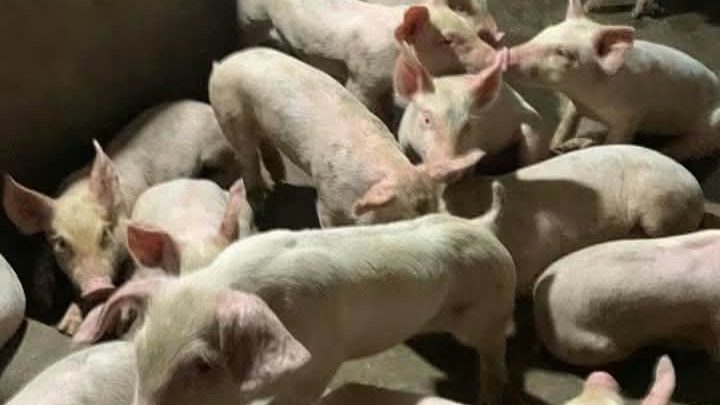
If your pigs have pot bellies, rough coats, and grow slower than the feed bill says they should, internal parasites are the first thing to rule out. Roundworm (Ascaris suum) is the most common and widespread parasite of pigs, and infection rates climb on dirt-floor backyard setups where eggs survive in the soil for years.
The good news is that deworming is cheap and simple, and the payoff is large. The MSD Veterinary Manual and pig333 both report that heavy Ascaris loads measurably cut feed efficiency and daily gain, mostly through liver damage ("milk spot" livers) and lung migration. A deworming that costs around ₱20-₱30 a pig recovers most of that. We have seen pigs visibly improve within 2 weeks of a proper dose. The coat gets shinier, the belly goes down, and they start putting on weight again.
"Pagpa-deworm na, laki na man." (Time to deworm, it is already big.)
How to Tell If Your Pig Has Worms
Not every wormy pig looks obviously sick. But these signs, especially 2-3 together, almost always mean parasites:
- Pot belly with visible ribs. The classic worm belly. The pig eats but the worms take the nutrients.
- Rough, dull coat. Healthy pigs have smooth, slightly shiny skin. A dry, bristly coat is a red flag.
- Slow growth. If your pig is eating well but not gaining weight, parasites are the first thing to rule out.
- Coughing or "thumps." Ascaris larvae migrate through the lungs before reaching the gut. Heavy infection causes a persistent dry cough, especially in young pigs.
- Pale skin or gums. A sign of anemia from blood-feeding parasites or poor nutrient absorption.
- Worms visible in manure. Adult roundworms, 15 to 30 cm long and white or pink, sometimes pass in feces. If you see them, the infection is heavy.
- Diarrhea without fever. Loose stool that doesn't respond to antibiotics often points to worms, not bacteria.
If piglets under 8 weeks are coughing and in poor condition, don't just deworm. Consult your municipal vet. Heavy Ascaris larval migration in young piglets can cause fatal pneumonia. The BAI and most swine vets recommend treating the sow before farrowing so the piglets never get a heavy load in the first place.
Deworming Products Available in the Philippines
One thing to get straight first, because it trips up a lot of new farmers. The Agmectin sachets sold in almost every Philippine vet store are ivermectin 0.3% oral granules that you mix into feed. They are not the same as the ivermectin 1% injectable in a bottle. Same drug, different concentration, different route, different withdrawal time. Don't inject the granules and don't try to dose the injectable like a powder.
| Product | Type | Targets | Administration | Withdrawal Before Slaughter |
|---|---|---|---|---|
| Ivermectin 1% injectable (Ivomec, GenVet Ivermec) | Injectable | Roundworms, lungworms, mange, lice | Subcutaneous in the neck, 1 mL per 33 kg | 28 days (GenVet PH label); US Ivomec label 18 days |
| Ivermectin 0.3% oral (Agmectin / Metrovet) | Oral granules in feed | Roundworms, lungworms, mange, lice | Mixed in feed, one 5g sachet per ~76 kg pig | 7 days |
| Fenbendazole (Safe-Guard) | Oral | Roundworms, whipworms, lungworms, nodular worms | Oral or in feed, 9 mg/kg over 3-12 days | None at label dose |
| Albendazole | Oral | Roundworms, whipworms, liver flukes | Oral drench, ~10 mg/kg | 14 days (do not use in pregnant sows) |
| Doramectin (Dectomax) | Injectable | Roundworms, mange, lice | Intramuscular in the neck, 1 mL per 34 kg | 24 days |
| Levamisole | Oral or injectable | Roundworms, lungworms | Per label, ~8 mg/kg | 3 days |
| Piperazine | Oral (water/feed) | Roundworms only (narrow) | Single dose per label | 21 days |
For most backyard farmers, ivermectin is the best first choice because it treats both internal worms and external parasites like mange and lice in one go. Fenbendazole is the better pick if a slaughter date is close, since it has no withdrawal restriction at the label dose. Piperazine is the cheapest but only hits roundworms, so it's a poor all-rounder. Withdrawal periods come from the AASV anthelmintics reference, product labels, and the MSD Veterinary Manual withholding-period table.
Albendazole is teratogenic. The AASV and product labels say not to give it to sows in early pregnancy because it can cause birth defects or abortion. For breeding females, use fenbendazole or ivermectin instead.
What It Actually Costs
Prices below are current Philippine retail as of early 2026 from Lazada, Shopee, and vet supply listings. The single-sachet price has crept up, so the cheap path is the bulk box.
| Product | Package | Price (₱) | Cost per pig | Notes |
|---|---|---|---|---|
| Agmectin (Metrovet) 0.3% | Single 5g sachet | ₱500-₱960 | treats up to ~76 kg | Pricey one at a time; not the way to buy it |
| Agmectin (Metrovet) 0.3% | Box, 48 x 5g sachets | ~₱1,095 | ~₱20-₱25 | The actual cheap route, ~₱23 a sachet |
| GenVet Ivermec injectable | Per dose | ₱35-₱90 | ₱35-₱90 | Ready to inject, widely available |
| Ivomec 1% injectable (branded) | 50 mL bottle | ₱1,200-₱1,800 | ~₱40 | More upfront but treats 30+ pigs |
| Albendazole oral | 1 liter | ₱500-₱800 | ~₱20-₱30 | Cheaper per dose but skip for pregnant sows and it misses mange |
At roughly ₱20-₱30 a pig when you buy in bulk, deworming is one of the cheapest things you can do for a pig. A heavy worm load can quietly cost ₱1,000-₱2,000 in lost growth over a fattening cycle through poorer feed conversion. Sus, there's no excuse to skip it.
Correct Dosing
Under-dosing is the most common mistake. It does not kill all the worms and it pushes the survivors toward drug resistance.
Ivermectin 1% injectable: 300 mcg/kg, which works out to 1 mL per 33 kg bodyweight, given subcutaneously in the neck. This is the standard Ivomec/MSD label dose.
| Pig Weight | Ivermectin 1% Dose |
|---|---|
| 10 kg | 0.3 mL |
| 20 kg | 0.6 mL |
| 33 kg | 1.0 mL |
| 50 kg | 1.5 mL |
| 66 kg | 2.0 mL |
| 100 kg | 3.0 mL |
Injection site: the neck, subcutaneous (under the skin, not into muscle). Behind the ear is sometimes used in practice, but every current product label specifies the neck, so that's what we recommend. Use a clean needle for each pig so you don't spread infection down the line.
Agmectin 0.3% oral granules: mix into a small amount of feed and make sure the pig eats all of it. The Metrovet label rates one 5g sachet for 1 pig at 76 kg and up, 3 pigs at 38-50 kg, or 10 piglets at 10-15 kg. Repeat after 14 days.
Fenbendazole: 9 mg/kg, fed over 3 to 12 days per the Safe-Guard label. No slaughter withdrawal at the label dose, which makes it the safe choice when a pig is close to selling.
Weigh your pigs before dosing, even a rough estimate helps. If you don't have a scale, estimate the weight with a tape and the heart girth formula. When in doubt, dose for the heaviest pig in the pen, not the average. For injection technique, see our pig injection guide.
Deworming Schedule
In a warm, wet climate like the Philippines, deworm more often than temperate-country guides say, because parasite eggs survive longer in warm moist conditions and dirt-floor pens.
| Animal | When to Deworm |
|---|---|
| Piglets | First deworming at 6-8 weeks, after weaning |
| Growers and fatteners | Every 3-4 months |
| Sows | 2 weeks before farrowing (critical, cuts piglet infection) plus after weaning |
| Boars | Every 3-4 months |
| Newly purchased pigs | On arrival, during the quarantine period |
The single most important deworming is the sow 2 weeks before farrowing. Piglets pick up parasites from the sow during nursing and from contaminated pen surfaces. Deworming the sow first cuts the piglet worm load way down. Use ivermectin or fenbendazole for breeding females, never albendazole.
After Deworming: Clean the Pen
Deworming kills the worms inside the pig, but the eggs survive in the environment for weeks to years. Put a dewormed pig back into a dirty pen and it reinfects fast.
After deworming:
- Clean the pen thoroughly. Remove all manure and bedding.
- Scrub floors and walls with lime solution (apog dissolved in water).
- Let the pen dry in sunlight before returning the pig. UV kills many parasite eggs.
- Replace bedding with fresh material.
Mange Treatment
If your pig has crusty, thickened skin (often starting at the ears), constant scratching, and hair loss, it likely has sarcoptic mange.
Ivermectin treats mange, but you need two doses 10-14 days apart to catch mites at different life stages. A single dose isn't enough. The second dose kills the mites that hatch after the first one. For severe cases, supplement with amitraz spray or pour-on on the affected areas.
Avoiding Drug Resistance
Use the same dewormer every cycle for years and the parasites eventually shrug it off. The AASV (American Association of Swine Veterinarians) recommends rotating between drug classes:
- Cycle 1-2: Ivermectin (macrocyclic lactone class)
- Cycle 3: Fenbendazole or albendazole (benzimidazole class)
- Cycle 4: Back to ivermectin
The two classes kill worms through different mechanisms, so rotating slows resistance. Most backyard farmers in Visayas and Mindanao stick to ivermectin alone because it also handles mange. That's fine for a few cycles, but if deworming starts looking weak (pigs still showing worm signs 2 weeks after treatment), switch to fenbendazole for a round.
Where to Buy in the Philippines
- Veterinary supply stores. In every major town, usually near the public market. In Cebu City, the Carbon market area and V. Rama vet supply shops carry Agmectin and GenVet Ivermec. In Davao, check Bankerohan or Agdao vet supply.
- Agricultural supply stores. They stock dewormers alongside feeds and fertilizers. Agrilife Philippines and similar chains carry most brands.
- Municipal or City Veterinary Office. Many LGUs run free deworming during organized livestock health campaigns. In Leyte and Bohol the provincial vet office runs barangay-level deworming drives. Ask your MAO (Municipal Agriculture Office) when the next one is.
- Online. Lazada and Shopee carry Agmectin and injectable ivermectin shipped nationwide, but buy the 48-sachet box, not single sachets, if you have more than a couple of pigs.
Always check the expiration date. Store injectable products cool and dark, not in the sun and not in your pocket. A warm ivermectin bottle loses potency.
Bisaya / Cebuano
Para sa mga mag-uuma
Unsaon pag-deworm sa baboy:
- Gamita ang Ivermectin injectable, 1 mL kada 33 kg, inject sa liog (dili sa unod)
- O kaha ang Agmectin 0.3% granules, isagol sa pagkaon, usa ka 5g nga sachet para sa baboy nga abot 76 kg
- Deworm kada 3-4 ka bulan
- Ang pinaka-importante, deworm ang anay (sow) 2 ka semana bago manganak
- Human sa pag-deworm, limpyohi ang tangkal, kuhaa ang tanan hugaw ug butangi og apog
- Para sa galis (mange), kinahanglan og duha ka dose, balik inject pagkahuman sa 10-14 ka adlaw
Ayaw paghatag og albendazole sa anay nga mabdos kay makadaot kini sa baby. Bantayi sab ang withdrawal: human mag-deworm og oral, paghulat og 7 ka adlaw, ang injectable 28 ka adlaw, bag-o ihawon.
"Gikutlan og ulod ang baboy" (The pig has worms). Kini ang kasagaran nga rason ngano hinay motubo ang baboy sa backyard. Barato ra ang tambal pero dako ang resulta.
Related Reading
- Pig diseases in the Philippines: symptoms and treatment
- Why is my pig not gaining weight?, parasites are cause number one
- How to inject pigs properly, injection technique and needle selection
- Estimate pig weight without a scale, so you dose correctly
- Cost to raise a pig in the Philippines, budget deworming in
- Signs your pig is sick, when to deworm vs when to call the vet
Sources
- MSD Veterinary Manual: Ascaris suum in Pigs, roundworm biology, ivermectin dosing, production impact
- MSD Veterinary Manual: Withholding Periods After Anthelmintic Treatment, slaughter withdrawal reference
- AASV Fact Sheet: Anthelmintics, swine deworming drugs, doses, and contraindications
- CDC: About Ascaris in Pigs, zoonotic risk and lifecycle
- pig333: Ascariasis, prevalence and production impact
- Merck Veterinary Manual: Mange in Pigs, sarcoptic mange diagnosis, and the two-dose macrocyclic lactone protocol
- UNAHCO: GenVet Ivermec, Philippine ivermectin injectable label (28-day withdrawal)
- BAI, Bureau of Animal Industry, sow-before-farrowing treatment guidance