"Pag-andam sa baha ayaw hulata nga mabasa na, ayuha daan sa ting-init." (Don't wait for the flood to prepare, fix it during the dry season.)
Rainy season prep for a 5 to 10 pig backyard piggery costs ₱3,000 to ₱15,000 and prevents ₱20,000 to ₱50,000 in losses from flooding, respiratory disease, moldy feed, and parasite surges. Do the work in April or May. Once the June rains hit, you are reacting, not preventing, and the pigs are already sick.
The Five Rainy Season Threats
1. Flooding and Standing Water
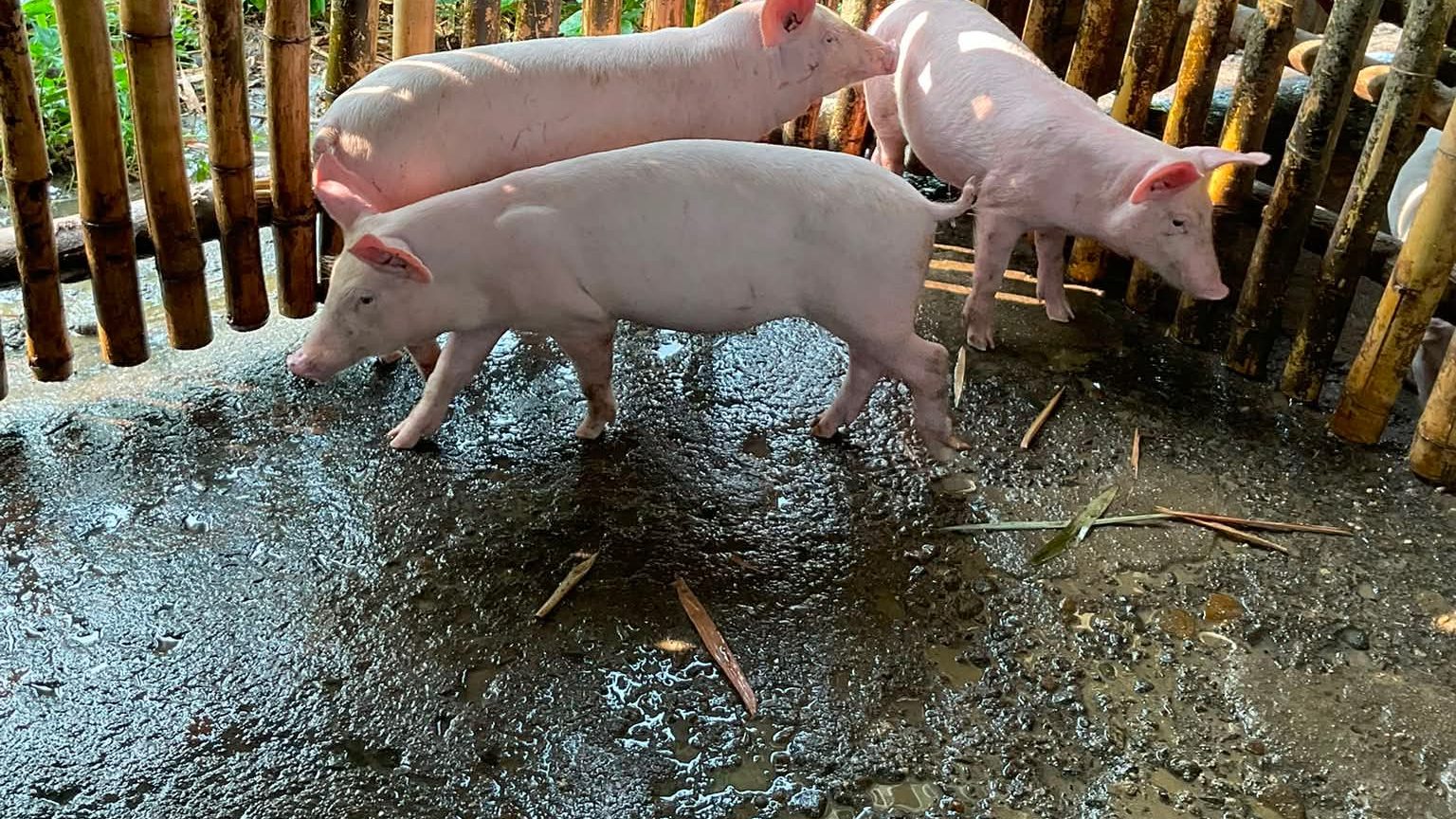
Even without river flooding, heavy rain (50-100mm per downpour) overwhelms drainage and leaves pens with 5-15 cm of standing water. That standing water is a breeding ground for leptospirosis, E. coli, Salmonella, skin infections, parasites, and ammonia buildup from waterlogged manure.
2. Respiratory Disease Spike
The combination of high humidity (85–95%), poor ventilation in closed pens, temperature swings, and ammonia from wet floors creates ideal conditions for Mycoplasma pneumonia, APP, and Pasteurella. According to pig333.com, these pathogens are often already present but cause clinical disease only when conditions weaken the pig's defenses.
Signs to watch: persistent coughing (especially mornings), labored breathing, reduced feed intake, fever, nasal discharge, and sudden deaths in finishers.
3. Feed Mold and Mycotoxin Contamination
At 70%+ humidity and 25°C+, conditions present 5–6 months straight, mold grows on feed within 48–72 hours. Mycotoxins (aflatoxin, fumonisin, zearalenone) reduce feed intake, damage liver and kidneys, suppress immunity, and cause reproductive failure in sows. The dangerous part: mold may not be visible, and contaminated feed can still reduce growth by 10–20%.
4. Parasite Surge
Wet conditions dramatically accelerate parasite life cycles:
- Roundworm (Ascaris suum) eggs survive for months in wet soil and pen surfaces
- Whipworm (Trichuris suis) thrives in muddy outdoor areas
- Coccidia (especially in piglets) multiplies rapidly in wet, contaminated bedding
- Mange mites spread faster in humid, crowded conditions
A pig that was adequately dewormed in the dry season may need re-treatment 6–8 weeks into the wet season as parasite pressure increases.
5. Structural Damage
Typhoons can destroy lightweight pen roofing, undermine foundations, rot wooden structures, and knock out power and water pumps. Even sustained rain without typhoon winds collapses earth embankments and drainage channels.
Pre-Rainy Season Checklist
Do this in April–May, before the first heavy rains. Each task has an estimated cost and time.
| Task | Priority | Estimated Cost | Time Needed | Notes |
|---|---|---|---|---|
| Clean and test all drainage channels | Critical | ₱0–₱500 (if repair needed) | 2–4 hours | Pour water through the system, check for blockages |
| Repair or add pen floor slope (3% minimum) | Critical | ₱1,000–₱5,000 | 1–2 days | If floor is level, water pools; re-skim with cement if needed |
| Check and reinforce roofing | Critical | ₱500–₱3,000 | Half day | Replace loose GI sheets, add wire tie-downs, seal gaps |
| Elevate feed storage off the ground | Critical | ₱500–₱1,000 | 2 hours | Pallets or concrete blocks, minimum 15 cm off floor |
| Buy sealed feed containers | High | ₱500–₱2,000 (drums/bins) | 2 hours | Airtight drums or bins with gasket lids |
| Vaccinate against hog cholera | High | ₱50–₱100 per pig | 1 hour (if doing it yourself) | Must be done 2–4 weeks BEFORE wet season starts |
| Deworm entire herd | High | ₱30–₱80 per pig | 1 hour | Ivermectin or fenbendazole, as appropriate by weight |
| Stock up on basic medications | High | ₱500–₱2,000 | 1 hour | Antibiotics, anti-diarrheal, electrolytes, wound spray |
| Prepare emergency feed supply | Medium | Variable | Half day | 2-week sealed supply in case of typhoon/flooding |
| Check pen walls for gaps | Medium | ₱0–₱1,000 | 1–2 hours | Seal lower wall gaps that let rain splash in |
| Clean and disinfect pens | Medium | ₱200–₱500 | Half day | Lime wash walls and floor, dry completely before rains |
| Install or repair gutter system | Medium | ₱1,000–₱3,000 | Half day | Divert roof water AWAY from pen area |
| Raise pen floor if in flood-prone area | High (if applicable) | ₱5,000–₱15,000 | 2–5 days | Add concrete or fill to raise floor 15–30 cm above surrounding grade |
| Trim trees near pen | Low | ₱0 | 1–2 hours | Falling branches during typhoon damage roofing |
Total preparation cost for a 5–10 pig operation: ₱3,000–₱15,000, depending on how much repair is needed. Compare this to losing 2–3 pigs to disease or a batch of spoiled feed, easily ₱20,000–₱50,000 in losses.
Free Tool
Break-Even Price Calculator
Fold the ₱3,000-₱15,000 wet-season prep into your batch costs and see what your breakeven kilo price actually is for a June-November cycle.
Drainage: The Single Most Important Fix
If you only do one thing to prepare for rainy season, fix your drainage.
A properly built pig pen has a 3% floor slope toward a drain channel. That channel should lead to a settling tank or soak pit, not to the neighbor's property or a public waterway. For drainage placement at scale (10-head, 50-head with isolation pens, full breeding-and-farrowing setups), our 5 pig pen designs and layouts guide shows where the channels should run for each footprint.
Common Drainage Problems and Fixes
- No floor slope: Re-skim with cement at a 3% slope. ₱1,000–₱3,000. Best money you will spend on your piggery.
- Blocked drain channel: Chip out hardened manure, flush with water. Do monthly during wet season. Free.
- Pen sits lower than surrounding ground: Build a 10–15 cm raised concrete lip at the entrance to divert surface water. ₱500–₱5,000.
- Roof water dumps into pen area: Install PVC gutter system to direct water away. ₱500–₱1,500 per pen. Also provides rainwater for collection.
- Settling tank overflows: Add a second overflow pipe to a gravel drainage field, or add another ring to the tank. ₱1,500–₱3,000.
Raised Flooring: When Concrete Is Not Enough
In areas prone to flooding, river floodplains, low-lying coastal barangays, areas near creeks, a concrete floor at grade level is not enough. Water will come in no matter how good your drainage is.
Options for elevated flooring:
- Raised concrete platform (15–30 cm above grade): Most durable, ₱3,000–₱8,000 per pen. Fill with compacted gravel, top with reinforced concrete.
- Slatted flooring: Concrete or bamboo slats over a pit. Manure falls through, pigs stay dry. ₱5,000–₱15,000.
- Bamboo platform: Traditional in Visayas native pig systems. Elevated 50–100 cm above ground. ₱1,000–₱3,000, but needs replacement every 1–2 years.
Feed Storage: Preventing Mold and Spoilage
Feed is your biggest cost, around 57% of what it takes to run a hog operation (PIDS). Losing one 50-kg sack of premium grower to mold, ₱1,750-₱1,900 as of July 2026, is money straight out of your pocket.
Storage Rules for Wet Season
-
Never store feed directly on concrete or earth floors. Moisture wicks up from below. Use pallets, bamboo racks, or concrete blocks, minimum 15 cm off the ground.
-
Maximum 2-week supply. During wet season, do not stockpile feed. Buy smaller quantities more frequently. Feed sitting for 3+ weeks in Philippine humidity will develop mold even in sealed containers.
-
Sealed containers only. Open sacks absorb moisture within hours. Transfer feed to sealed drums (200-liter steel drums with rubber gasket lids, ₱300–₱500 used) or commercial feed bins.
-
Ventilated, covered storage area. Not inside the pig pen (pen humidity is even higher than ambient). A separate roofed area with open sides for airflow is ideal.
-
Check feed before every feeding. Look for: clumping, discoloration (green, blue-gray, or pink spots), musty smell, unusual heat when you open the container. If any of these are present, discard the affected portion.
-
If mixing your own feed: Home-mixed feeds are more vulnerable to mold than pelletized commercial feed because the moisture content is less controlled. Mix only what you will use in 3–5 days during wet season.
Mycotoxin Binders
For feeds using copra meal, corn, or rice bran, add a mycotoxin binder during wet season. Commercial binders cost ₱15–₱30/kg, mixed at 1–2 kg per ton of feed, roughly ₱1–₱3 per day for a 10-pig operation. Cheap insurance against liver damage and immune suppression.
Vaccination Timing: Before the Rains, Not During
Vaccines need 2-4 weeks to build full immunity. Vaccinating after your pigs are already stressed, wet, and exposed to pathogens? Less effective. Time your vaccinations for April-May.
Wet Season Vaccination Priorities
| Vaccine | When to Give | Why It Matters for Wet Season |
|---|---|---|
| Hog cholera (Classical Swine Fever) | 2–4 weeks before wet season | Outbreaks increase during wet season due to increased pig movement and stress |
| Mycoplasma pneumonia | Piglets at 1 and 3 weeks, or sow vaccination pre-farrowing | Respiratory disease is the #1 wet season killer |
| E. coli (for sows) | 2–4 weeks pre-farrowing | Neonatal diarrhea worse in wet, cold conditions |
| Porcine parvovirus (gilts) | Pre-breeding | Reproductive failure; not seasonal but worth including |
Check with your MAO about free vaccination campaigns, many LGUs schedule mass hog cholera vaccination in April–May specifically because of wet season risk.
For specific disease identification, check our guide on pig diseases and symptoms. For step-by-step response if a wet-season outbreak hits your barangay, see pig disease outbreak response, which covers DA reporting, BAI hotlines, and indemnification under DA AO 10 (Series 2024).
Ventilation in Humid Conditions
During heavy rain, the instinct is to close the pen. But a closed pen with 5-10 pigs builds ammonia above 25 ppm within hours, the level at which ammonia exposure injures the respiratory tract and knocks down growth performance in growing pigs. Combine that with existing Mycoplasma, and you have a respiratory outbreak waiting to happen.
How to Ventilate Without Letting Rain In
Open-ridge roof design: Leave a 15–30 cm gap along the roof ridge, covered by a raised cap. Hot, moist air rises and escapes without letting rain in. Retrofitting costs ₱2,000–₱5,000.
Eave overhangs (minimum 60 cm): Wide roof overhangs let you keep upper walls open during rain. With a 60–90 cm overhang, most rain will not enter the pen.
Windward wall management: Keep the windward wall (usually east to northeast during habagat) more enclosed with CHB ventilation holes, and the leeward wall more open.
Signs your ventilation is inadequate: ammonia smell when you enter the pen, condensation under the roof, morning coughing, and walls that never dry between rain events.
Parasite Management During Wet Season
Deworm before the rains start (April–May), then again 6–8 weeks in (July–August). Rotate the dewormer class between treatments to prevent resistance. Piglets need treatment at 4–6 weeks and again at 10–12 weeks, coccidia prevention (toltrazuril) is especially important during wet season when coccidiosis incidence doubles.
For detailed protocols, see our deworming guide.
Environmental control: Keep pens dry, remove manure daily, lime wash walls and floors between batches, and rotate grazing areas in outdoor systems to break reinfestation cycles.
Emergency Preparedness: Typhoon Protocol
When a typhoon signal is raised for your area, act 72 hours before landfall:
- Secure roofing add extra wire tie-downs on GI sheets; stack sandbags on flat sections
- Move feed supply to the highest, driest location. Wrap sacks in plastic if no sealed containers are available.
- Fill all water containers. Municipal water may be cut for days after a typhoon.
- Stock 3–5 days of feed in sealed, waterproof storage
- If flooding is likely: Move pigs to higher ground. Even a neighbor's elevated pen is better than drowning.
- Prepare basic medical supplies: antibiotics, wound spray, electrolytes
- Document your herd (photos, count, approximate values) for insurance claims or DA indemnification
If your sealed feed supply runs out before roads reopen and dealers reload, the emergency pig feeding playbook covers the safest 1–3 week fallback rations using kamote tops, banana trunk, copra meal, and rice bran. It buys you time without wrecking growth or triggering the gut upset that follows a panicked feed switch.
"Pag-andam sa bagyo dili kabalo og adlaw, pero ang wala nangandam, mao ang mawad-an." (The typhoon doesn't know what day it is, but the unprepared are the ones who lose.)
Post-Typhoon Recovery (First 14 Days)
The two weeks after a typhoon are where most of the real losses happen, not during the storm itself. Surviving pigs are stressed, water is contaminated, feed is compromised, and disease pressure spikes.
- Days 1-3: Drain standing water immediately. Move pigs to the driest pen you have. Switch to electrolytes (Stresspack or Vitalyte at ₱25-40/sachet) in drinking water for 5 days. Discard any feed that got wet, even slightly. Mold blooms within 48 hours.
- Days 4-7: Watch for coughing, scouring, and lameness. Lepto symptoms (fever, jaundice, red urine) appear 4-7 days after flood exposure, treat at first sign with Penstrep or oxytetracycline. Disinfect floors with Virkon S or 1:32 chlorine.
- Days 8-14: Repeat deworming if pigs walked through floodwater. Test your drinking water source if it is shallow well, which is typically contaminated for 2-3 weeks post-flood.
For PCIC-insured farms, document losses immediately (photos, ear-tag IDs, timestamps) and file claims within 45 days. PCIC swine livestock insurance pays ₱4,000-12,000 per pig depending on weight tier, but the documentation has to be filed correctly. Visit your nearest PCIC office or contact them through the regional DA.
Month-by-Month Wet Season Calendar
| Month | Key Action |
|---|---|
| April–May | Vaccinate, deworm, fix drainage, stock supplies |
| June | Monitor drainage, check for leaks, adjust feed storage |
| July–August | Watch for coughing, check ventilation, mid-season deworming |
| September–October | Typhoon prep, structural reinforcement, feed supply secured |
| November | Drainage maintenance, parasite check, monitor feed quality |
| December | Post-season pen repair and dry-out |
Bisaya / Cebuano
Para sa mga mag-uuma (For farmers)
Ang ting-ulan (June–November) mao ang pinaka-delikado nga panahon para sa mga baboy. Ang mga problema:
- Baha ug basa nga kulungan ang bacteria ug parasito mopaspas og dagan kung basa. Ayuha ang drainage DAAN sa dili pa moulan.
- Sakit sa baga (respiratory disease), mosamot kung sirado ang kulungan ug walay hangin. Ayaw siradoha tanan, kinahanglan og ventilation bisan kung nagaulan.
- Bulok nga feeds kung basa ang feeds, motubo ang mold sulod sa 2–3 ka adlaw. Butangi og sealed drum, ayaw ibutang sa salog.
- Bakuna ipabakunahan ang baboy 2–4 ka semana DAAN sa ting-ulan (April–May), dili na sa June kung nag-ulan na.
- Ulod (parasites), deworm sa dili pa moulan, unya deworm ulit sa July–August.
Ang preparation sa ting-init, mao ang makaluwas sa imong baboy sa ting-ulan.
Learn More
- Pig disease outbreak response guide, step-by-step protocol with BAI hotlines and indemnification rates
- ASF recovery era biosecurity, what actually works on a backyard budget
- Best flooring for pig pens, flooring options that handle wet conditions
- Best feed mix for backyard pigs, proper feed storage and formulation
- Pig diseases in the Philippines: symptoms guide, identify and respond to wet season disease outbreaks
- How to build a backyard piggery, pen design with proper drainage and ventilation
- pig333.com respiratory diseases in pigs, technical reference on diagnosis and prevention
- FAO Farm Structures in Tropical Climates, Ch.10 Pig Housing, ventilation and layout for hot climates
Sources: pig333.com Porcine Respiratory Disease Complex, FAO Farm Structures in Tropical Climates, Ch.10 Pig Housing, Merck Veterinary Manual: Swine Respiratory Disease, Merck Veterinary Manual: Mycotoxicosis, FAO Livestock and Floods, PAGASA Climate Data, DA-BAI Hog Cholera Vaccination Program, PCIC Livestock Insurance (accessed May 2026).