Treating a sick pig costs 5-10x more than preventing the disease. A basic biosecurity program runs ₱2,000 to ₱5,000 to set up plus ₱500 to ₱1,000 monthly, roughly ₱3,900 to ₱8,600 per 10-head batch. One hog cholera outbreak can cost ₱36,000 to ₱108,000. ASF wipes out the whole batch. Prevention is not expensive, it is just discipline.
"Mas maayo ang makalikay kaysa magpa-tambal."
The Three Pillars
- Keep diseases out (biosecurity)
- Build immunity (vaccination)
- Reduce disease pressure (sanitation and management)
Do all three consistently and you will have fewer sick pigs than 90% of backyard farms in your area. Skip any one and you are gambling with your batch.
Pillar 1: Biosecurity
Diseases arrive on pigs, people, vehicles, equipment, feed, and boots. You can't eliminate all risk. But you can cut it way down.
The Non-Negotiable Biosecurity Measures
| Measure | Cost to Set Up | What It Prevents | Priority |
|---|---|---|---|
| Footbath at farm entrance | ₱200-₱500 (basin + disinfectant) | Viruses/bacteria carried on footwear | Critical, do this first |
| Quarantine area for new pigs | ₱2,000-₱5,000 (separate pen, 10+ meters from main herd) | Introduction of diseases from new stock | Critical |
| Visitor restriction | ₱0 (just a policy) | Random visitors tracking in diseases | Critical during ASF risk |
| Dedicated farm clothes/boots | ₱500-₱1,000 | Cross-contamination from other farms, markets | High |
| Perimeter fence | ₱3,000-₱10,000 (depends on area) | Stray animals, unauthorized entry | High |
| Feed storage (covered, elevated) | ₱1,000-₱3,000 | Rodent contamination, mold/mycotoxins | High |
| Dead animal disposal protocol | ₱0-₱500 (lime, burial site) | Disease spread from carcasses | Critical |
Footbath Protocol
A footbath is the cheapest biosecurity measure and probably the most effective per peso spent.
- Location: At every entrance point to the pig area
- Solution: Any of these work:
- Chlorine bleach: 1 part bleach to 30 parts water (cheapest, ₱15-₱25 per mix)
- Lime solution (apog): saturated, very cheap and effective on concrete
- Virkon S: ₱350-₱500 per 200g sachet, most effective but pricier
- Quaternary ammonium (quat-based disinfectant from agri-vet supply): follow label
- Maintenance: Change solution every 2-3 days, or sooner if dirty. A week-old footbath is worse than nothing because it gives false confidence.
- Rule: Everyone steps through. No exceptions. Family, visitors, feed delivery, vet. Everyone.
Quarantine Protocol for New Pigs
Every new pig is a potential disease carrier. Quarantine is non-negotiable, even if the breeder says "healthy na ni."
- Separate pen at least 10 meters from main herd
- Duration: minimum 14 days, ideally 21-30 days
- During quarantine: observe for illness, deworm with GenVet Ivermec or WormVet (1 mL per 33 kg SC), vaccinate for hog cholera
- Feed and water separately. Do not share scoops, buckets, or hoses with main herd
- Care for quarantine pigs last in your daily routine, then wash hands and change boots before going back to healthy pigs
If a quarantined pig shows disease signs, do not move it to the main herd. Call your municipal vet.
ASF has no cure and no commercially available vaccine for backyard farmers (the AVAC vaccine is still under government-controlled rollout only). The only defense is keeping the virus out. If ASF enters your herd, you will lose every pig.
ASF-Specific Biosecurity
According to WOAH ASF technical guidelines, the virus can survive:
- In pork products: months (cured, dried, or frozen meat)
- In the environment: weeks in cool, moist conditions
- On boots, tools, and vehicles: days to weeks
| ASF Risk Factor | Prevention |
|---|---|
| Swill feeding (kitchen scraps with pork) | Never feed swill containing meat products. This is the #1 transmission route for backyard farms. Cook all kitchen scraps to boiling for 30+ minutes if you must use them. |
| Buying pigs from unknown sources | Buy only from farms/traders you trust. Ask about health history. Quarantine everything. |
| Visitors from other farms | Restrict access. If they must enter, require boot change or footbath + hand washing. |
| Shared equipment (syringes, tools) | Do not borrow equipment from other farms. Use disposable needles. |
| Proximity to infected farms | If ASF is reported within 10 km, heighten all biosecurity measures. Report to your municipal vet. |
For more on farming during ASF risk periods, see ASF recovery era pig farming.
Pillar 2: Vaccination
Vaccines are the most cost-effective health investment in pig farming. The entire vaccination program for a grow-out pig costs ₱80-₱200 per head. One case of hog cholera in an unvaccinated batch can kill 30-90% of your pigs. The math is obvious.
Core Vaccination Schedule
| Vaccine | Brand Names (PH) | When | Booster | Cost/Head | Notes |
|---|---|---|---|---|---|
| Hog cholera (CSF) | Coglapest (Ceva), Porcilis CSF Live (MSD), Suigen HC (Virbac) | 6-8 weeks | 4 weeks after first dose | ₱40-₱80 | Non-negotiable. Many LGUs provide free. |
| Mycoplasma pneumonia | Porcilis M Hyo (MSD), Ingelvac MycoFLEX | 7-10 days | 3-4 weeks after first | ₱30-₱60 | Reduces respiratory disease, improves ADG |
| Porcine parvovirus (PPV) | Porcilis Parvo (MSD) | Gilts: 2-3 weeks pre-breeding | Annual | ₱40-₱70 | Breeding stock only |
| Erysipelas | Porcilis Ery (MSD) | 8-10 weeks | 3-4 weeks after first | ₱25-₱50 | Skin lesions, joint swelling, sudden death |
| E. coli (piglets) | Porcilis ColiClos (MSD) | Sow: 2 and 5 weeks pre-farrowing | Each pregnancy | ₱35-₱60 | Protects piglets via colostrum |
At minimum, every pig needs hog cholera vaccination. This is the one that kills batches. Everything else depends on what's common in your area. Ask your municipal vet. Most LGUs in Cebu, Iloilo, Davao, and Bukidnon run free hog cholera vaccination campaigns, usually using Coglapest. Take advantage of these, they save you ₱40-₱80 per head.
Where to buy vaccines if your LGU doesn't provide free: any agri-vet supply store carries Coglapest (₱350-₱450 per 10-dose vial). That's ₱35-₱45 per pig. You can vaccinate yourself with a clean syringe (IM injection, 1 mL, neck muscle). But store the vial at 2-8°C. A vaccine left in the sun for an hour is useless. If you don't have a refrigerator, coordinate with your barangay health worker or neighbor who does.
For the complete schedule with timing details, see pig vaccination schedule for Philippine farmers.
Vaccination Best Practices
- One needle per pig for injectables. Shared needles spread blood-borne diseases. Disposable needles cost ₱3-₱5 each. Cheap insurance.
- Do not vaccinate sick pigs. A sick pig's immune system is already compromised. Vaccinating it wastes the dose.
- Record vaccination dates. When, which vaccine, which batch. This matters if disease occurs later and your vet needs history.
- For injection technique, see how to inject pigs.
Pillar 3: Sanitation and Management
A clean pen reduces disease pressure even when pathogens are present. A pig exposed to a small amount of bacteria in a clean environment may fight it off. Same pig in a filthy pen? Gets sick. Honestly, most disease problems we see in backyard farms trace back to sanitation, not bad luck.
Daily Sanitation Routine
| Task | Frequency | Time Required | Why It Matters |
|---|---|---|---|
| Remove manure and wet bedding | Twice daily | 15-30 min | Reduces ammonia, bacteria, parasite eggs |
| Scrub and rinse feeders | Daily | 10 min | Prevents mold, fermented feed, bacterial growth |
| Check and clean waterers | Daily | 5 min | Dirty water = disease transmission |
| Inspect pigs for illness signs | Twice daily (during feeding) | 10 min | Early detection = cheaper treatment. See signs a pig is sick |
| Fly and rodent control | Daily observation, treat as needed | 5 min | Flies spread bacteria, rodents carry diseases and contaminate feed |
Water Quality
Water is often overlooked. Pigs drink 5-10 liters per day depending on size and temperature (more in Philippine heat). Contaminated water causes diarrhea, poor feed conversion, and spreads diseases.
| Water Issue | Sign | Fix |
|---|---|---|
| Bacterial contamination | Green slime in trough, diarrhea in multiple pigs | Clean trough daily, consider chlorination (2-5 ppm) |
| Stagnant water | Algae growth, mosquito larvae | Use nipple drinkers instead of open troughs |
| Insufficient supply | Pigs fighting at waterer, low feed intake | Ensure 1 nipple per 10-12 pigs, check flow rate |
| High iron content (deep well) | Reddish-brown staining | Usually not harmful, but can reduce palatability |
For water consumption guidelines, see how much water do pigs need per day.
Pen Disinfection Between Batches
The all-in/all-out system (empty a pen completely, clean it, leave it empty before the next batch) is the gold standard for disease prevention. Even backyard farms should practice this. See SwineFlow batch management for the full protocol.
Between-batch protocol:
- Remove all pigs, manure, bedding, and movable equipment
- Scrape and power-wash all surfaces (walls, floor, ceiling if reachable)
- Apply disinfectant. Lime wash (apog) is cheap and effective for concrete. ₱50-₱100 per pen.
- Let the pen dry completely in sunlight, minimum 3-5 days empty
- Repair any damage (broken floors create bacteria traps)
- Replace bedding with fresh material before new pigs arrive
This downtime feels like wasted money. It's not. Farms that skip this step see the same respiratory and scours problems batch after batch, spending ₱3,000-₱8,000 on antibiotics that wouldn't be needed if they'd spent ₱100 on lime and 5 days of patience.
Monthly Biosecurity Checklist
Use this checklist to audit your farm monthly. It takes 30 minutes and catches problems before they become outbreaks.
| Item | Check | Action if Failing |
|---|---|---|
| Footbath solution | Fresh, adequate volume, at every entrance | Replace solution, add more basins if needed |
| Perimeter integrity | No gaps where stray animals can enter | Repair fence/barriers immediately |
| Feed storage | Covered, dry, no rodent damage, no mold | Move feed, set traps, discard moldy feed |
| Water supply | Clean, adequate flow, no contamination | Clean troughs, check plumbing, test water |
| Pen cleanliness | Manure removed, no wet spots pooling, ammonia smell minimal | Increase cleaning frequency, improve drainage |
| Quarantine readiness | Pen available, supplies on hand | Prepare before new pigs arrive, not after |
| Vaccination records | Up to date, next vaccinations scheduled | Schedule immediately, contact LGU vet |
| Rodent/pest activity | No droppings in feed area, no burrows | Set traps, secure feed storage, clear vegetation near pens |
| Visitor log | All visitors went through footbath, no unauthorized access | Reinforce policy, post signage |
| Dead animal disposal | Proper burial/composting, no carcasses lying around | Dispose immediately, apply lime |
| Drug/vaccine storage | Refrigerated items cold, no expired products | Discard expired items, fix refrigeration |
| Drainage | No standing water near pens | Improve grading, dig drainage channels |
Print this out and tape it to your wall. Check it on the 1st of every month.
Stress Reduction: The Overlooked Prevention Tool
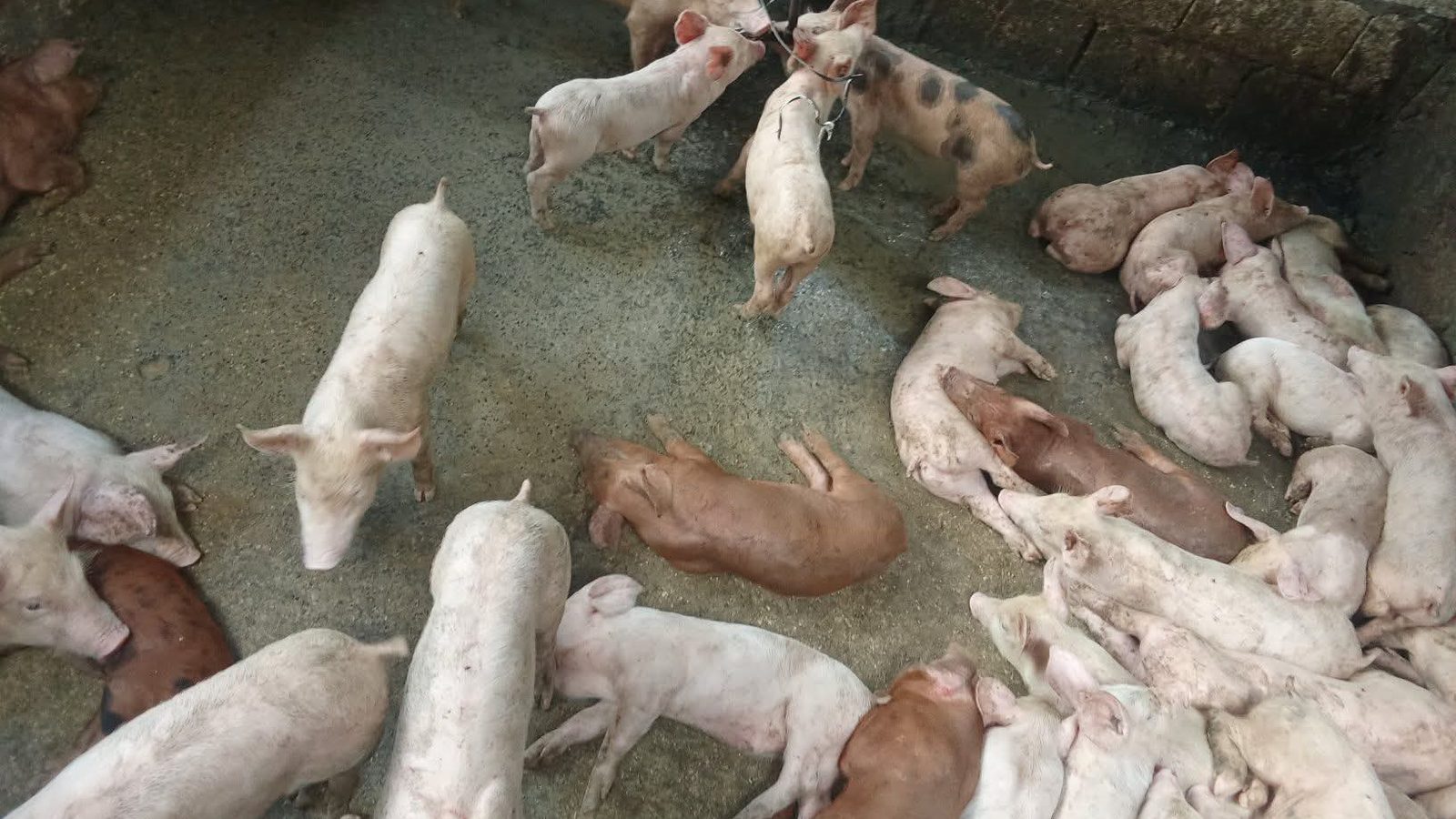
Stressed pigs get sick more easily. The immune system weakens under stress, and infections that a healthy pig would fight off become full-blown disease. In Philippine conditions, the main stressors are:
| Stressor | Effect | Prevention |
|---|---|---|
| Heat stress | Reduced feed intake, immune suppression | Shade, ventilation, cool water, sprinklers during peak heat (12-3 PM) |
| Overcrowding | Aggression, disease spread, reduced growth | 0.75-1.0 m² per finisher pig minimum |
| Mixing unfamiliar pigs | Fighting, injuries, stress hormones | Mix at night, provide enough feeders for all pigs |
| Sudden diet changes | Diarrhea, reduced intake | Transition over 3-5 days, mixing old and new feed |
Heat stress is the big one. Temperatures above 30°C reduce feed intake and growth in finisher pigs. During March-May in Cebu, Iloilo, and Davao, pigs in poorly ventilated concrete pens can lose 5-10% of their potential growth. Shade cloth (₱30-₱50/meter), proper ventilation openings, and cool water during 12-3 PM peak heat are cheap fixes.
When Prevention Fails: Early Detection
Even with good biosecurity, diseases can get in. Catch them early. Check pigs twice daily during feeding. A pig that doesn't come to the feeder is telling you something. Watch for:
- Not eating. The single most reliable early sign.
- Coughing or labored breathing. Respiratory disease.
- Diarrhea. Bacterial, viral, or parasitic.
- Skin changes. Red spots, lesions, rough coat.
- Lethargy. Lying apart from the group, not interested in food or water.
- Fever. Above 40°C (normal is 38.5-39.5°C). Use a rectal thermometer, ₱150-₱250 from any agri-vet.
If you spot any of these, isolate the pig immediately and call your municipal vet. Don't wait to see if it gets better. For a complete symptom guide, see pig diseases in the Philippines.
The Cost of Prevention vs. Treatment
| Item | Prevention Cost (Per Batch, 10 Heads) | Treatment/Loss Cost if Skipped |
|---|---|---|
| Biosecurity setup (amortized) | ₱500-₱1,000 | ASF outbreak: ₱120,000+ total loss |
| Monthly biosecurity maintenance | ₱1,500-₱3,000 (over 5 months) | Recurring respiratory issues: ₱5,000-₱15,000 in treatment + lost growth |
| Vaccination program | ₱800-₱2,400 | Hog cholera outbreak: 30-90% mortality = ₱36,000-₱108,000 lost |
| Deworming (2 rounds) | ₱600-₱1,200 | Parasite-related growth loss: ₱5,000-₱15,000 in extended finishing |
| Clean water system | ₱500-₱1,000 (amortized) | Waterborne diarrhea: ₱2,000-₱5,000 in treatment + lost growth |
| Total prevention | ₱3,900-₱8,600 | Potential losses if skipped: ₱48,000-₱260,000+ |
For every peso spent on prevention, you save ₱5-₱30 in potential losses. And unlike treatment, prevention doesn't stress the pigs or interrupt growth.
Free Tool
Break-Even Price Calculator
Add the ₱3,900-₱8,600 biosecurity spend to your batch cost and see how much it shifts your breakeven price per kilo.
Learn More
- Pig vaccination schedule: complete timing guide
- Pig diseases: symptoms and treatment: disease identification
- ASF recovery era farming: managing ASF risk
- Signs your pig is sick: early detection
- How to deworm pigs: deworming schedule and brands
Sources: FAO Good Practices for Biosecurity in the Pig Sector; WOAH ASF Technical Disease Card; Merck Vet Manual: Health-Management Interaction in Pigs; Ceva Coglapest product info; MSD Porcilis CSF Live; DA-BAI GAHP Guidelines for Swine; pig333.com biosecurity.
Bisaya / Cebuano
Unsaon paglikay sa sakit sa baboy: giya para sa mag-uuma sa Visayas ug Mindanao
Ang tulo ka haligi:
1. Biosecurity (pagpugong sa sakit nga mosulod)
- Footbath: Butangi sa entrance sa tangkal. Chlorine bleach (1:30 ratio sa tubig) o apog, ₱15-₱25 matag mix. Ilisan matag 2-3 ka adlaw.
- Quarantine: Matag bag-ong baboy, ibulag og 14-30 ka adlaw sa lain nga tangkal, minimum 10 metros gikan sa ubang baboy. Bisan pa moingon ang breeder "healthy na ni," quarantine gihapon.
- Bisita: Ayaw pasudla ang silingan o trader nga gikan sa ubang farm. Kung kinahanglan mosulod, patunoba sa footbath ug palisan og boots.
- Swill feeding: AYAW GYUD ipakaon ang sobra nga pagkaon nga naay hilaw nga karne. Mao ni ang #1 nga paagi sa pagkuyanap sa ASF. Kung gusto nimo gamiton ang labay, lut-a og 30+ minutos sa bukal.
2. Bakuna (paglig-on sa resistensya)
- Hog cholera (CSF): KINAHANGLAN gyud. Coglapest (Ceva) o Porcilis CSF Live (MSD), ₱35-₱80 matag ulo. Daghan og LGU sa Cebu, Iloilo, Davao, ug Bukidnon nga naghatag og LIBRE nga hog cholera vaccine. Pangutana sa imong municipal vet.
- Pila ang gasto sa tanan nga bakuna? Mga ₱80-₱200 matag ulo para sa kompleto nga programa (hog cholera + Mycoplasma + dewormer). Kung libre ang hog cholera sa LGU, mga ₱40-₱120 na lang.
- Storage: Ibutang sa refrigerator (2-8°C). Ang bakuna nga nabiyaan sa init, useless na. Kung walay ref, pakigsabot sa barangay health worker.
3. Kalimpyo (pagkunhod sa sakit nga pressure)
- Kuha sa hugaw 2x matag adlaw
- Limpyohi ang kan-anan ug imnanan matag adlaw
- Disinfect ang tangkal human sa matag batch: hugasi, butangi og apog (₱50-₱100), pabuy-i og 3-5 ka adlaw sa init sa adlaw
- Ayaw skip-a ang downtime tali sa batch, bisan pa murag sayang ang oras. Mas mahal ang antibiotics kaysa apog.
Kung naay masakit:
Ang pinaka-unang senyales: dili mokaon. Kung ang baboy dili moduol sa kan-anan, naay problema. I-isolate dayon ug tawagi ang municipal vet. Ayaw hulata og 2-3 ka adlaw, basin makalat na sa ubang baboy.
Ang prevention sa sakit ₱3,900-₱8,600 matag batch (10 ulo). Ang usa ka outbreak sa hog cholera pwede mogasto og ₱36,000-₱108,000. Ang ASF, ₱120,000+ total loss. Asa ka gustong mogasto?