A 3-head backyard pen costs ₱13,400 to ₱21,900 to build, while a 50-head zoned commercial setup runs ₱535,000 to ₱850,000. Floor space matters most: finishers need 1.0 to 1.3 sq m per head, with floors sloped 2-3% toward drains. Below are 5 tested layouts with dimensions, materials, and PHP costs for Philippine conditions.
FAO's pig housing chapter carries the space allowances and floor slopes these layouts are checked against.
Space Requirements: The Foundation
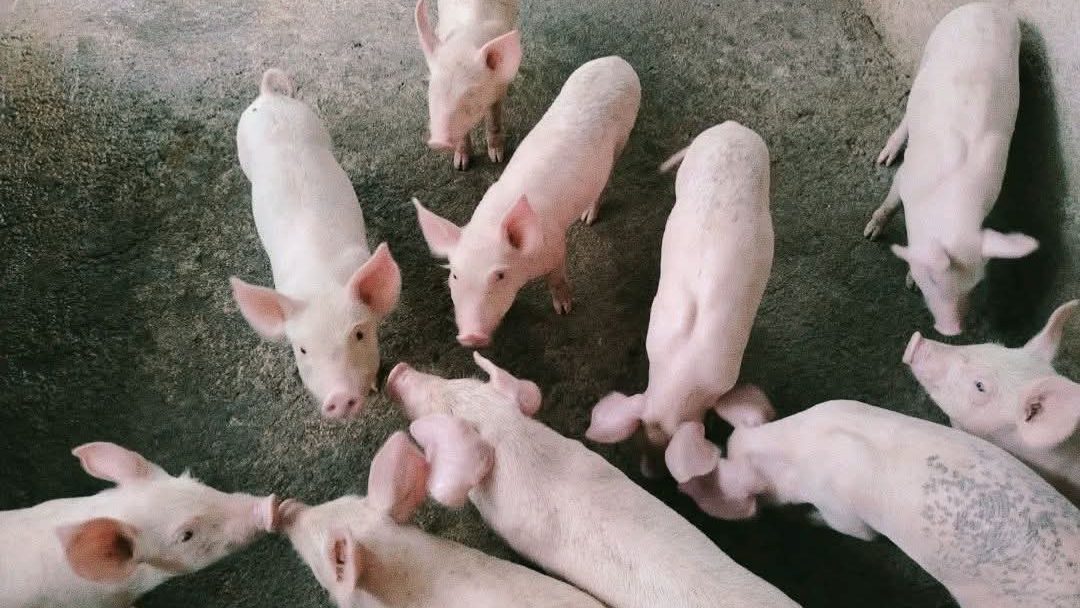
Before picking a layout, know how much space each pig actually needs. Overcrowding is the single most common mistake in Philippine piggeries. It causes stress, tail biting, reduced feed intake, slower growth, and higher disease transmission.
| Pig Type | Weight Range | Min. Floor Space per Head | Recommended Floor Space | Feeder Space per Head |
|---|---|---|---|---|
| Weanling | 8-15 kg | 0.25 sq m | 0.3-0.4 sq m | 15 cm |
| Starter | 15-30 kg | 0.4 sq m | 0.5-0.6 sq m | 20 cm |
| Grower | 30-60 kg | 0.6 sq m | 0.7-0.9 sq m | 25 cm |
| Finisher | 60-100 kg | 0.9 sq m | 1.0-1.3 sq m | 30 cm |
| Dry sow | 120-180 kg | 1.5 sq m | 2.0-2.5 sq m | 40 cm |
| Sow + litter (farrowing) | 150-220 kg + litter | 4.0 sq m | 5.0-6.0 sq m | — |
| Boar | 150-250 kg | 5.0 sq m | 6.0-7.5 sq m | — |
These figures are for partially enclosed pens with access to shade and ventilation, standard Philippine piggery conditions. In fully enclosed climate-controlled buildings (rare in backyard/semi-commercial operations), space can be slightly less. "Hatagi og igong luna ang baboy, kung puno kaayo, dili mo-tubo og tarong." (Give pigs enough space, if it is too crowded, they will not grow properly.)
Free Tool
Pen Space Calculator
Get the exact floor area for your planned herd, adjusted for hot-season conditions.
Layout 1: 3-Head Backyard Starter
Best for: First-time pig raisers, supplemental income, limited space in residential areas
This is the simplest functional piggery you can build. Three fattener pigs from weaning to market weight, raised in one cycle at a time.
Dimensions: 3.0 m x 2.5 m pen area (7.5 sq m total), 1.0 m concrete apron in front for feeding
Design:
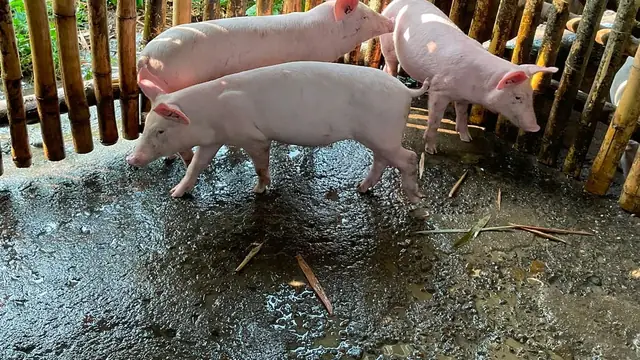
- Single pen, concrete floor with 2-3% slope toward a drain channel at the back
- Three walls at 1.2 m height: CHB (concrete hollow blocks) or a combination of CHB base (0.5 m) with bamboo or wood upper walls
- Open front with a simple steel pipe or bamboo gate
- Roof: galvanized iron (GI) sheets on a wood or bamboo frame, extending 0.5 m past the back wall to shed rain
Materials and estimated cost:
| Material | Quantity | Est. Cost (PHP) |
|---|---|---|
| CHB (4" hollow blocks) | 120-150 pcs | PHP 1,800-2,400 |
| Cement (40 kg bags) | 8-10 bags | PHP 2,000-2,800 |
| Sand and gravel | 1 cu m each | PHP 1,500-2,000 |
| Steel reinforcing bars (10mm) | 4-6 lengths | PHP 1,200-1,800 |
| GI roofing (0.4mm) | 4 sheets | PHP 1,600-2,400 |
| Lumber (framing, purlins) | Assorted | PHP 2,000-3,500 |
| Gate materials (steel pipe or bamboo) | 1 set | PHP 500-1,500 |
| Plumbing (drain, water line) | 1 set | PHP 800-1,500 |
| Labor (if hired) | 2-3 days | PHP 2,000-4,000 |
| Total | PHP 13,400-21,900 |
If you use bamboo for upper walls and framing (abundant in many provinces), you can cut the total to PHP 8,000-12,000. But bamboo deteriorates in 2-3 years with constant moisture exposure, so budget for replacements.
Pros: Low investment, simple to build in a weekend, fits in a standard residential lot, easy to clean with one person. Honestly, most first-time raisers do fine starting here.
Cons: No room for expansion. Cannot separate pigs by size if growth rates differ. No isolation space if a pig gets sick. Not ideal for breeding, sow and boar need separate pens.
Layout 2: 10-Head Grow-Out
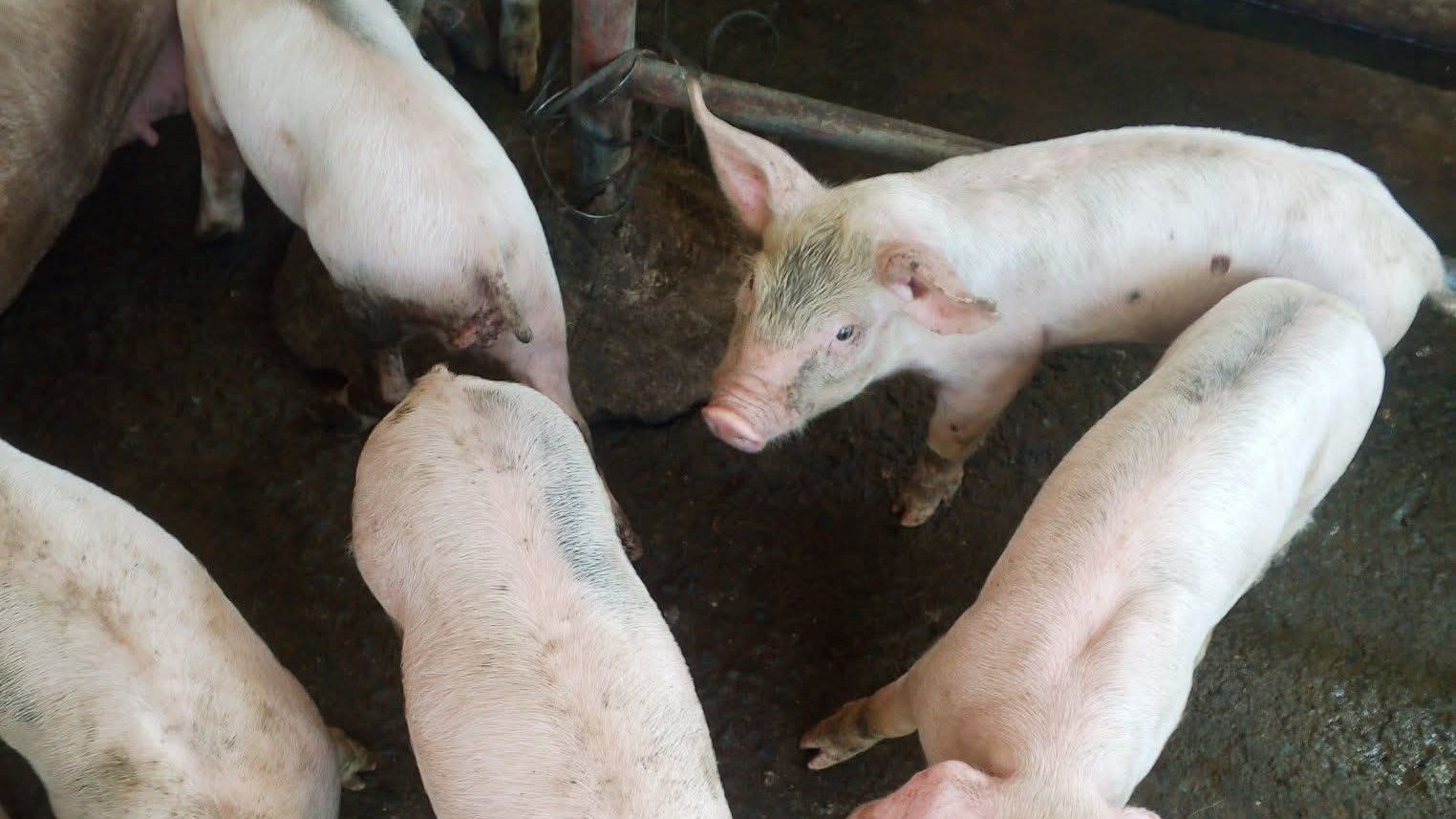
Best for: Serious backyard farmers doing 2-3 cycles per year, targeting PHP 50,000-100,000 annual profit
This layout uses two pens to allow basic separation (e.g., smaller and larger pigs, or two batches at different stages).
Dimensions: Total pen area: 6.0 m x 4.0 m (24 sq m), divided into two pens of 6.0 m x 2.0 m each. Central feeding aisle of 1.0 m width between pens. Total footprint including aisle: 6.0 m x 5.0 m (30 sq m).
Design:
- Two parallel pens with a central walkway for feeding and cleaning
- Concrete floor throughout with drainage channels running along the back wall of each pen, connecting to a settling pit or biodigester
- CHB walls to 1.2 m on three sides of each pen. Dividing wall between pens can be 0.9 m CHB with steel pipe top rail
- GI roof covering entire structure, with ridge vent or gap at peak for hot air escape
- Concrete feeding trough built into the aisle-side wall of each pen
Materials and estimated cost:
| Material | Quantity | Est. Cost (PHP) |
|---|---|---|
| CHB (4" and 6") | 400-500 pcs | PHP 6,000-8,000 |
| Cement | 20-25 bags | PHP 5,000-7,000 |
| Sand and gravel | 3 cu m each | PHP 4,500-6,000 |
| Steel reinforcing bars | 15-20 lengths | PHP 4,500-6,000 |
| GI roofing | 8-10 sheets | PHP 3,200-6,000 |
| Lumber/steel framing | assorted | PHP 5,000-8,000 |
| Gates (2 pcs) | 2 pcs | PHP 1,500-3,000 |
| Plumbing + drainage | 1 set | PHP 2,000-4,000 |
| Feeding troughs (built-in) | 2 pcs | PHP 1,500-2,500 |
| Labor | 5-7 days | PHP 5,000-9,000 |
| Total | PHP 38,200-59,500 |
Pros: Two-pen system allows batch management, size separation, or quarantine flexibility. Central aisle makes feeding and cleaning efficient. Can handle 10 finishers or 15 growers comfortably.
Cons: Still no dedicated farrowing area. Not enough separation for a breeding program. If one pen needs major repair, you have nowhere to move those pigs.
Layout 3: Sow + Farrowing Setup
Best for: Farmers who want to breed and sell piglets or raise their own replacement stock. Requires 2-4 sows.
This is where pig farming starts to get more technical. Farrowing pens need specific design features to prevent sow crush (the leading cause of piglet deaths in the first week).
Dimensions:
- 2 farrowing pens: 2.0 m x 2.5 m each (5 sq m per pen)
- 1 sow holding pen: 3.0 m x 2.5 m (7.5 sq m)
- 1 boar pen: 2.5 m x 3.0 m (7.5 sq m)
- 1 nursery pen for weaned piglets: 3.0 m x 2.0 m (6 sq m)
- Service aisle: 1.0 m wide
- Total footprint: approximately 8.0 m x 6.0 m (48 sq m)
Farrowing pen design details:
- Farrowing rails (crush bars): steel pipe or hardwood rails mounted 20-25 cm from the floor and 20-25 cm from the wall, creating a protected creep area where piglets can lie without being crushed
- Creep area: the space under and behind the farrowing rails, ideally with a heat lamp or covered section for piglet warmth in cooler provinces
- Sloped floor (3%) for drainage; slatted flooring in the creep area helps keep piglets dry
- Sow cannot turn freely in farrowing crate designs, but Philippine backyard farrowing more commonly uses open pens with crush rails rather than full crates
Estimated cost:
| Component | Est. Cost (PHP) |
|---|---|
| 2 farrowing pens (concrete + rails) | PHP 25,000-35,000 |
| 1 sow holding pen | PHP 12,000-18,000 |
| 1 boar pen | PHP 12,000-18,000 |
| 1 nursery pen | PHP 10,000-15,000 |
| Roofing for entire structure | PHP 8,000-15,000 |
| Plumbing, drainage, settling pit | PHP 5,000-8,000 |
| Labor | PHP 10,000-18,000 |
| Total | PHP 82,000-127,000 |
Pros: Enables breeding for piglet sales (high margin) or self-replacement. Farrowing rails reduce piglet mortality by 30-50% compared to open pens without them. Dedicated boar pen prevents unwanted breeding.
Cons: Significant investment for a backyard farmer. Requires breeding knowledge: knowing when a sow is in heat, how to tell if a pig is pregnant, and avoiding common breeding mistakes is not trivial. Boar pen sits mostly empty (boar is only active a few days per month). Higher labor requirement for farrowing management.
Layout 4: 20-Head Semi-Commercial
Best for: Full-time pig farming, targeting PHP 200,000-400,000 annual profit. This is where most Philippine farmers transition from "backyard" to "semi-commercial," and where LGU permit requirements (Mayor's permit, sanitary permit, DENR-DAO 2003-30 environmental compliance for operations above 21 sows or 41 fatteners) start to apply more strictly.
Dimensions:
- 4 grow-out pens: 4.0 m x 3.5 m each (14 sq m per pen, 5 heads each)
- 1 receiving/quarantine pen: 3.0 m x 3.0 m (9 sq m)
- 1 isolation/hospital pen: 2.5 m x 2.5 m (6.25 sq m)
- Central feed aisle: 1.2 m wide, running the length of the structure
- Feed storage room: 3.0 m x 2.5 m (7.5 sq m), keeps feed dry and rat-free
- Total footprint: approximately 18.0 m x 8.0 m (144 sq m)
Design features for this scale:
- All concrete floors with proper gradient (2-3%) and covered drain channels leading to a waste management system (settling pit, biodigester, or composting area)
- Full CHB walls to 1.2-1.5 m for durability. Upper sections can be open or covered with wire mesh for ventilation
- Steel truss roofing (no wood; termite damage is a constant problem in humid Philippine conditions at this scale)
- Nipple drinkers instead of open water troughs. Saves water, reduces contamination
- Built-in concrete feeding troughs with round bottoms (easier to clean than square corners)
- Perimeter fence: at minimum 1.5 m high with solid base to prevent stray animal entry, critical for biosecurity
Estimated cost:
| Component | Est. Cost (PHP) |
|---|---|
| 4 grow-out pens | PHP 80,000-120,000 |
| Quarantine + isolation pens | PHP 20,000-30,000 |
| Feed storage room | PHP 15,000-25,000 |
| Central aisle + concrete work | PHP 15,000-25,000 |
| Steel truss roofing (full) | PHP 30,000-50,000 |
| Water system (tank, nipple drinkers) | PHP 8,000-15,000 |
| Waste management (settling pit) | PHP 10,000-20,000 |
| Perimeter fence | PHP 15,000-25,000 |
| Electrical (lighting, optional fan) | PHP 5,000-10,000 |
| Labor (2-3 weeks) | PHP 20,000-35,000 |
| Total | PHP 218,000-355,000 |
Pros: Quarantine pen lets you safely introduce new stock and isolate sick pigs, which is the difference between losing one pig and losing the whole herd. Feed storage prevents waste and spoilage. Four pens allow batch rotation and all-in-all-out management. Proper drainage and waste handling reduce odor complaints from neighbors.
Cons: Serious capital investment. Requires dedicated land (at least 150-200 sq m including setbacks). Operating at this scale means you need reliable feed supply chains, veterinary relationships, and a market for 60-80 pigs per year. Building a proper piggery at this level takes 3-4 weeks of construction.
Layout 5: 50-Head with Separate Zones
Best for: Full-time commercial operation, potentially with breeding. Annual throughput of 150-200 pigs. This is the upper end of what most Filipino farmers can manage without hired full-time staff.
Dimensions and zones:
| Zone | Pens | Dimensions per Pen | Total Area | Purpose |
|---|---|---|---|---|
| Grow-out | 6 pens | 5.0 m x 4.0 m (20 sq m) | 120 sq m | Main production, 8 heads per pen |
| Farrowing | 3 pens | 2.0 m x 2.5 m (5 sq m) | 15 sq m | Birthing with crush rails |
| Gestation/dry sow | 2 pens | 3.5 m x 3.0 m (10.5 sq m) | 21 sq m | Pregnant sows |
| Boar | 1 pen | 3.0 m x 3.0 m (9 sq m) | 9 sq m | Breeding boar, separate from sows |
| Nursery | 2 pens | 3.0 m x 2.5 m (7.5 sq m) | 15 sq m | Weaned piglets 8-20 kg |
| Quarantine | 1 pen | 3.0 m x 3.0 m (9 sq m) | 9 sq m | New arrivals, 14-21 day hold |
| Isolation/hospital | 1 pen | 3.0 m x 2.5 m (7.5 sq m) | 7.5 sq m | Sick pigs, away from main area |
| Feed storage | 1 room | 4.0 m x 3.0 m (12 sq m) | 12 sq m | Dry, elevated, rat-proofed |
| Equipment/medicine | 1 room | 2.5 m x 2.0 m (5 sq m) | 5 sq m | Vaccines, tools, records |
| Total pen/building area | 213.5 sq m | |||
| Aisles, walkways, waste area | ~80 sq m | |||
| Total footprint | ~300 sq m | Excludes setbacks and buffer |
With required setbacks from property lines, water sources, and neighboring houses (varies by LGU, typically 10-25 meters from the nearest residence and at least 25 m from any water body under DENR-DAO 2003-30), you need a lot of at least 500-800 sq m dedicated to the piggery. The exact buffer distances are usually written into your municipality's environment or zoning ordinance, so check with the Sanggunian Bayan office before pouring concrete.
Critical design features at this scale:
- Zone separation: Farrowing/nursery area must be physically separated from grow-out area with its own entrance. Workers should move from clean (farrowing) to dirty (grow-out), never the reverse.
- All-in-all-out capability: Grow-out pens should allow complete emptying, cleaning, and disinfection between batches. This breaks disease cycles.
- Waste management system: At 50 heads, you generate 200-400 kg of manure daily. A settling pit is minimum; a biodigester that captures methane for cooking fuel is ideal. PCAARRD has free reference designs and the DA's Soil and Water Conservation program (and a few LGU agriculture offices in Bukidnon, Iloilo, and Pangasinan) periodically subsidize small-farm biodigesters.
- Water supply: Dedicated water tank (2,000-5,000 liter capacity) with gravity-fed nipple drinker lines. Municipal water or deep well. Do not rely on a single source.
- Vehicle access: Feed delivery trucks need access. Design a loading/unloading area outside the biosecurity perimeter.
Estimated cost:
| Component | Est. Cost (PHP) |
|---|---|
| Grow-out building (6 pens) | PHP 200,000-300,000 |
| Farrowing + nursery building | PHP 80,000-120,000 |
| Gestation + boar pens | PHP 40,000-60,000 |
| Quarantine + isolation | PHP 25,000-40,000 |
| Feed + equipment storage | PHP 25,000-40,000 |
| Water system (tank, lines, drinkers) | PHP 20,000-35,000 |
| Waste management (biodigester or lagoon) | PHP 30,000-60,000 |
| Perimeter fence + gates | PHP 25,000-45,000 |
| Electrical system | PHP 10,000-20,000 |
| Concrete work (aisles, aprons, drainage) | PHP 30,000-50,000 |
| Labor (4-6 weeks) | PHP 50,000-80,000 |
| Total | PHP 535,000-850,000 |
Pros: True commercial operation capable of generating PHP 500,000-1,000,000+ annual revenue. Zone separation dramatically reduces disease spread. Breeding capability means you can produce your own piglets. Professional-grade waste management keeps you compliant with environmental regulations. Economies of scale on feed purchasing.
Cons: Major capital requirement. Needs at least one full-time worker plus the owner. You need a real vet relationship; you cannot manage 50 heads with YouTube advice. Permit process is more involved. If market prices drop or disease hits, the financial exposure is substantial. See our profitability analysis to run the numbers before committing.
Universal Design Principles for Philippine Conditions
Regardless of layout, these principles apply anywhere in the Philippines:
Ventilation over insulation. Philippine pigs die from heat stress far more often than cold stress. Open-sided designs with large roof overhangs (0.5-1.0 m) that block rain while allowing airflow are better than enclosed buildings. Orient the long axis east-west so prevailing winds flow through the open sides.
Drainage is everything. Design floors with a 2-3% slope toward drain channels. Use smooth-finished concrete (not rough), it is easier to clean and does not trap bacteria. Drain channels should be covered to prevent hoof injuries and should lead to a collection point, not just dump onto the ground.
Roof height matters. Minimum 2.5 m at the eaves for small pens, 3.0-3.5 m for larger structures. Higher ceilings allow hot air to rise away from the pigs. A ridge vent or monitor roof design (raised center section with gap) provides passive ventilation without mechanical fans.
Flooring choice. Full concrete is most durable and hygienic but hardest on pig joints, especially for sows on long gestations. Partially slatted (concrete slats over a shallow pit) reduces labor for manure removal. Bamboo slats work in the short term but rot fast under daily moisture. If your site sits close to neighbors and a conventional drain-channel design will draw odor and fly complaints, the KNF (Korean Natural Farming) deep-litter approach is worth a look — it replaces drainage with a 60-80 cm rice-hull-and-sawdust bed inoculated with indigenous microorganisms that compost urine and manure on the spot, with almost no smell. PCAARRD and several DA-ATI provincial offices have running demos.
For practical tips on building your first piggery, including tool lists and step-by-step construction guidance, read our how to build a backyard piggery guide. If you are working with very limited space, our guide on raising pigs in a small backyard covers creative solutions.
Bisaya / Cebuano
Para sa mga mag-uuma: Pagbuhat og babuyan
- Ang pinakamaayo nga salog mao ang semento nga hapsay ug may dagan sa tubig, limpyo ug sayon limpyohan
- Hatagi og 1 sq m matag isa ka baboy nga finisher, kung kulang ang luna, mag-away sila ug dili mo-tubo
- Ayaw kalimti ang drain, kung mag-baha ang babuyan matag ulan, masakit dayon ang mga baboy
- Ang hangin mas importante kaysa bongbong, ayaw sirad-i ang babuyan, pahanginan
- Kung naay budget, butangi og nipple drinker, mas limpyo ug mas tipid sa tubig
Learn More
- How to build a backyard piggery: step-by-step construction guide
- Raising pigs in a small backyard: creative solutions for limited space
- Why piglets die in the first week: pen design choices that prevent crushing and chilling
- How to tell a sow is in heat: required reading if you are building farrowing pens
- Pen space calculator: calculate exact floor area for your herd
- Profit simulator: run the numbers before committing to a layout
Sources: FAO Pig Housing and Environment Guidelines, BAI (Bureau of Animal Industry) Swine Production Standards, PCAARRD Philippine Swine Housing Technology Guide, DA-ATI Backyard Piggery Construction Manual, PhilMech Agricultural Structures Design Reference, Philippine Society of Agricultural Engineers (PSAE) Livestock Housing Standards.