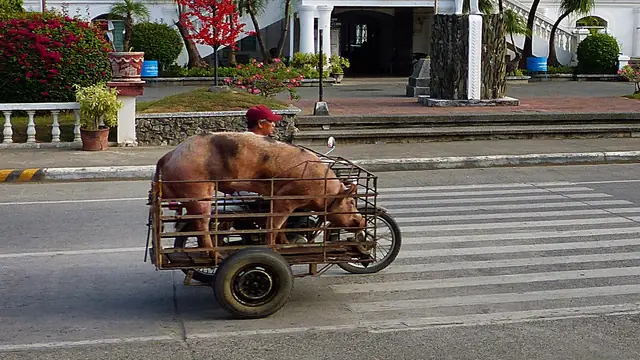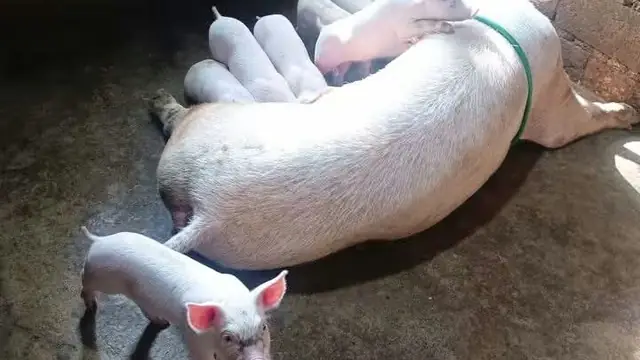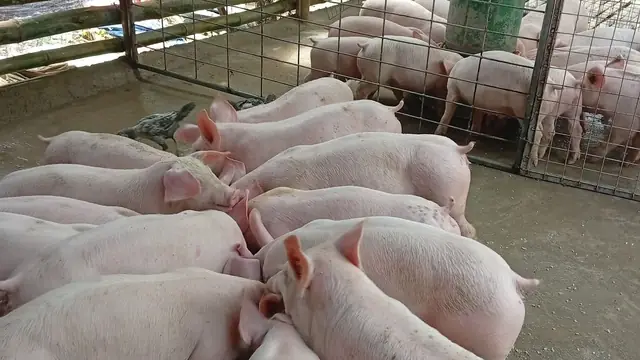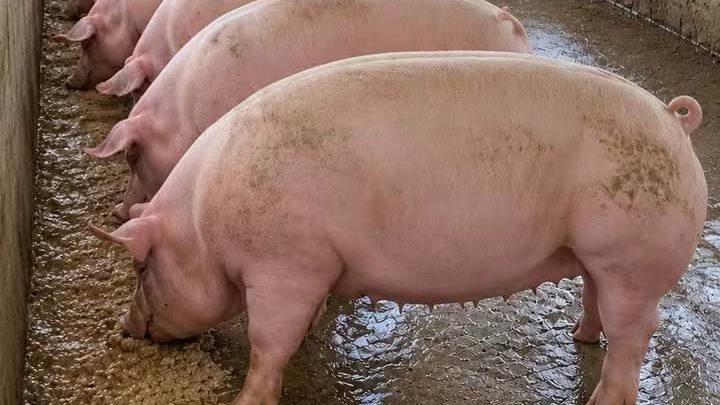
A 10-pig backyard cycle nets roughly ₱15,000-₱38,000 at the mid-2026 farmgate, and a well-run 80-pig semi-commercial cycle nets ₱75,000-₱225,000. Scaling 8x does not give you 8x the money. It gives you about 8x the throughput on a slightly thinner per-pig margin, and it costs roughly 15x more capital plus a full-time job.
So scaling can still be worth it. But you scale for the right reason at the right point, not because bigger looks better on paper. Below is the side-by-side math, priced at the farmgate that actually exists in July 2026, not the ₱210/kg the DA says you should be getting.
Free Tool
Pig Profit Simulator
Model a 10-head backyard cycle and an 80-head semi-commercial cycle side by side at your own feed price and local farmgate price.
Defining the two operations
So we're comparing the same thing across both models, here's the spec:
Backyard model, 10 head per cycle, two cycles a year:
- 20 fattener pigs per year, sold at 95 kg liveweight
- Pen: 4-pen layout, total 60-80 m² covered, concrete floor, mostly DIY-built over 2-3 weekends
- Feed: commercial bagged feed bought from a local dealer, no bulk discount
- Labour: household, before-work and after-work, ~1 hour per day average
- Buyer: 1-2 local viajeros, occasionally direct to wet market
- Permits: barangay clearance, that's about it
Semi-commercial model, 80 head per cycle, two cycles a year:
- 160 fattener pigs per year, sold at 95-100 kg liveweight
- Pen: 12-16 pens, 500-700 m² covered, concrete floor, proper drainage, biosec footbaths, monitor-vent roof
- Feed: commercial bulk or 70% commercial + 30% farm-mixed concentrate with a small mill
- Labour: one full-time labourer + owner-manager
- Buyer: established viajero contract, occasional direct slaughterhouse delivery
- Permits: LGU commercial livestock permit, BAI registration, ECC or CNC environmental clearance
These are real, common operations. They're not the same farm at different sizes. They're structurally different businesses.
Per-pig cost comparison
Here's where the per-pig math diverges. All figures in 2026 pesos. Costs move less by region than prices do, and the price map is not the one most guides draw: in PSA's June 2026 figures the highest farmgate was Cordillera at ₱224.10/kg and Central Visayas at ₱208.73, Central Luzon sat sixth at ₱181.05, and SOCCSKSARGEN was last at ₱141.98. Check your own province before you trust any national average. These line items track the same cost structure used in our cost to raise a pig breakdown, so the two articles stay consistent.
| Cost line per pig | Backyard 10-head | Semi-commercial 80-head |
|---|---|---|
| Weaner purchase (8-12 kg) | ₱3,000-₱4,000 | ₱3,400-₱3,900 (volume + relationship) |
| Feed, weaner to 95 kg (~275 kg) | ₱8,300-₱11,200 | ₱7,800-₱10,200 (bulk + 25-30% mix) |
| Vet, dewormer, meds | ₱200-₱500 | ₱250-₱450 (volume buying) |
| Pen depreciation per pig | ₱300-₱800 | ₱600-₱1,000 (heavier build) |
| Water, power per pig | ₱100-₱300 | ₱350-₱550 (pumps, fans) |
| Labour cost per pig | ₱0 (household time) | ₱900-₱1,300 (employed labourer) |
| Permits, compliance per pig | ₱30 | ₱180-₱280 |
| Biosec consumables per pig | ₱100-₱200 | ₱300-₱450 |
| Mortality reserve (5% vs 6%) | ₱500-₱700 | ₱700-₱950 |
| Total cost per pig sold | ₱12,500-₱17,700 | ₱14,500-₱19,100 |
The per-pig cost is in the same range across both models. What backyard saves on labour, permits, and infrastructure, semi-commercial gives back through employed labour, compliance, and a heavier build. What semi-commercial claws back on bulk feed and weaner pricing, backyard matches through household labour at zero marginal cost.
This is the first surprise. Scale doesn't make pigs cheaper to raise. It restructures where the cost lands.
Per-pig revenue and margin
Both operations sell into the same liveweight market, and that market is not where the headlines put it. PSA's national average was ₱191.51/kg in Q3 2025, ₱182.83 in Q4, ₱176.03 in Q1 2026 and ₱172.44 in Q2 2026. SINAG put the industry average at ₱180-₱190/kg in May 2026 and eFeedLink trade quotes ran ₱183-₱193. Pick one and say which: ₱172 is the official survey, ₱185 is the trade. The gap between them is ₱1,200 on a 95 kg pig, which is most of a backyard margin. Farmgate has not touched ₱200 since mid-2025.
The ₱210/kg minimum farmgate price the DA announced on 4 November 2025 is a target, not money in your hand. No month of the national series, and no region outside the Cordillera, has ever printed it. If your plan needs ₱210, you do not have a plan.
Now the part that stings. SINAG and the National Federation of Hog Farmers separately put cost of production at about ₱180/kg. The average Philippine hog farm is selling at roughly its own cost. Backyard raisers survive that because household labour is free and the pen is long since paid for. A semi-commercial farm carrying a wage, a permit bill, and depreciation on a proper build has no such cushion.
Semi-commercial can sometimes negotiate ₱3-6/kg better on consistent volume, worth ₱300-₱600 per pig.
| Revenue per pig sold | Backyard 10-head | Semi-commercial 80-head |
|---|---|---|
| Sale liveweight | 95 kg | 97 kg (tighter feed management) |
| Sale price per kg liveweight | ₱175-₱190 | ₱180-₱193 |
| Revenue per pig | ₱16,625-₱18,050 | ₱17,460-₱18,721 |
| Less total cost (above) | ₱12,500-₱17,700 | ₱14,500-₱19,100 |
| Net margin per pig | ₱1,500-₱4,000 (typical) | ₱1,000-₱3,000 (typical) |
The honest read: per-pig margin does not improve when you scale, and at PSA's ₱172.44/kg neither model is comfortable. It drifts lower with scale because the fixed costs of a commercial operation (labour, permits, heavier infrastructure) land on every pig, while the bulk-feed and pricing savings only partly offset them. Look at the top of each cost column. A backyard raiser sitting at ₱17,700 per pig is underwater even at the trade's ₱185/kg, and so is a semi-commercial farm at ₱19,100. That is not a scare line. It is where the national average farm sits right now, with cost of production at roughly ₱180/kg against a sale at the trade's ₱185/kg. The margins above belong to farms that manage their feed conversion and their mortality, not to the average one.
Annual margin at scale
Both operations run two cycles a year. The gain from scaling is throughput, not a fatter margin per pig.
| Annual figure | Backyard 10-head | Semi-commercial 80-head |
|---|---|---|
| Pigs sold per year (after mortality) | ~19 | ~150 |
| Net margin per pig (typical) | ₱1,500-₱4,000 | ₱1,000-₱3,000 |
| Net annual margin (standard) | ₱30,000-₱75,000 | ₱150,000-₱450,000 |
A standard backyard 10-head operator following the bought-weaner, bagged-feed playbook nets ₱30,000-₱75,000 a year at July 2026 prices. That is well down on what the same playbook cleared when farmgate was still printing ₱214/kg in June 2025. Nothing about the farm changed. The price did. Our sow vs fattener breakdown runs the same 10-pig operation line by line.
An optimised backyard operator who runs a breeding sow for home-bred weaners (saving ₱2,500-₱3,500/pig), mixes 25-30% of the feed, and sells a few dressed pigs direct can reach ₱150,000-₱250,000 a year at the same headcount. Those gains come from extra inputs (a sow, milling time, a retail channel) that the standard per-pig table above doesn't carry. Note where the money comes from: cutting your own cost, not getting a better price. Nobody is going to hand you a better price.
Semi-commercial at 80 head splits the same way: a standard operation nets ₱150,000-₱450,000, an optimised one with farm-bred weaners, partial milling, and direct slaughterhouse buyers reaches ₱500,000-₱800,000. Same scale, different management depth. Notice the optimised backyard farm, on a fraction of the capital, earns within reach of a standard semi-commercial farm.
Capital required to make the jump
Going from a 10-head backyard pen to an 80-head semi-commercial operation isn't a renovation. It's a rebuild.
| Capital line | Cost |
|---|---|
| Pen expansion: 12-16 pens, 500-700 m² | ₱600,000-₱1,200,000 |
| Bulk feed storage silo + small mill | ₱300,000-₱500,000 |
| Water tank, pumps, drinkers | ₱120,000-₱200,000 |
| Manure trench + biogas or concrete pit | ₱180,000-₱350,000 |
| Boundary fence, biosec footbaths, hand-wash | ₱80,000-₱150,000 |
| Office/storage shed, lockers, vehicle access | ₱150,000-₱250,000 |
| LGU + BAI + environmental permits | ₱100,000-₱300,000 |
| Working capital (about one cycle of feed at 80 head) | ₱700,000-₱1,100,000 |
| Total to scale from 10 to 80 head | ₱2,230,000-₱4,050,000 |
This is the number that surprises most raisers. The pens are not the biggest line. The working capital is. Premium grower/finisher ran ₱34.90-₱38.20/kg as of 12 July 2026 (₱1,747-₱1,910 per 50 kg bag, mean ₱36.69/kg), and feed has climbed ₱1-2/kg through the year with no miller announcing a rollback. Eighty pigs eating roughly 275 kg each across 5-6 months of grow-out runs a feed bill of about ₱770,000-₱840,000 per cycle. Feed is around 57% of hog operating cost (PIDS), so that one line decides whether the farm works. You need close to a full cycle of it sitting in the bank, or you'll get forced into early sale during a price dip.
The inflection: when scale stops paying
Per-pig margin doesn't keep improving as you add pigs. Here's the rough curve. Treat it as directional, not precise; actual numbers swing with feed price and farmgate.
| Scale | Per-pig margin (typical) | Why |
|---|---|---|
| 5-10 head | ₱1,500-₱4,000 | Low fixed cost, household labour |
| 20-30 head | ₱1,800-₱4,200 | Bulk feed kicks in, viajero relationship deepens |
| 40-60 head | ₱1,500-₱3,800 | Labour cost added, biosec heavier |
| 80-100 head | ₱1,000-₱3,000 | Permits and compliance added, working capital strain |
| 150-200 head | ₱1,000-₱2,800 | Management complexity, full vet contract |
| 300+ head | ₱1,800-₱4,000 | Real bulk economies: own mill, slaughterhouse contracts, vet on retainer |
There's a productivity valley between roughly 60 and 250 head where you've added all the fixed costs of commercial operation but don't have enough volume to spread them out. Operations stuck in this range tend to feel a lot busier and earn proportionally less than they expected.
The exception is contract growing. A 60-100 head contract-grower operation under an integrator like San Miguel, Vitarich, or Bounty Fresh removes the buyer and feed-pricing risk that makes this range hard. Per-pig margin is ₱1,500-₱2,500, and it's stable, and the integrator carries the feed bill. Two years ago that fee looked like the lazy option. At a ₱185/kg farmgate against ₱180/kg cost of production, it is competitive with owning the pig yourself, which tells you exactly how thin the open market has become.
When scaling fails
Three patterns wreck scaling attempts again and again. They show up regardless of region:
Working capital shortfall. The farmer scales the pen and the headcount but underestimates how much feed-money cushion is needed. Around month 4 of the first scaled cycle, pigs hit 60-70 kg, feed consumption peaks at 3+ kg/day per pig, and the monthly feed bill blows up. The farmer can't fund the final 4-6 weeks of finisher feed and sells pigs at 70-75 kg instead of 95 kg. Twenty kilos short at the trade's ₱185/kg is ₱3,700 of revenue gone against feed already bought, which at 2026 margins means the pig sells at a loss. Do that across 80 head and the cycle is a write-off.
Management overload. A single owner-operator who managed 20 pigs comfortably tries to manage 80 with one minimally-trained labourer. Biosec lapses (the labourer skips the foot dip, dead pigs aren't promptly removed, mixed-age pens). One ASF or classical swine fever scare and 30% mortality wipes out the season's margin.
Buyer mismatch. The local viajero who happily took 10 pigs every six months cannot absorb 80. Sometimes they refuse outright; sometimes they take the volume but at ₱20-₱30/kg below the going rate because "you need me more than I need you." The scaled-up farm hasn't built a relationship with a larger buyer, whether institutional, a slaughterhouse, or an organised meat trader, so the pricing leverage they assumed at scale doesn't exist.
The common thread: scaling is not a pen problem. It's a working capital + management + buyer relationship problem, and the pens are actually the easy part.
Bisaya / Cebuano
Mag-scale ba ngadto sa semi-commercial?
Daghang backyard raisers ang ni-scale ngadto sa 50-80 ka baboy unya ni-balik ra pud sa 15-20 sulod sa duha ka tuig. Ang kasagarang rason kay ang feed bill nahimong dako kaayo, ug ang viajero nga buyer dili kaya mo-kuha og 80 ka baboy matag unom ka bulan.
Ang tinuod nga math:
- Ang farmgate karon (Mayo 2026, SINAG) mga ₱180 ngadto ₱190 kada kilo. Ang gasto sa pag-alima mga ₱180 pud. Ang ₱210 nga presyo sa DA wala pa gyud na-abot bisan usa ka bulan, bisan asa nga rehiyon.
- 10 ka baboy backyard, 2 ka cycle kada tuig: net mga ₱30,000 ngadto ₱75,000.
- 80 ka baboy semi-commercial, standard: net mga ₱150,000 ngadto ₱450,000, pero kinahanglan og ₱2.2M ngadto ₱4M nga puhunan.
- Ang ganansya kada baboy dili modako kung mo-scale ka. Mga ₱1,500 ngadto ₱4,000 ra gihapon, o gamay pa gani.
Ayaw pag-scale kung: wala pa kay 2-3 ka tuig nga track record sa 20-30 ka baboy, walay institutional o slaughterhouse buyer nga committed, ug walay capital cushion nga makasugakod sa usa ka daotang cycle.
Mas maayo nga paagi para sa kasagaran: ayaw pag-scale ngadto sa 80. I-optimize ang 10-20 ka baboy. Pagbutang og usa ka sow para sa kaugalingong weaner, isagol ang 25-30% sa feed, ug pagbaligya og pipila ka dressed nga baboy direkta. Mahimo kang mo-clear og ₱150,000 ngadto ₱250,000 kada tuig nga walay commercial permit ug walay utang.
When scaling actually works
Some operations do scale successfully. They share a few specific traits:
- Prior track record. Two or more years of consistently running 20-30 head profitably. The owner-operator has feel for cycle timing, mortality patterns, buyer behaviour.
- Buyer commitment in writing. A contract with an integrator (San Miguel, Vitarich, Bounty Fresh) or a verbal-but-real commitment from a wet-market wholesaler or institutional buyer (school cafeteria network, hotel chain) to take the volume.
- Capital cushion that survives one bad cycle. Enough cash reserve that one ASF scare or one price dip doesn't force the farm into distress sale.
- Either a working spouse or a dedicated labourer. Solo owner-operators above 50 head usually break down within 18 months.
- A specific reason to scale beyond income. A child in agriculture school who'll take over, a niche market (institutional buyer, breed-specific contract) that pays a premium, or a feed mill side business that needs the pig volume to justify.
If three or more of these aren't true, optimising the 10-30 head operation is almost always a higher ROI than scaling.
The optimised backyard alternative
For most readers, the better path is not "scale to 80" but "optimise the 10-20." That looks like:
- Add one breeding sow. Home-bred weaners save ₱2,500-₱3,500 per pig.
- Mix 25-35% of feed yourself using copra meal, rice bran, and concentrate. Saves ₱1,500-₱2,500 per pig.
- Add a biogas digester. Cuts LPG and gas spend, gives compost-quality slurry.
- Build a direct retail channel for 2-3 pigs per cycle (whole dressed sale to neighbours or restaurants at ₱300-₱340/kg). For reference, DA Bantay Presyo had NCR retail at ₱379/kg liempo and ₱325-₱328 for kasim and pigue on 12 July 2026, so a whole carcass has to price under the cuts. Adds ₱2,500-₱4,000 per direct-sold pig.
- Sell or compost the manure as a small side line. ₱8,000-₱20,000 in annual side income, plus you stop paying to haul it away.
An optimised 15-head backyard operation can clear ₱150,000-₱250,000 annually without commercial permits, without taking on debt, and without hiring a full-time labourer. That's the version that beats most standard semi-commercial farms on return per peso of capital invested. The lesson isn't "never scale." It's that depth of management on a small herd usually beats raw headcount until you have the buyer, the capital cushion, and the track record to make the big jump pay.
Tools and related reading
Model both scenarios at current feed prices and your local liveweight price with the Profit Simulator, then pressure-test the scaled cycle on the break-even calculator to see how low farmgate can go before the bigger operation loses money.
Related articles:
- Magkano puhunan sa baboyan? Capital tiers explained
- Pig farming profit on 10 pigs
- Cost to raise a pig in the Philippines 2026
- Sow vs fattener: which earns more?
- Contract growing pig farming
- Hidden pig farm startup costs
- 5 pig pen layouts: 3-head to 50-head
- Biogas digester ROI
- Browse the Money topic cluster
Sources: PSA OpenSTAT farmgate price of hogs for slaughter, liveweight (Q3 2025 ₱191.51/kg; Q4 2025 ₱182.83; Q1 2026 ₱176.03; Apr-Jun 2026 ₱174.00, ₱171.56, ₱171.76, Q2 average ₱172.44; June 2026 regional highs Cordillera ₱224.10 and Central Visayas ₱208.73, Central Luzon ₱181.05, SOCCSKSARGEN ₱141.98); SINAG industry average ₱180-₱190/kg and cost of production ~₱180/kg, May 2026, corroborated by the National Federation of Hog Farmers; DA and stakeholders set a ₱210/kg minimum farmgate price, 4 November 2025 (PNA), a target no month of the PSA national series has reached and only the Cordillera has been paid; DA Bantay Presyo NCR retail, 12 July 2026; PIDS, feed at ~57% of hog operating cost; DA-BAI Good Animal Husbandry Practices (GAHP) for Swine. Weaner, feed, and per-pig cost figures cross-checked against Baboy PH's 2026 cost to raise a pig and sow vs fattener breakdowns. Figures are typical ranges and vary by region and management level. Last re-checked 19 August 2026.