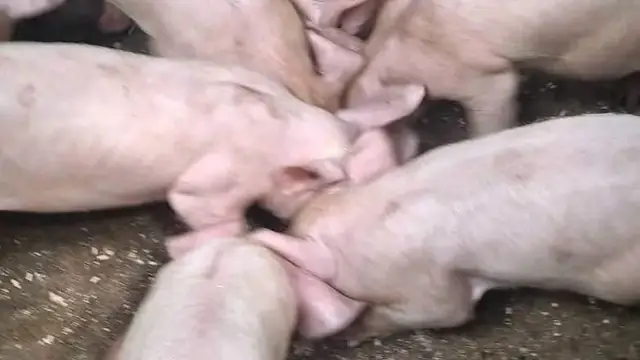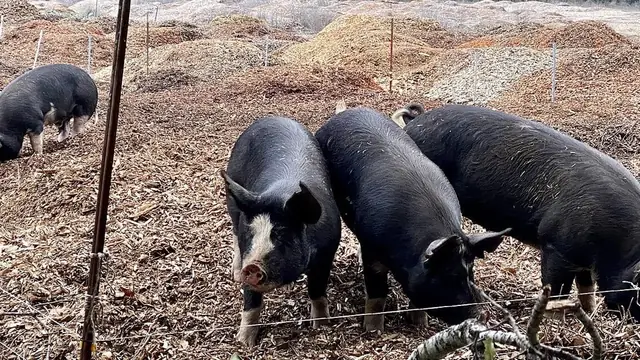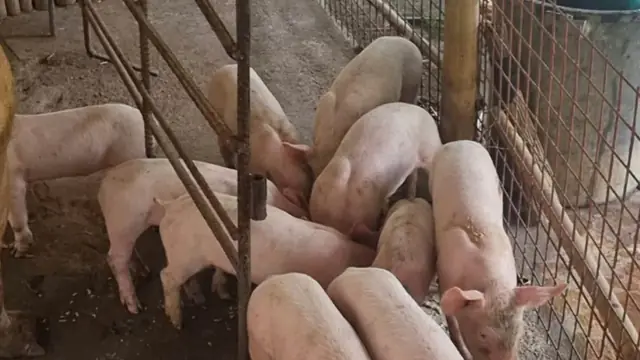
A 50/50 paiwi sounds fair. Half the work, half the profit. Then you run the math after the pigs sell and the owner who put up ₱136,000 in capital walks with about ₱11,000 plus their money back, while the caretaker who fed and watched the pigs every day for five months also gets about ₱11,000, which works out to roughly ₱24 an hour. The percentage was right. The cost-allocation rules were not.
This is the article that should exist before any handshake deal. Real numbers from a 10-pig batch at 2026 prices, three split structures (50/50 owner-fed, 60/40 caretaker-fed, and sow-share), where each one quietly cheats one party, and a one-page contract template that protects both.
"Pila man jud ang akong bahin?" (How much is actually mine?)
If you're the owner lending out pigs, or the tagapag-alaga raising someone else's, the answer is in the costs, not the percentage. And these splits vary by region and family, so treat the percentages here as common starting points, not a national standard.
What Paiwi Actually Means in Practice
Paiwi (also called paalaga or hatian) is informal contract growing between two farmers. One side has capital. The other side has labor, pen space, and time. They share the pigs and split the profit.
The Philippine Carabao Center runs a real Modified Paiwi scheme for dairy buffalo, where it entrusts breeding animals to farmer-trustees or cooperatives under a signed Modified Paiwi contract. The legal pattern is well established for carabao and cattle. For backyard pigs, almost no one bothers with a written contract. Most arrangements are sealed with "Sige, hatian na ta" over coffee.
The peso math below uses 2026 prices. PSA put the national farmgate average at ₱191.51/kg liveweight in Q3 2025, then ₱182.83/kg in Q4 2025, ₱176.03/kg for Q1 2026 and ₱172.44/kg for Q2 2026. The DA set a ₱210/kg minimum farmgate price in November 2025. It has never been met by the national average, and outside the Cordillera not in a single region, so treat it as a target and not as money you are going to see. As of May 2026 SINAG puts the industry average at ₱180-₱190/kg, while SINAG and NatFed both put cost of production near ₱180/kg. The average farm is selling at roughly what it spent.
One thing worth fixing before any split is computed: a paiwi pig is a backyard pig, and PSA publishes a backyard-only farmgate series separate from the national all-farms average. That is the series a hatian is actually taken on. Use it, not the headline number, when you and the owner agree what the batch is worth.
Regional spreads are wide, and not where most people assume. PSA's June 2026 numbers had Cordillera on top at ₱224.10 and Central Visayas right behind at ₱208.73, Central Luzon sixth at ₱181.05, Negros at ₱166.29, and SOCCSKSARGEN last at ₱141.98. Luzon is not automatically the premium market. The examples below use ₱185/kg, which is SINAG's trade read rather than the official ₱172.44, so treat them as the optimistic version and rerun them at your own province's number.
That works fine when the pigs sell at a profit and everyone's happy. It explodes when:
- A pig dies and nobody agreed in advance who absorbs the loss.
- Feed prices spike mid-batch and the side buying feed can't keep up.
- The caretaker sells direct to a biyahero without telling the owner.
- The owner pulls the pigs out early because they need cash.
The Three Split Structures You'll See
Most informal paiwi falls into one of three patterns. Each one shifts cost, risk, and reward differently.
| Structure | Owner provides | Caretaker provides | Split |
|---|---|---|---|
| 50/50 fattener (owner-fed) | Piglet, all feed, vet | Pen, water, labor, daily care | 50% net to each |
| 60/40 fattener (caretaker-fed) | Piglet only | Pen, all feed, water, labor, vet | 60% net to caretaker, 40% to owner |
| 50/50 sow-share (paiwi sa anay) | Sow, AI/breeding fee | Pen, all feed, labor, farrowing care | 50% of weaner sales each |
The 50/50 owner-fed split is the most common arrangement in the Visayas and Mindanao for backyard fattening. It's also the one most likely to leave the caretaker undercompensated. We'll do that math first.
Worked Example 1: 50/50 Fattener Split (Owner Pays Feed)
The setup. Owner buys 10 LW × Landrace weaners at ₱3,500 each from a local multiplier. Owner also covers all feed and vet costs. Caretaker provides the pen, water, and daily care for ~5 months until pigs hit 95 kg liveweight. They split net profit 50/50.
The numbers (per 10-pig batch):
| Cost item | Amount | Notes |
|---|---|---|
| Weaners (10 × ₱3,500) | ₱35,000 | LW × Landrace, 25-30 days, 7-9 kg |
| Feed (10 × ~₱9,500/pig) | ₱95,000 | ~260-280 kg/pig of commercial feed at ₱34.90-₱38.20/kg (premium grower/finisher, July 2026, mean ₱36.69), per cost-to-raise breakdown |
| Vaccines + iron + dewormer | ₱3,500 | ~₱350/head, per PCAARRD livestock health guidance |
| Vet/medicine reserve | ₱2,500 | For 1-2 sick pigs across the batch |
| Total owner cost | ₱136,000 | All cash from owner, about ₱13,600/head |
| Pen depreciation + water + electricity | ₱3,000 | Caretaker absorbs |
| Caretaker labor (5 months × hours/day) | unpaid | Caretaker absorbs |
The sale. Assume 9 pigs survive (1 mortality, normal for backyard), each averaging 95 kg liveweight, sold at SINAG's ₱185/kg farmgate per current regional pricing.
- Gross sales: 9 × 95 × ₱172.44 = ₱147,436
- Net profit: ₱158,175 − ₱136,000 = ₱22,175
- Owner's 50%: ₱11,088 (plus original ₱136,000 capital returned)
- Caretaker's 50%: ₱11,088
Looks fair on the surface. Each side gets about ₱11,088. But here's where the math gets honest.
The caretaker spent 150 days × ~3 hours/day = about 450 hours feeding, watering, cleaning, watching for sickness. ₱11,088 ÷ 450 hours = ₱24.64/hour. The rural farm-labor day rate in much of the Visayas runs ₱300-₱400 for the same kind of work. The caretaker also covered ₱3,000 in pen and utility costs out of that share, leaving net take-home around ₱8,000 over 5 months, roughly ₱1,600 a month.
The owner did almost nothing day to day. They put in ₱136,000, got it back, plus ₱11,088. ROI on owner capital: ₱11,088 ÷ ₱136,000 = about 8% over 5 months, or roughly 20% annualized. Thinner than the old fairy-tale numbers floating around Facebook groups, but still passive, and the owner carried no labor.
Read that batch cost again, though. ₱136,000 over 855 kg sold is about ₱159/kg. That is the only reason there is a profit to split at all. SINAG and NatFed both peg national cost of production near ₱180/kg, and at ₱180 in and ₱172.44 out there is nothing worth arguing over, maybe ₱4,000 for the whole batch before anybody's labor. So before you agree to any split, price your own kilo. A paiwi deal cannot rescue a cost structure that is already at the national average.
The split is fair only if you assume labor is worth nothing. Most paiwi deals make this assumption silently. The caretaker rarely sees it until the pigs sell and the per-hour math becomes visible. And in a soft-price year (farmgate at ₱165-₱170/kg), this same batch barely breaks even, and the caretaker's "share" of a near-zero profit is close to nothing while the owner still recovers most of their capital.
If you are the caretaker in a 50/50 owner-fed split, do this one calculation first. How much would you make doing 3 hours of farm labor a day for 5 months elsewhere? At a ₱350/day rural rate × 150 days, that is ₱52,500. This paiwi pays around ₱8,000 net. On a normal-price year you are effectively subsidizing the owner's return with your own labor.
Worked Example 2: 60/40 Caretaker-Fed Split
This structure flips the math. The caretaker takes on the feed cost (the biggest expense in pig farming) and gets 60% of net in return. The owner contributes only the piglet and walks away with passive income.
The setup. Same 10 LW × Landrace weaners at ₱3,500 each. Owner pays for the piglets only (₱35,000). Caretaker pays for all feed (₱95,000), vaccines and vet (₱6,000), and pen and utilities (₱3,000), for ₱104,000 total. They split net profit 60/40, with the caretaker taking 60%.
The sale. Same 9 pigs at 95 kg × ₱172.44/kg = ₱147,436 gross.
| Side | Capital invested | Share of net profit | Total return | ROI / 5 mo |
|---|---|---|---|---|
| Owner (piglets only) | ₱35,000 | 40% × ₱19,175 = ₱7,670 | ₱42,670 | ~22% |
| Caretaker (feed + vet + pen + labor) | ₱104,000 | 60% × ₱19,175 = ₱11,505 | ₱115,505 | ~11% |
| Net profit pool | ₱139,000 | ₱19,175 |
Now the caretaker clears about ₱11,505 over 5 months and gets back their feed capital. That is similar take-home to the 50/50 owner-fed case, but the caretaker carried far more cash risk to earn it. The owner makes less in absolute pesos than in Example 1 (₱7,670 vs ₱11,088), yet a much higher percentage return, because they only tied up ₱35,000.
So which side actually wins here? On a good-price year, neither dramatically. The 60/40 split mostly shifts risk onto the caretaker without paying them much extra for it. The honest case for 60/40 is not bigger profit, it is control: the caretaker who buys the feed controls feed quality and the sell decision, and is not waiting on an owner to release money for the next sack.
Both sides walk away roughly even when:
- Liveweight stays above about ₱170/kg (below that, the caretaker struggles to recover feed cost)
- Mortality stays under 10% (1 dead pig in 10 is normal)
- Feed prices don't spike more than ₱200/sack mid-batch
When liveweight crashes (Q4 2025 saw the national average fall to ₱182.83/kg, with some farmers hit as low as ₱150/kg per our pricing guide), the caretaker takes the hit hardest because they bought all the feed. Six quarters of that slide sit in the quarterly farmgate series, ₱209.83 in Q1 2025 down to ₱172.44 in Q2 2026, and any caretaker-fed split signed at the top of that run was underwater by the bottom of it. The owner only loses the piglet cost.
The Mortality Question (Where Most Splits Break)
When a pig dies, who pays?
There are three honest ways to handle it. Pick one before the deal, write it down, and stop arguing.
Method A: Off the top. Mortality cost (weaner price + feed already consumed) comes off net profit before splitting. Both sides feel the loss proportionally. This is the fairest method when neither party caused the death.
Method B: Off the owner. Mortality is treated as a capital loss for the owner. Caretaker walks away with their share unaffected. Common in 50/50 owner-fed splits because the owner already paid for the dead pig. Caretaker has zero downside risk, but also less incentive to prevent disease.
Method C: Off the caretaker. Mortality is deducted from the caretaker's share, sometimes capped at the weaner price per dead pig. This pushes the caretaker to be diligent about biosecurity and parasite control. Standard in commercial contract growing.
The Philippine Carabao Center's Modified Paiwi contract for cattle uses Method A: mortality from natural causes is treated as shared loss; mortality from caretaker negligence is treated as caretaker's liability. That framing transfers cleanly to pigs. Cite it in your written agreement.
Worked Example 3: 50/50 Sow-Share (Paiwi sa Anay)
This is the breeder version of paiwi and the most underrated structure for caretakers with pen space but no capital. The owner provides a bred sow (or pays the AI fee). The caretaker raises her through farrowing, weaning, and sells the piglets. They split weaner sales 50/50.
The setup. Owner buys a Landrace gilt at ₱18,000 from an NPPC-accredited multiplier. Sow farrows twice a year. Caretaker pays for sow feed (~12 sacks × ₱1,800 = ₱21,600 per cycle), AI/breeding fee (₱1,500 per litter), vaccines, and pen.
The sale. Sow farrows 10 piglets, weans 8 (in line with the 8-9 weaned per litter that backyard sows average in the Philippines, see our sow vs fattener breakdown and native litter-size data). Weaners sell at ₱3,500 each at 30 days. Weaner prices are not published anywhere official, which is exactly why the finished-pig price matters to a sow-share: it is what the buyer of your weaners is betting on. Check the province-level backyard table for where your area sat when the deal was struck.
- Gross sales per litter: 8 × ₱3,500 = ₱28,000
- Caretaker costs: ₱21,600 feed + ₱1,500 AI + ₱500 vaccines = ₱23,600
- Net profit per litter: ₱28,000 − ₱23,600 = ₱4,400
- 50/50 split: ₱2,200 each per litter
That's bad. The caretaker did 4 months of work for ₱2,200. The math doesn't work, and this is why most informal sow-share deals collapse after one cycle.
The fix. Split gross sales, not net. Owner provides the sow and absorbs feed cost (sow stays at owner's farm, or owner reimburses). Caretaker only contributes labor and pen. Now the math is:
- Owner cost per litter: ₱23,600 (feed + AI + vaccines)
- Gross sales: ₱28,000
- Net: ₱4,400, split 50/50
Or split the piglets directly: 4 piglets each. Owner sells theirs, caretaker sells theirs (or keeps for fattening).
Direct piglet split is the cleanest version. No bookkeeping. No "did the feed receipts add up?" arguments. Each side gets 4 weaners (worth about ₱14,000 at ₱3,500 each on an 8-weaned litter) and decides what to do with them. This is also how the carabao Modified Paiwi programs handle offspring, the trustee keeps a share of the calves rather than splitting a cash figure, and the same logic is what keeps sow-share deals from blowing up over receipts.
What a Real Paiwi Contract Should Cover
If you're going to do this, write it down. One page, both sides sign, both sides keep a copy. Here's what every paiwi contract needs:
- Number of pigs and identifying marks. Ear notches, photos, weights at start.
- Who pays for what. Piglet, feed (which brand and grade), vaccines, dewormer, vet bills, water, electricity, pen depreciation.
- Mortality rule. Method A, B, or C from above. Specify what counts as "negligence" vs "natural cause."
- Selling decision. Who decides when to sell? At what weight? Who finds the buyer? Who handles the cash?
- Profit calculation. Define "net" exactly. Is it gross sales minus all costs, or gross sales minus only owner-paid costs? This is the #1 source of post-sale arguments.
- Split percentage and timing. When does the caretaker get paid? On sale day, or after the owner recovers capital?
- Early termination. What if the owner pulls the pigs out at month 3? What if the caretaker quits? Pro-rata splits based on weight gain are fairest.
- Disputes. Barangay captain mediates first. If unresolved, small claims court (cases under ₱400,000 don't need a lawyer).
Themis Partner offers a Philippine profit-sharing agreement template you can adapt. The general partnership structure works fine for paiwi. Just specify the livestock terms in the schedule.
When Paiwi Beats Going Solo
Paiwi isn't always a bad deal. For some farmers, it's the right entry point.
You should be the caretaker if:
- You have pen space and time but no ₱80,000-₱100,000 to start a solo 10-pig batch.
- You want to learn the operational side (feeding, vaccinating, selling) before risking your own capital.
- You can negotiate a 60/40 caretaker-fed split. The 50/50 owner-fed deal almost never beats labor-only farm work on hourly math.
You should be the owner if:
- You have capital but no time, no pen, or you're an OFW managing from abroad.
- You want passive agricultural income with rural development bonus (some areas count this toward ACPC eligibility).
- You can verify the caretaker's track record. First-time caretakers lose more pigs.
Free Tool
Pig Profit Simulator
Plug in your weaner cost, feed assumption, and split percentage. The simulator shows what each side actually takes home, so the conversation starts from honest numbers.
The "Both Sides Win" Test
Before signing any paiwi deal, ask both parties this:
If everything goes wrong, half the pigs die, prices crash to ₱150/kg, feed jumps ₱400 a sack, who absorbs the loss? Are we both still talking to each other afterward?
If the answer is "the caretaker eats it," it's a bad contract. If the answer is "the owner eats it," the caretaker has no skin in the game. The honest answer should be "we both lose proportionally, and we agreed to that in writing."
A good paiwi structure aligns incentives so that both sides want the pigs to live, eat well, and sell at the right time. A bad structure makes one side want to cut corners while the other side checks every receipt.
The percentage matters less than the cost-allocation rules. A 70/30 split with clear cost rules beats a 50/50 split with murky ones every time.
Sources: Philippine Carabao Center Modified Paiwi / Dairy Buffalo Module (signed Modified Paiwi contract structure); PCAARRD livestock breeding data; PSA: Q3 2025 average farmgate price of hogs ₱191.51/kg liveweight; DA sets ₱210/kg minimum farmgate price for live pigs, Nov 2025 (PNA); DA-ACPC Agri-Negosyo Loan Program; Agriculture Monthly: a win-win scheme for backyard pig raisers, BAHOG cooperative grower model, Balanac, Laguna (co-op deducts piglet, feed, and medicine cost, grower gets 60%); Republic Act 1199, Agricultural Tenancy Act, on profit-sharing crop and livestock arrangements.
Bisaya / Cebuano
Paiwi sa Baboy: Unsaon Pag-compute ug Hatian
Tulo ka klase sa hatian:
1. 50/50 (tag-iya nagbayad sa pagkaon). Tag-iya ang nagpalit sa biik ug pagkaon. Tagapag-alaga naghatag og kulungan, tubig, ug paghago. Hatian sa net profit. Komon ni pero kasagaran kulang ang sweldo sa tagapag-alaga.
2. 60/40 (tagapag-alaga nagbayad sa pagkaon). Tag-iya ang nagpalit sa biik. Tagapag-alaga ang nagbayad sa tanan: pagkaon, bakuna, kuryente. Mas dako og bahin ang tagapag-alaga (60%) kay mas dako siya og puhunan.
3. Hatian sa anay. Tag-iya naghatag og anay (sow). Tagapag-alaga ang nag-amuma kutob sa pag-anak ug pag-wean. Ibahin ang biik kada litter: 4 sa tag-iya, 4 sa tagapag-alaga. Pinakamaayo ni nga arrangement kung naa kay kulungan pero walay kapital.
Ang tinuod nga math sa 10 ka baboy (50/50 owner-fed):
- Gasto sa tag-iya: ₱136,000 (biik + pagkaon + bakuna + tambal), mga ₱13,600 kada ulo
- Gibaligya: 9 ka ulo × 95 kg × ₱172.44/kg = ₱147,436
- Net profit: ₱22,175
- Bahin sa kada usa: mga ₱11,088
Kung tan-awon nimo, parehas ra ang bahin. Pero ang tagapag-alaga, 5 ka bulan nga nag-trabaho, mga 450 ka oras tanan. ₱11,088 ÷ 450 = mga ₱24.64 kada oras. Ang adlaw nga sweldo sa mamumuo sa uma sa Visayas mga ₱300 ngadto sa ₱400. Layo kaayo.
Kung kuhaon pa ang ₱3,000 nga kuryente ug pen depreciation, ang tagapag-alaga makakuha lang og mga ₱8,000 sa 5 ka bulan, mga ₱1,600 matag bulan. Mas maayo pa nga magpa-trabaho sa uma kada adlaw. Ug kung mubo ang presyo (₱165 hangtod ₱170/kg), halos walay ganansya, ug ang tagapag-alaga ang pinaka-lugi kay ang trabaho niya ang gigamit.
Kanus-a maayo ang paiwi para sa tagapag-alaga:
- Wala kay puhunan pero naa kay kulungan ug oras
- Gusto nimo makakat-on usa magpalit og kaugalingong baboy
- Ma-negotiate nimo ang 60/40 caretaker-fed split, dili 50/50
Kanus-a maayo ang paiwi para sa tag-iya:
- Naa kay kwarta pero walay oras, walay kulungan
- OFW ka nga nagdumala gikan sa abroad
- Nahibal-an nimo ang track record sa tagapag-alaga
Mortality rules nga kinahanglan i-isulat:
- Method A: Ang gasto sa namatay nga baboy gikuhaan sa net profit usa pa ibahin. Pareho silang nawad-an.
- Method B: Ang tag-iya ra ang nawad-an. Tagapag-alaga walay risgo.
- Method C: Tagapag-alaga ang nawad-an, pero may cap (basta dili molabaw sa presyo sa biik).
Pili-a ang isa, isulat sa kontrata, dili na maglalisay sa adlaw nga ibaligya.
Importante sa kontrata:
- Pila ka baboy ug ang ear notch
- Kinsa nagbayad sa unsa
- Mortality rule (A, B, o C)
- Kinsa ang naghimo og baligya ug nagdawat sa kwarta
- Unsaon pag-compute ang "net profit"
- Hatian percentage ug kanus-a bayaran
- Unsa kung mo-undang og sayo ang isa
- Asa pasagdan kung magkalalis (barangay una, dayon small claims)
Dali nga test usa ka mo-pirma:
Kung mamatay ang katunga sa baboy ug mahulog ang presyo sa ₱150/kg, kinsa ang nawad-an? Kung "tagapag-alaga ra," bati nga kontrata. Kung "tag-iya ra," walay incentive ang tagapag-alaga nga mag-amping. Kung "pareho silang nawad-an, agreed na," kana ang patas.
"Ang husto nga paiwi, dili sa porsiyento. Naa sa isulat."