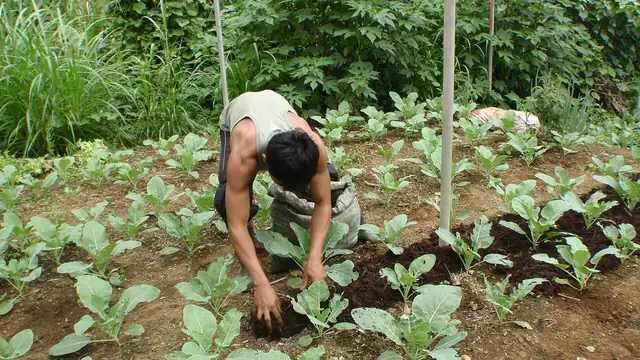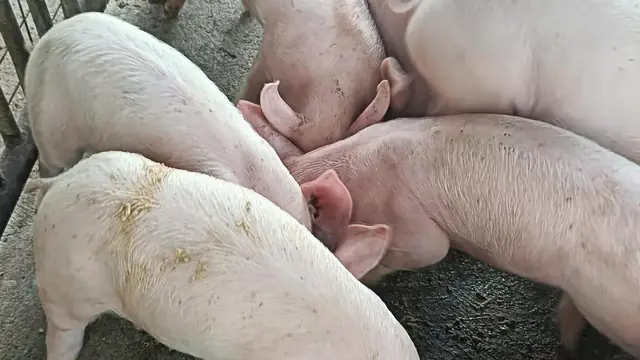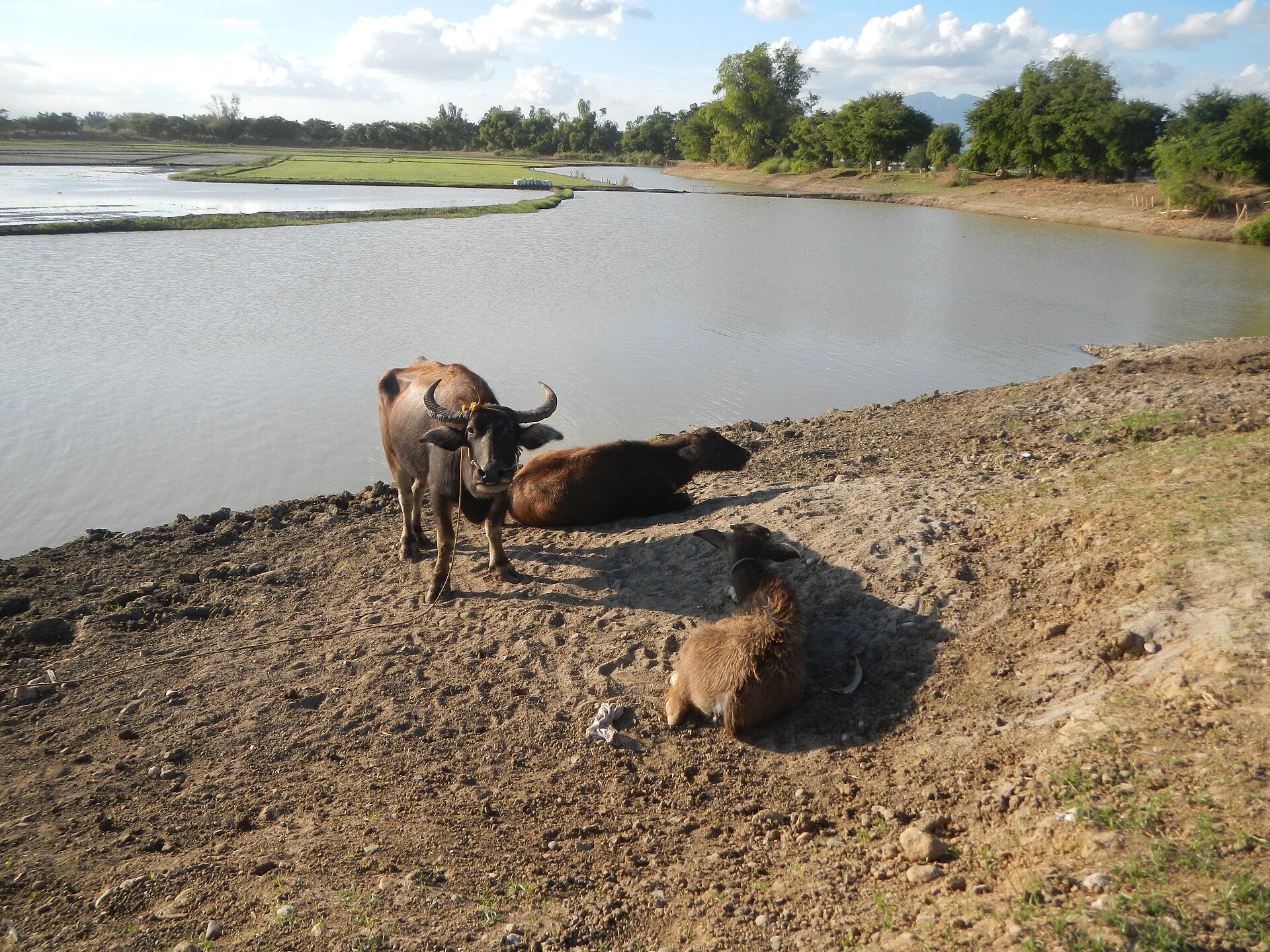
A 1-hectare pig-tilapia integrated farm in the Philippines nets roughly ₱530,000-₱750,000 a year at PSA's official ₱172.44/kg for Q2 2026, and almost all of that comes from the fish, not the pigs. Only about ₱70,000-₱150,000 of it is the manure-as-fertilizer bonus over running a piggery and a fishpond separately. The integrated system is real, just smaller than the brochures suggest, and it concentrates risk.
The pig-tilapia integrated system is on every BFAR and PCAARRD extension brochure. Pig manure feeds plankton, plankton feeds fingerlings, you sell pigs and tilapia from the same hectare. The diagrams show neat circles.
The reality is closer to running two small businesses that share one waste stream and a lot of risk. Of the integrated farms documented in Philippine extension literature, the pattern is consistent: the ones that last started as a working piggery and added the pond later, with someone who already knew aquaculture. The ones that fail usually scaled the pig side without resizing the pond, or had nobody watching water chemistry. That split is what this piece is about.
The biological logic
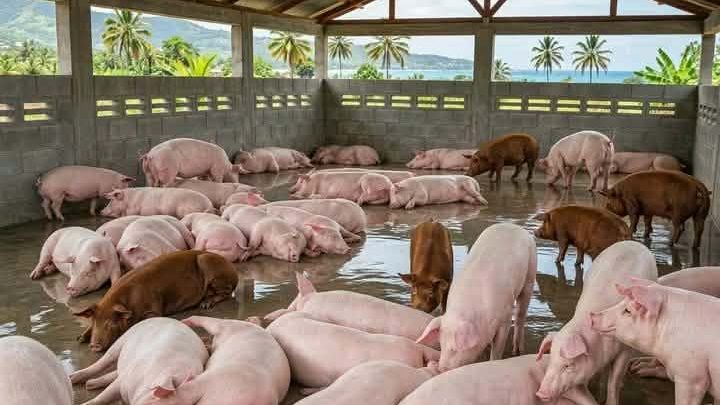
Pig manure dropped or flushed into a pond does three things:
- Feeds bacteria that break down organic matter into ammonia and nitrites.
- Fertilizes phytoplankton (algae) which bloom and feed zooplankton.
- Provides direct organic matter that benthic feeders eat.
Nile tilapia (Oreochromis niloticus), the standard Philippine cultured species, feeds heavily on plankton and detritus for the first 60-80 days of grow-out. It strains them straight from the water column. In a well-fertilized pond a fingerling can reach 80-100 grams on plankton alone, with only minimal supplemental feed.
After 80-100 grams, tilapia shift toward needing more protein than plankton can supply, and commercial pelleted feed (or alternative grain-based feed) becomes necessary to push them to market size of 200-300 grams.
The integrated system works because pigs produce far more manure than a household can use as compost, and tilapia ponds need fertilization. Stacking the two captures value from a waste stream.
The pig:pond ratio
The commonly cited Philippine ratio is roughly 60-100 pigs at market-weight equivalent per hectare of pond surface. FAO's integrated agriculture-aquaculture guidance puts one 50 kg pig at enough manure for 100-150 m² of pond, which works out to about 67-100 pigs per hectare. Philippine extension references go a bit higher, up to 80 fattening pigs plus 50,000 fish per hectare per 90-day crop with the pond kept near a metre deep. Either way, that figure assumes pigs are penned above the pond (or in pens that drain to it), and the pond runs 0.6-1.5 m deep with slow flow-through or a scheduled water exchange.
| Pond size | Pigs the pond can absorb |
|---|---|
| 1,000 m² (0.1 ha) | 6-10 pigs |
| 2,500 m² (0.25 ha) | 15-25 pigs |
| 5,000 m² (0.5 ha) | 30-50 pigs |
| 10,000 m² (1 ha) | 60-100 pigs |
| 20,000 m² (2 ha) | 120-200 pigs |
Get the ratio wrong in the high direction (too many pigs per pond area) and you cause:
- Algae overbloom followed by dieback and oxygen crash, killing tilapia overnight.
- Ammonia and nitrite spikes that stress and slow tilapia growth.
- Anaerobic bottom layers that release hydrogen sulfide.
Get the ratio wrong in the low direction (too few pigs) and the plankton-feeding benefit is small. You're essentially running normal aquaculture with bonus fertilizer.
The most common practical mistake is operators who built a pond for their current 20-pig operation and then scaled to 60 pigs without expanding the pond. Within six months tilapia growth slows, mortality climbs, and the pond starts to smell. Daghang ni-undang sa integrated kay kalit lang gi-doble ang baboy pero wala gi-pa-dako ang pond.
The economics, per hectare per year
Here is the math on a 1-hectare integrated setup with 60 pigs in pens and 1 hectare of pond, both running near capacity. Pig pricing uses ₱185/kg liveweight, which is where hogs actually trade as of May 2026: SINAG puts the industry average at ₱180-₱190/kg and eFeedLink trade quotes run ₱183-₱193/kg. The DA set a ₱210/kg minimum farmgate price in November 2025, and no month of the national series has reached it. Only the Cordillera has regionally, so unless you sell in Benguet, do not budget on it. Feed costs assume premium grower/finisher at the ₱36.69/kg mean of the ₱34.90-₱38.20 range quoted on 12 July 2026.
Pig side (60 head per cycle, 2 cycles a year):
| Line | Per cycle | Annual |
|---|---|---|
| Revenue: 60 pigs x 95 kg x ₱172.44/kg | ₱982,908 | ₱1,965,816 |
| Feed cost: 60 pigs x ~₱10,800 | ₱648,000 | ₱1,296,000 |
| Weaner cost: 60 x ₱3,500 | ₱210,000 | ₱420,000 |
| Vet, biosec, mortality, labour share | ₱165,000 | ₱330,000 |
| Pig side net | ~₱31,500 | ~₱63,000 |
That pig table is tight because the pig side genuinely is. Costs there work out to about ₱180 per kilo of liveweight, which is exactly where SINAG and NatFed independently put national cost of production. So at ₱172.44/kg a 60-head cycle is about ₱40,000 in the red, call it ₱80,000 a year of losses, and it only turns positive at a loss the moment farmgate slips under ₱180. PSA's national average for Q1 2026 was ₱176.03/kg (Jan ₱172.56, Feb ₱176.31, Mar ₱179.23). The average Philippine farm is currently selling at or slightly below its own cost. Model your own numbers in the Profit Simulator before committing, and do not plug in ₱210.
One more thing about that national average. PSA does not survey a single population, it surveys two, and we publish both monthly back to 2010: backyard farms and commercial establishments. A 60-head unit penned over a pond sits between them, and closer to the household survey than most operators assume. On the cost side, the premium grower/finisher listing behind the ₱36.69 mean carries its own retrieval date, because a finished-feed price nobody surveys nationally should not be quoted as though somebody did.
Tilapia side (2-3 crops per year, 1 hectare):
| Line | Per crop | Annual (2.5 crops) |
|---|---|---|
| Stocking: 15,000 fingerlings @ ₱1.50 | ₱22,500 | ₱56,000 |
| Supplemental feed (50% of standard rate) | ₱90,000 | ₱225,000 |
| Pond labour, maintenance, harvest | ₱35,000 | ₱88,000 |
| Harvest: ~13,000 fish avg 230 g = ~3,000 kg | ||
| Revenue: 3,000 kg x ₱120-₱150/kg pond-gate | ₱360,000-₱450,000 | ₱900,000-₱1,125,000 |
| Tilapia side net | ~₱215,000-₱300,000 | ~₱530,000-₱755,000 |
Pond-gate tilapia of ₱120-₱150/kg is conservative. BFAR price monitoring put medium tilapia from Batangas and Pampanga around ₱120/kg at source in early 2026, PSA recorded farmgate near ₱190/kg in early February 2026, and retail sits ₱177-₱190/kg. A farm selling direct or to a consolidator lands in the ₱120-₱150 band; a farm with retail access does better.
Combined annual net: roughly ₱600,000-₱820,000, and the fish are carrying almost all of it.
Compare to standalone operations:
- Same 60 pigs alone, no pond: about ₱80,000 of losses a year at PSA's ₱172.44/kg. The pigs are not the business. The pond is
- Same 1-hectare tilapia alone, fed normally: ₱400,000-₱600,000 net (slightly lower growth without manure fertilization, slightly lower disease-spread risk)
The integrated system adds roughly ₱70,000-₱150,000 of net per year over running the two separately. That is the manure-as-fertilizer benefit, and it is real. But it is a 10-20% boost on the fish side, not the 50%+ that some brochures imply. And look at where the money is coming from. At mid-2026 prices the tilapia side is not a hedge against some future pig-price crash, it is the thing paying the bills right now. That diversification is the bigger reason to integrate, not the manure savings.
What it costs to set up
A 1-hectare pond next to a 60-pig piggery is not a cheap build.
| Capital component | Cost |
|---|---|
| Pond excavation, 1 ha, 1.2m average depth | ₱350,000-₱600,000 |
| Dyke construction, intake, outlet, screens | ₱120,000-₱200,000 |
| Pig pens (60-head capacity) | ₱350,000-₱600,000 |
| Manure channel from pen to pond | ₱60,000-₱120,000 |
| Aerator (paddlewheel or air pump) | ₱45,000-₱90,000 |
| Initial water filling and conditioning | ₱25,000 |
| Working capital (1 cycle of pig feed + first tilapia crop) | ₱650,000-₱900,000 |
| Total to start | ₱1,600,000-₱2,535,000 |
This is real semi-commercial money. If you already have the piggery operating, the marginal cost of adding the tilapia pond is roughly ₱650,000-₱1,030,000, which pays back in 2-3 years on the added margin alone. That payback math is the whole case for integration, and it only holds if the pond is run properly.
The non-obvious risks
The brochures don't mention these. The farmers do.
Risk 1: ASF biosecurity against an open pond. ASF virus is not infectious to fish, but the open pond and dyke are the problem, not the fish. A pond that receives pen effluent is a wet, organic reservoir where the virus can persist in sediment for months, and it cannot be disinfected the way a concrete pen floor can. In an ASF zone, an integrated site is harder to clear and restock than a clean-pen piggery because the contaminated area is the whole footprint, not just the building. Where ASF zoning is active, follow the current BAI zone status for your area before restocking, and expect LGUs in tighter zones to restrict integrated operations until clearance.
Risk 2: water management is a daily, separate job. Dissolved oxygen, pH, ammonia, and water visibility all need checking daily. Overnight is the danger window: plankton stops producing oxygen after dark while everything in the pond keeps consuming it, so DO bottoms out before dawn. An aerator failure at 2 a.m. can kill a whole crop by sunrise. An operator who runs pigs well does not automatically have the time or the skill for water chemistry. Learn it or hire it, and keep a backup aerator and generator.
Risk 3: manure-fed fish food safety. This is the one most farmers underrate. FAO's integrated agriculture-aquaculture guidance is explicit that consumers are wary of fish from manure-loaded ponds, and the recommended practice is to stop manure loading and either flush the pond or transfer fish to clean water for several days (a few hours at minimum) before harvest. Skipping this risks off-flavour and a food-safety problem, not just a marketing one. Build the clean-water flush into your harvest schedule.
Risk 4: regulatory ambiguity. A pond receiving direct pig manure sits in a grey zone between BFAR's aquaculture rules and DA's livestock rules, with DENR holding stricter effluent standards for combined wastewater. Some LGUs require a buffer between piggery effluent and aquaculture water. Confirm exactly which permits you need and what effluent standards apply before you build, and budget for monitoring and compliance.
Risk 5: concentrated, covariant risk. A typhoon flood that overtops the dyke kills fish and contaminates the pens. An ASF outbreak that takes out the pig side also kills the pond's fertilization. Drought drops the water and concentrates the manure load. One piece of land, several risks that hit together.
Bisaya / Cebuano
Ang pig-tilapia integrated nindot tan-awon sa papel pero lisod i-padayon. Ang dako nga sayop kasagaran kay water management. Kung mawala ang kuryente sa aerator sa tungang gabii, posible mamatay ang tanang isda pag-abot sa buntag. Kinahanglan naa kay backup generator ug kahibalo ka mo-test sa tubig kada adlaw. Usa pa, ayaw i-baligya dayon ang isda human sa manure loading. Patubigi og limpyo nga tubig ang pond pila ka adlaw una mag-ani para luwas kan-on. Kung wala kay aquaculture nga kasinatian ug wala kay reserba para sa ASF o bagyo, mas maayo pa ang biogas digester kaysa integrated pond.
When integrated farming actually pays
Three conditions need to be present for the integrated system to beat running them separately:
-
You have low-lying land near a reliable water source. Building a 1-hectare pond on land that needs to be terraced or pumped to is a losing proposition. Existing rice land that already floods naturally, or land near a creek with consistent flow, is the right starting point.
-
You have prior tilapia or aquaculture experience, or access to barangay-level extension support. Water chemistry, fingerling sourcing, harvest timing, market access: none of these are trivial. A first-year integrated farm run by a first-year aquaculture operator usually loses money on the tilapia side.
-
You can absorb the concentrated risk. One serious disease outbreak or one bad typhoon shouldn't bankrupt the operation. That means either insurance, diversification beyond this single site, or financial reserves equal to one full cycle's working capital.
If even one of these is missing, the simpler version is better: a piggery with a biogas digester for energy capture, plus composted manure sold as fertilizer. That captures most of the manure-side value without the aquaculture complexity, and without betting a fish crop on overnight oxygen levels.
What about pig-duck or pig-fish-rice?
The same principles extend to duck-fish, pig-fish-rice (rice paddy adjacent to pond), and pig-vegetable systems. They all share the same logic: capture nutrient flows that would otherwise be waste. They all share the same constraints: more complexity, more skill required, more concentrated risk.
The Philippine farms that run multi-stack integrated systems successfully have usually built one component at a time over 5-10 years. They didn't start integrated. They evolved into it.
That's the right pattern. Master the pig operation first. Add the next layer once the pig side is reliably profitable and you have spare management capacity.
Tools and related reading
Model the pig side cash flow and use that as the anchor before deciding whether to add tilapia: Profit Simulator.
Related articles:
- Biogas digester ROI for piggery: the lower-complexity way to capture manure value
- Alternative feeding systems Philippines
- Backyard vs semi-commercial pig farm ROI
- Pig farming profit on 10 pigs
- Browse the Housing & Setup cluster
- Browse the Money cluster
Sources
- FAO, Integrated agriculture-aquaculture: a primer and Backyard integrated pig-fish culture in the Philippines (manure loading rates, stocking density, clean-water flush before harvest): fao.org/4/y1187e/y1187e17.htm
- Philippine Statistics Authority, Average Farmgate Price of Hogs for Slaughter: ₱191.51/kg liveweight for Q3 2025, ₱182.83/kg for Q4 2025, ₱176.03/kg for Q1 2026 and a ₱172.44/kg national average for Q2 2026 (Apr ₱174.00, May ₱171.56, Jun ₱171.76): psa.gov.ph
- SINAG and NatFed statements, May 2026: prevailing farmgate ₱180-₱190/kg, cost of production about ₱180/kg. eFeedLink trade quotes ₱183-₱193/kg over the same period.
- Philippine News Agency, "DA, stakeholders set ₱210/kg minimum farmgate price for pork" (4 November 2025): pna.gov.ph. The floor has not been reached in any month of the national series since it was set, and regionally only by the Cordillera and, in late 2025, by BARMM and Central Visayas.
- PSA price situationer and DA-BFAR price monitoring, tilapia farmgate and source prices, early 2026 (~₱120-₱190/kg depending on channel and region): psa.gov.ph/statistics/price-situationer
- BAI African Swine Fever situation and zoning updates (bai.gov.ph) for current zone status before restocking.